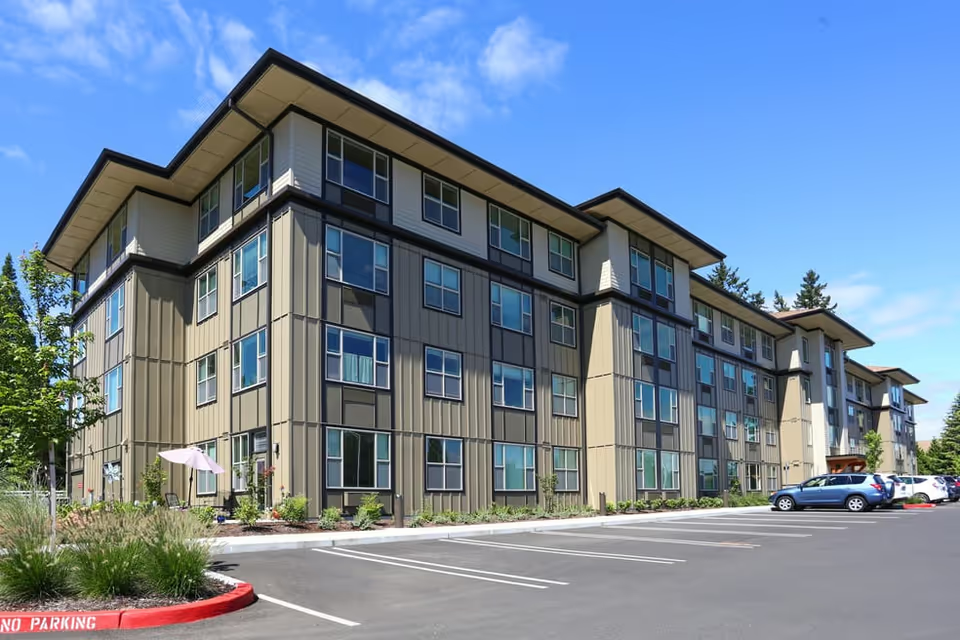
The Springs at the Waterfront presents as a newer, full-service retirement community with many attributes that prospective residents and families commonly prioritize. The community's waterfront location and contemporary building are frequently highlighted, along with expansive common-area amenities — including a pool, spa, gym, theater, art studio, and social spaces — that support an active lifestyle. Review content consistently emphasizes a lively social calendar (happy hours, seasonal parties, music nights, and organized outings) and accessible leisure programming, which appear to contribute to a generally engaging, community-oriented atmosphere.
Staff and care impressions are largely positive: reviewers describe staff as professional, attentive, and responsive, and several comments note quick resolution of issues and thorough service. Families and residents often mention supportive services such as concierge, maintenance, housekeeping, wellness and fitness programming, and transportation assistance. Reports that residents are "well cared for" and experience helpful, welcoming interactions suggest a strong baseline of hospitality and day-to-day operations.
Dining and activities are recurring strengths. Multiple comments call out good or delicious food, regular entertainment (for example, Friday-night music), structured fitness and art opportunities, and organized rides to religious services. These elements reinforce the community’s positioning as a full-service offering that emphasizes lifestyle as much as housing.
Notable operational concerns surface in the reviews as well. There are indications of uneven staff conduct and communication tone in some interactions; this suggests variability in how staff engage with particular residents or family members and is an area for management attention. Policy enforcement is another area to watch: reviewers mention instances of smoking on property and proximity to entrances where municipal rules apply, pointing to gaps in on-the-ground enforcement of campus rules. Additionally, references to accommodation for younger adults with disabilities suggest the facility may serve a broader resident profile, but the protocols and expectations for such accommodations are not clearly described in public-facing comments.
Finally, some review content is non-specific or ideologically charged and offers little actionable detail about care quality; such items should be weighed separately from comments addressing operational practices. Overall impressions skew positive — attractive waterfront setting, robust amenities, active social programming, and largely responsive staff — but prospective residents and their families would benefit from an in-person visit that includes a meal sample, observation of staff–resident interactions, and direct questions to management about policy enforcement (especially smoking) and the facility’s approach to nontraditional resident accommodations and clinical-care specifics.