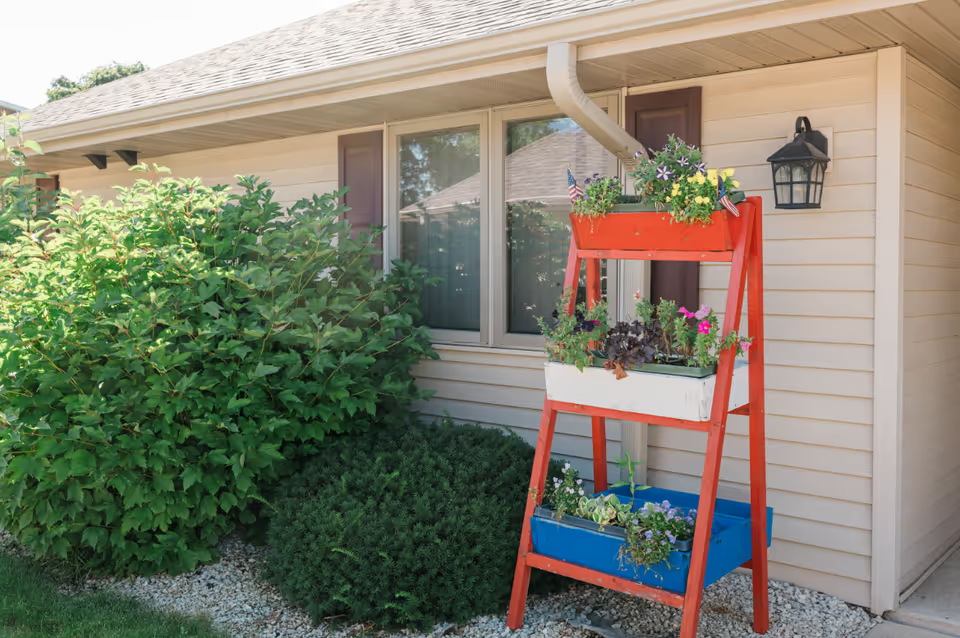
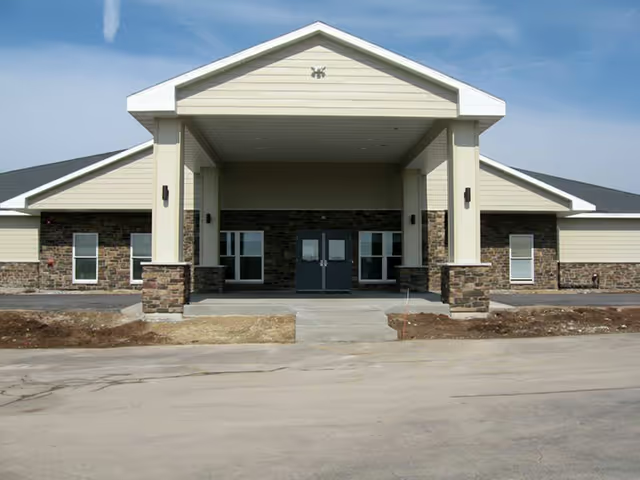
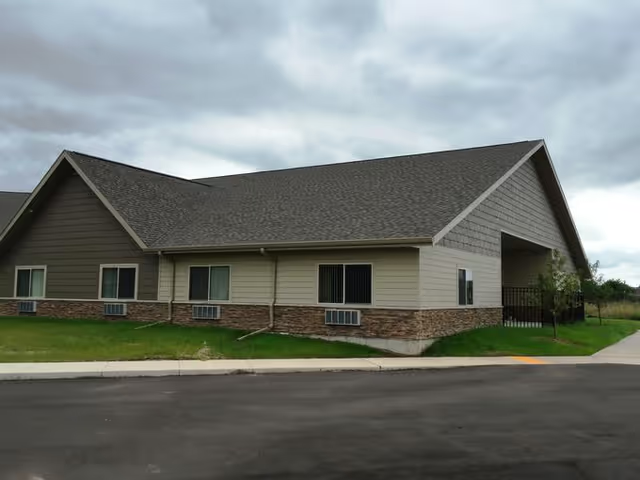
Autumn Embers presents as a small, residential-style community whose core strengths are interpersonal. Many families and visitors describe a low resident-to-staff ratio and an environment in which staff know residents individually, which supports timely assistance, personalized care plans, and a home-like atmosphere. Administrators and some managers are frequently characterized as accessible and responsive; several accounts highlight staff members who go out of their way to support transitions, accommodate personalization of rooms, and engage residents in one-on-one activities. Private rooms with en-suite bathrooms and flexible visitation are also recurring positive features.
Care quality appears mixed but leans positive where staffing is adequate. Reviewers commonly praise the compassion and attentiveness of on-shift caregivers and note improvements in hygiene, diet, and socialization for some residents after admission. At the same time, a consistent pattern concerns staffing variability — particularly limited evening and overnight coverage — and uneven dementia-specific expertise. These operational gaps affect the facility’s ability to provide consistent supervision for residents with cognitive impairment and to sustain evening programming and timely responses at night.
Dining and activities show a split experience. Strengths include customizable meals and a number of engaging activities such as crafts, baking, dancing, gardening, and small-group exercise. Reviewers who value social programming point to creative, homey offerings. Conversely, other accounts describe limited activity continuity when key staff leave, and complaints about repetitive, lower-quality menu items or limited healthy options. The absence of an on-site therapy department or formal rehabilitation services was noted as a service limitation for residents with higher clinical needs.
Facility condition and safety are areas of clear concern. Positive impressions of tidy common areas coexist with comments about maintenance issues: damaged flooring, exposed fixtures, unfinished outdoor decking, and general repair backlogs. Cleanliness and sanitation are described inconsistently across units; some families emphasize a neat, odor-free environment, while others report sanitation concerns and visible room-level damage. Security and exit-monitoring processes were also flagged — alarms and door-monitoring systems appear to be unreliable in some accounts, which raises concerns about elopement risk for residents with cognitive impairment.
Management and operations elicit polarized views. Many reviewers single out an involved, compassionate administrator and staff who collaborate well; others describe leadership turnover, inconsistent enforcement of advertised services, and cost/value concerns. A recurring theme is a gap between advertised amenities (for example, promised outdoor decking or a spa) and the services observed by families. This contributes to perceptions of uneven value for the price.
In sum, Autumn Embers may be a good fit for prospective residents and families who prioritize a small, familiar community with individualized attention and flexible, home-like living. At the same time, the facility shows operational vulnerabilities — notably staffing consistency (especially evenings/nights), dementia-care training, maintenance and repair completion, activity-program continuity, and some aspects of food-service quality. Prospective families should arrange a focused tour and ask for documentation about overnight staffing patterns, dementia-care protocols, the activity schedule and staffing, maintenance plans for outstanding repairs, security/exit-monitoring procedures, and which amenities are contractually guaranteed versus promotional. These targeted questions can help determine whether the community’s strengths meet a particular resident’s clinical and social needs.