
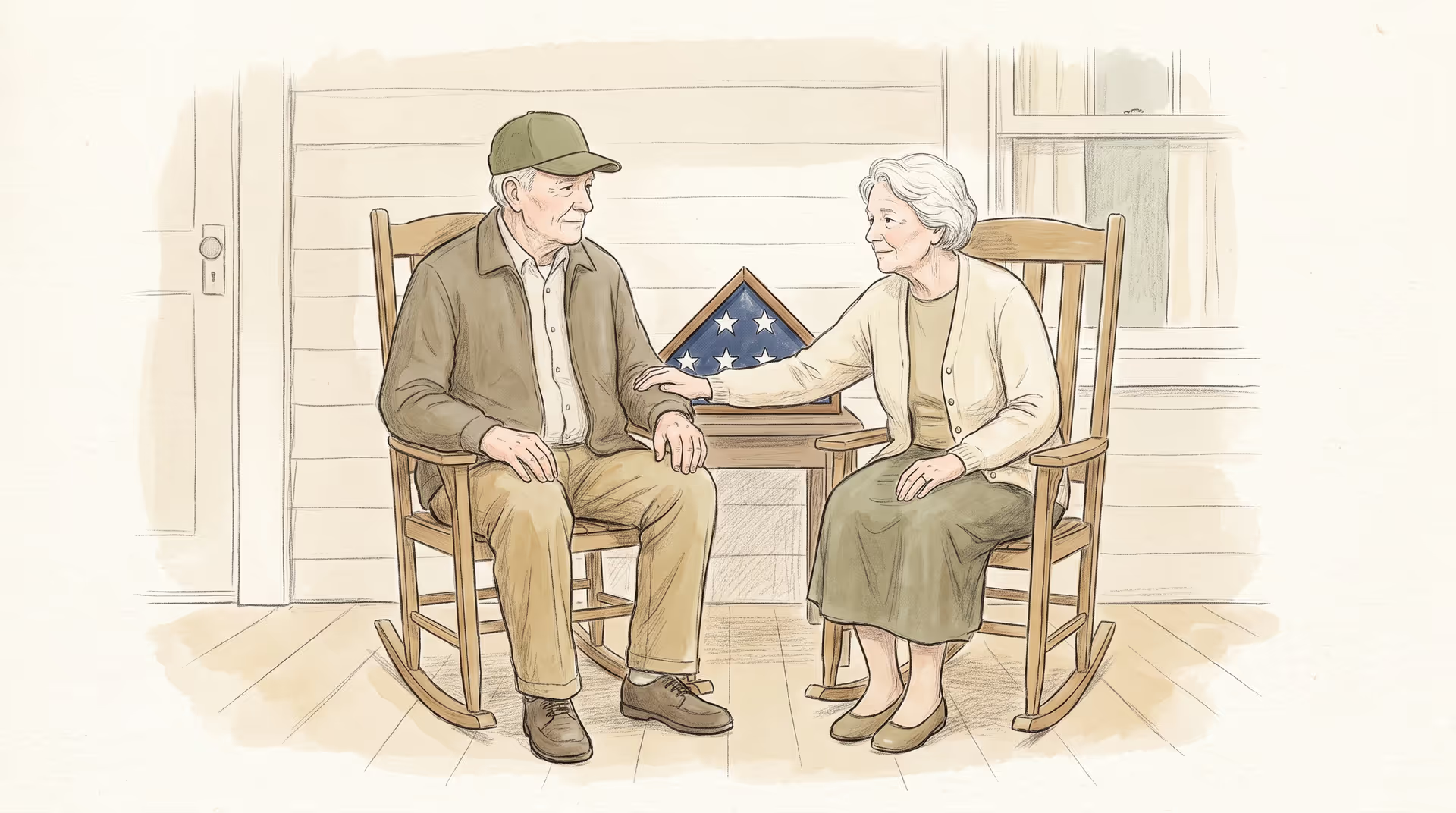
About half of America's veterans are 65 or older. Many of them served in Vietnam, Korea, or even World War II. Yet a large share have never used the benefits they earned. Some think they don't qualify. Others applied decades ago, were turned down, and never tried again. The rules have changed a lot since then, and the most recent changes favor older veterans.
This guide walks through the main benefits for senior veterans and their spouses: health care, long-term care, pension, disability pay, survivor benefits, and burial honors. For a deeper look at using VA money to pay for a community, see our companion piece on VA benefits for assisted living and long-term care.
A note on the numbers: The dollar amounts below are the rates in effect from December 1, 2025, through November 30, 2026. VA raises most of them each December by the same cost-of-living increase that Social Security uses. Always check the linked VA page for the current figure.
Benefits at a Glance
| Benefit | Who it helps | What it provides |
|---|---|---|
| VA health care | Most veterans who served on active duty | Doctor visits, hospital care, prescriptions, hearing aids, geriatric care |
| Long-term care | Enrolled veterans with a care need | Nursing home care, home health aides, adult day care, respite care |
| Veterans Pension | Low-income wartime veterans 65+ | Monthly payments, plus more with Aid and Attendance or Housebound |
| Disability compensation | Veterans with a service-connected condition | Tax-free monthly payments based on a disability rating |
| Survivor benefits | Surviving spouses and dependents | DIC, Survivors Pension, CHAMPVA health coverage |
| Burial and memorial | Veterans and eligible spouses | National cemetery burial, headstone, burial allowance, funeral honors |
VA Health Care
VA health care is the doorway to most other VA services, including long-term care. If you have never enrolled, start here.
Who qualifies. In general, you need to have served on active duty and left under conditions other than dishonorable. If you enlisted after September 7, 1980, you usually need 24 months of continuous service or the full period you were called up for, though there are exceptions for veterans discharged due to a disability or hardship. See VA's health care eligibility page for details.
The PACT Act opened the door wider. Since March 5, 2024, any veteran who was exposed to toxins or other hazards during service can enroll directly in VA health care. That covers a huge number of Vietnam, Gulf War, and post-9/11 veterans who may have been turned away in the past. VA's guide to the PACT Act and your VA benefits lists the exposures and locations that count.
Priority groups and cost. VA places each enrollee into one of eight priority groups. Veterans with service-connected disabilities, former prisoners of war, and those receiving pension with Aid and Attendance land in the higher groups and often pay little or nothing. For some groups, your household income affects your copays. VA's income limits tool shows the thresholds for your ZIP code.
Medicare and VA work side by side. You can have both. VA care is free or low-cost at VA facilities, while Medicare covers care you get outside VA. Many older veterans keep Medicare Part B as a backup, since VA eligibility and funding can change.
How to apply. Fill out VA Form 10-10EZ online, call 1-877-222-8387 (Monday through Friday, 8 a.m. to 8 p.m. ET), or apply in person at any VA medical center. Most people get a decision in about a week.
Long-Term Care and Help at Home
As needs grow, VA offers a range of long-term care services. Most require that you are enrolled in VA health care and that a VA clinician confirms the need.
Care at home:
- Home Based Primary Care: a VA team of doctors, nurses, and therapists who come to the home of a veteran who has trouble getting to a clinic.
- Homemaker and home health aide services: help with bathing, dressing, meals, and other daily tasks.
- Veteran-Directed Care: a monthly budget the veteran controls to hire their own helpers, which can include family members or neighbors. Learn more on VA's Veteran-Directed Care page.
- Adult day health care: a daytime program with social activities, meals, and health services.
- Respite care: short-term care that gives a family caregiver a break. VA covers up to 30 days a year, which can be split between home, adult day, and nursing home settings.
Care outside the home:
- Community Living Centers: nursing homes run by VA, often on the grounds of a VA medical center.
- Community nursing homes: private nursing homes that contract with VA.
- State Veterans Homes: owned and run by states and certified by VA. Each state sets its own rules and costs, and some accept a veteran's spouse.
- Medical foster homes: private homes where a trained caregiver looks after a small number of veterans. The veteran pays the caregiver directly, often $1,500 to $3,000 a month.
What VA does not pay for. VA does not pay rent or room and board in assisted living. It may cover some health services delivered there. Most veterans in assisted living use pension with Aid and Attendance (below), savings, or long-term care insurance to cover the monthly bill.
Changes are coming. The Elizabeth Dole Act, signed in January 2025, requires VA to expand home care and Veteran-Directed Care to every VA medical center and raises how much VA can spend on home care for one veteran. It also sets up a small pilot to pay for assisted living for some veterans. Ask your VA social worker what is available near you.
Veterans Pension and Aid and Attendance
The Veterans Pension is a monthly, tax-free payment for wartime veterans with limited income. It is one of the most overlooked benefits for older veterans.
Who qualifies. You must meet all three of these:
- Wartime service. At least 90 days of active duty with at least one day during a wartime period (24 months for those who entered after September 7, 1980). Wartime periods include World War II, the Korean conflict, the Vietnam era (August 5, 1964, to May 7, 1975, or from November 1, 1955, for those who served in Vietnam), and the Gulf War (August 2, 1990, to a date not yet set). You did not need to serve in combat.
- Age or disability. You are 65 or older, or you are permanently and totally disabled, live in a nursing home, or receive Social Security disability or SSI.
- Limited income and assets. Your net worth must be at or below $163,699. Your home, car, and most household items do not count.
How much it pays. VA subtracts your yearly countable income from a maximum amount, called the Maximum Annual Pension Rate, and pays the difference. You can subtract many out-of-pocket medical costs, including assisted living or home care costs, from your income. That is how many veterans with modest Social Security checks still qualify.
| Household | Basic pension | With Housebound | With Aid and Attendance |
|---|---|---|---|
| Veteran with no dependents | $17,441 / year | $21,313 / year | $29,093 / year |
| Veteran with a spouse or 1 dependent | $22,839 / year | $26,710 / year | $34,488 / year |
Source: VA Veterans Pension rates, effective December 1, 2025.
Aid and Attendance and Housebound. These are add-ons to the pension, not separate programs. Aid and Attendance is for veterans who need help with daily activities like bathing or dressing, are bedridden, live in a nursing home, or have very limited eyesight. Housebound is for veterans mostly confined to their home by a permanent disability. You can get one or the other, not both. Apply with VA Form 21-2680, which a doctor fills out.
The 3-year look-back. VA reviews asset transfers made in the 36 months before you apply. If you gave away money or moved it into certain trusts or annuities to get under the net worth limit, VA can deny benefits for up to five years. Be wary of anyone who suggests restructuring your assets to qualify (see "Avoid Pension Scams" below).
Disability Compensation
If an illness or injury was caused or made worse by your military service, you may qualify for disability compensation. It is tax-free and has no income limit. VA rates each condition from 0% to 100%. For a veteran with no dependents, monthly pay ranges from $180.42 at 10% to $3,938.58 at 100%.
Older veterans often don't file because the condition "came on late." But many conditions linked to service, such as hearing loss, tinnitus, and illnesses tied to Agent Orange or burn pits, show up decades later. The PACT Act added many of these to the list VA presumes are service-connected, which means you don't have to prove the link. Filing a claim can also raise your health care priority group.
Benefits for Surviving Spouses
A veteran's death does not end the family's benefits. Surviving spouses should look into three programs:
- Dependency and Indemnity Compensation (DIC): a tax-free monthly payment if the veteran died from a service-connected condition, or had been rated totally disabled for a set length of time. The base rate is $1,699.36 a month, with more for a spouse who needs Aid and Attendance.
- Survivors Pension: a needs-based payment for the unremarried spouse of a wartime veteran. It uses the same $163,699 net worth limit. The maximum is $11,699 a year, or $18,697 with Aid and Attendance. See VA's Survivors Pension page.
- CHAMPVA: health coverage for the spouse or survivor of a veteran who was rated permanently and totally disabled or died of a service-connected condition. At 65, you must have Medicare Parts A and B to keep it. Details are on VA's CHAMPVA page.
Military retirees and their spouses have a separate option: TRICARE For Life, which works as second coverage behind Medicare once you have Parts A and B.
Support for Family Caregivers
If you care for an aging veteran, VA can help you too.
- The Program of General Caregiver Support Services is open to caregivers of any enrolled veteran. There's no application. It offers training, peer mentoring, coaching, and support.
- The Program of Comprehensive Assistance for Family Caregivers is for veterans with a VA disability rating of 70% or higher who need in-person care. The main caregiver may get a monthly stipend, health coverage through CHAMPVA, and respite care.
The VA Caregiver Support Line at 1-855-260-3274 can point you to the right program and connect you with your local caregiver support team.
Burial, Memorial Benefits, and Funeral Honors
Planning ahead spares your family hard choices later.
National cemetery burial. Veterans who were not dishonorably discharged can be buried in a VA national cemetery at no cost. That includes the gravesite, opening and closing the grave, a liner, a headstone or marker, and care of the grave forever. Spouses and some dependents can be buried there too, even if they die first.
Pre-need eligibility. You can find out now whether you qualify by filing VA Form 40-10007 for a pre-need eligibility decision. It won't reserve a plot, but it makes arrangements much faster for your family.
Headstones, markers, and medallions. VA provides a free headstone or marker for a veteran's grave in any cemetery. If the family buys a private headstone, VA can provide a bronze medallion to attach to it instead.
Presidential Memorial Certificate. Families can request a free engraved certificate signed by the current president, honoring the veteran's service.
Burial allowance. For a veteran whose death was not service-connected and who died on or after October 1, 2025, VA may pay up to $1,002 toward burial costs and $1,002 toward a plot. For a service-connected death, the allowance is up to $2,000. See VA's burial allowance page for the rules.
Military funeral honors. Every eligible veteran is entitled to military funeral honors at no cost. By law, the ceremony includes at least two uniformed service members, the playing of Taps, and the folding and presenting of the U.S. flag to the family. To request honors, ask your funeral director, who will contact the military honors team. Allow at least 48 hours. Military OneSource warns that honors are always free, so anyone asking for payment is running a scam.
Avoid Pension Scams
Older veterans are a common target for "pension poachers." These are advisors who offer "free" help with an Aid and Attendance claim, then sell annuities, trusts, or high fees to move assets and make you qualify. That can trigger the look-back penalty, make you ineligible for Medicaid, or force you to pay VA back.
- No one may charge you to prepare or file your first VA claim.
- Only VA-accredited representatives may help you with a claim. Check their name before you share anything.
- Report suspected fraud to VA at 833-38V-SAFE (833-387-7233). VA's fraud prevention page lists other warning signs.
Where to Get Free Help
You never have to pay for help applying for VA benefits. Good places to start:
- Veterans Service Organizations (VSOs): groups like the American Legion, VFW, and DAV have accredited officers who file claims for free. VA's accredited representative guide explains how to choose one.
- Your state veterans affairs office: each state runs its own office, and many counties have a veterans service officer. State offices also handle state-level benefits like property tax breaks for veterans. Find yours in VA's directory of state veterans affairs offices.
- VA's Elderly Veterans page: VA's guide for elderly veterans gathers pension, health care, and caregiver links in one place.
- Phone numbers: VA benefits at 1-800-827-1000, VA health care at 1-877-222-8387, and MyVA411 (24/7 general help) at 1-800-698-2411.
- In a crisis: the Veterans Crisis Line is free and confidential. Dial 988 and press 1, or text 838255. You do not need to be enrolled in VA care.
A Mirador Note
If a move to senior living is on the horizon, VA benefits can make a real difference in what a family can afford. Pension with Aid and Attendance can help cover assisted living or memory care, and State Veterans Homes are an option worth comparing against private communities. Our guides to how to pay for assisted living and long-term care insurance cover the other pieces of the puzzle.
Frequently Asked Questions
Can I get VA benefits if I never saw combat? Yes. Most benefits, including health care and the Veterans Pension, don't require combat service. The pension requires that at least one day of your active duty fell during a wartime period, but you could have served anywhere.
Do I lose VA health care if I have Medicare? No. You can use both. VA covers care at VA facilities, and Medicare covers care you get elsewhere.
Will the VA pay for assisted living? Not the rent. VA does not pay room and board in assisted living, but pension with Aid and Attendance is a monthly payment you can put toward the cost, and VA may cover some health services delivered there.
I was denied years ago. Should I apply again? Often, yes. The PACT Act and other laws have widened eligibility, and income and asset rules may apply differently now that you are older or your finances have changed. An accredited VSO can review your case for free.
Can a surviving spouse still get benefits? Yes. Depending on the veteran's service and cause of death, a surviving spouse may qualify for DIC, Survivors Pension, CHAMPVA, and burial in a national cemetery.
