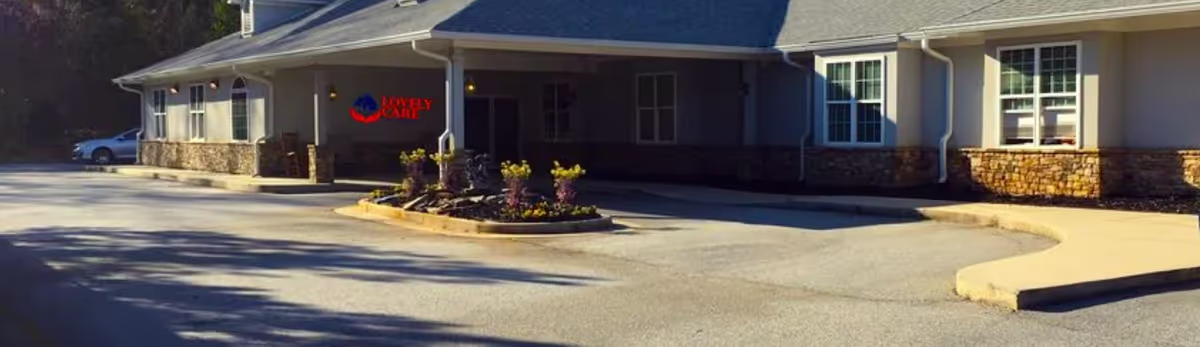
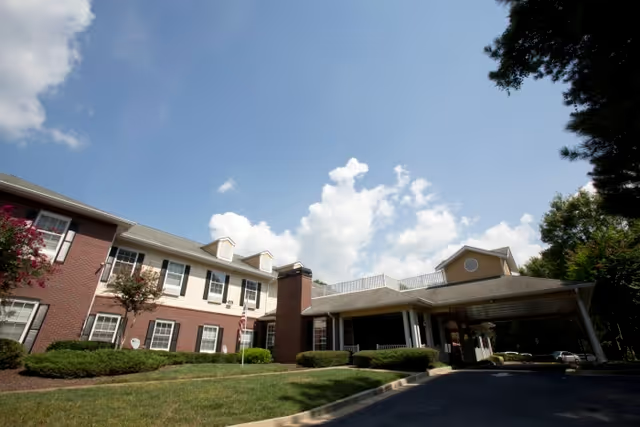
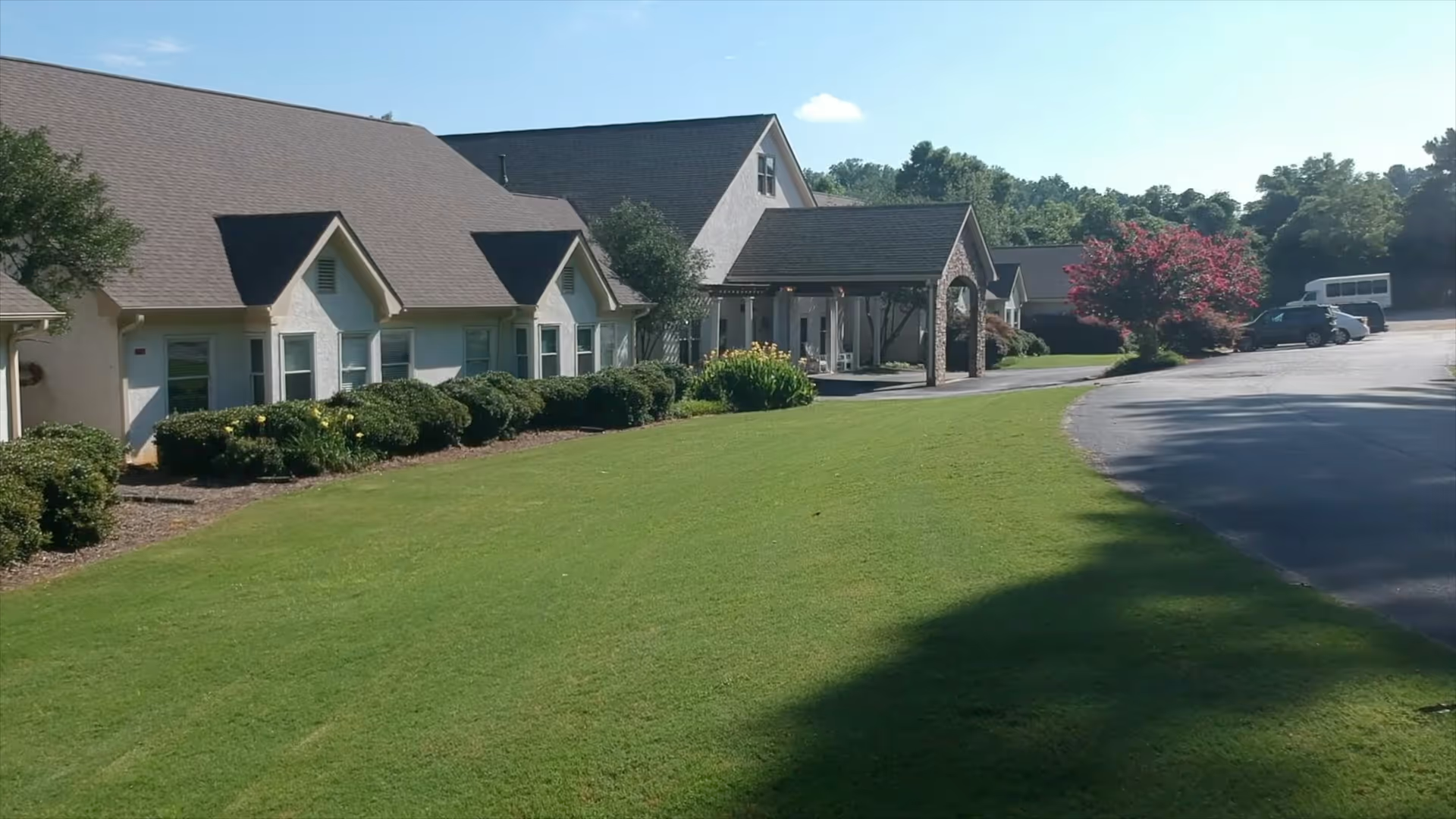
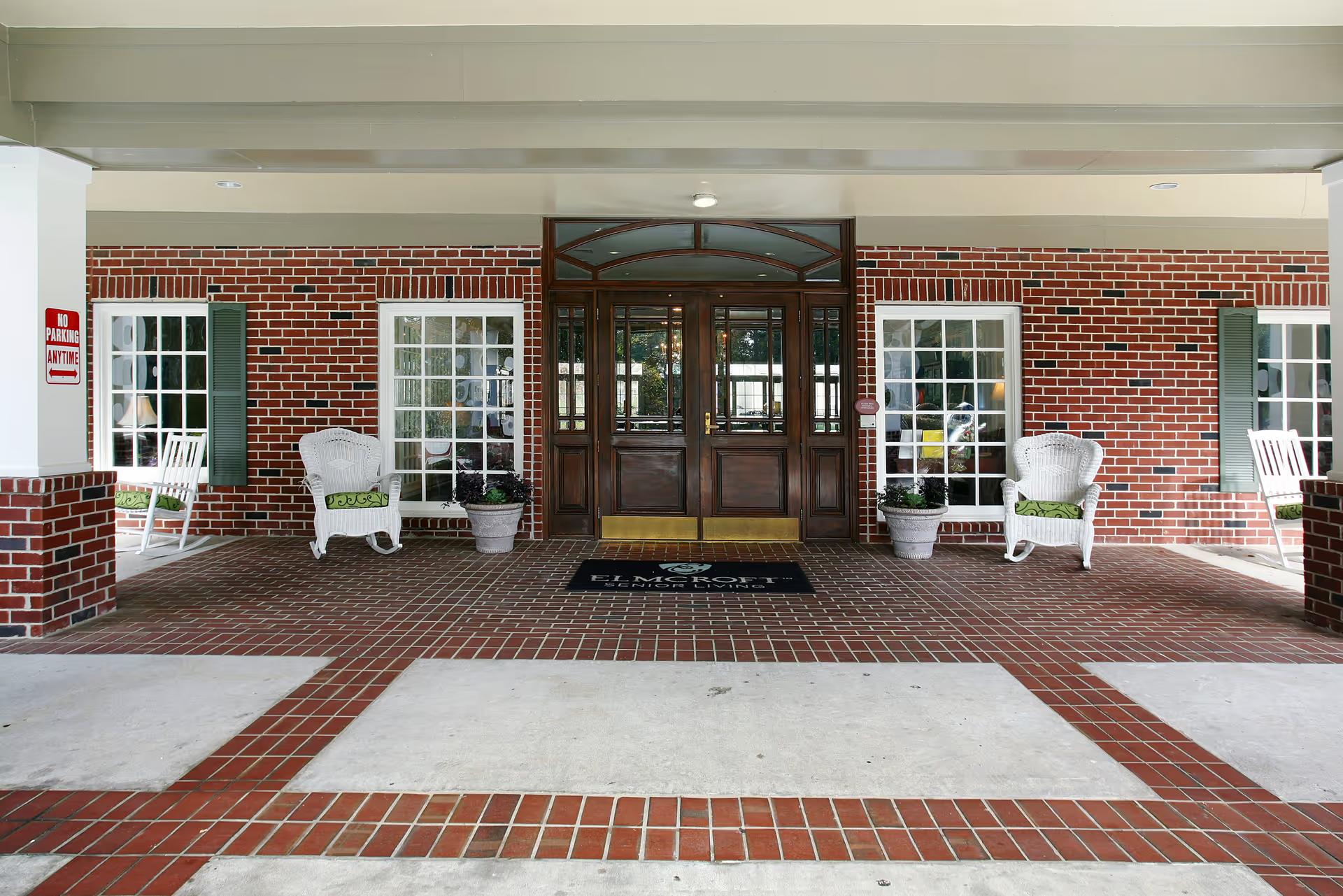
Overall impression Fulton Center for Rehabilitation elicits a mixed set of impressions: reviewers cite a number of individual staff members and clinical services that families found helpful, while also describing recurring operational and environmental problems that appear to affect daily care continuity. Positive elements include recent updates to shared spaces, on-site rehabilitation and therapy programming, and front-desk and admissions staff who are viewed as compassionate. At the same time, a pattern of systems-level issues is evident across multiple areas.
Care quality and clinical coordination Care concerns focus on inconsistent personal-care routines, delays in attending to resident needs, and gaps in clinical continuity. Families described delays or failures in responding to call lights, variability in bathing and incontinence care, and instances of missed or late medication administration. Reviewers also noted weekend limitations in wound and specialty care. While some nurses and therapists are identified as attentive and effective — with isolated reports of clinical improvement for individual residents — the overall pattern suggests uneven staffing and inconsistent clinical oversight.
Staff conduct and communication Comments about staff are polarized: multiple reviewers praised specific employees and shifts, while others raised concerns about staff responsiveness, on-shift cellphone use, and the tone of interactions with families. Communication and billing interactions were singled out as adversarial in some accounts. These mixed impressions point to variability in staff training, supervision, and customer-service practices across the facility.
Dining and dietary management Food quality and dietary management are frequently criticized. Reviewers described unappealing meal presentation and concerns about appropriate nutrition for residents with medical dietary needs (for example, diabetes and food-allergy management). Allergy-safety processes and special-diet accommodations appear to require clearer protocols and monitoring.
Activities, amenities, and therapies Therapy services and the rehabilitation area are noted as strengths; some families reported observable benefit from therapy interventions. Conversely, activity programming, in-room entertainment, and outdoor access are described as limited. Many rooms reportedly lack televisions or telephones and opportunities for outdoor or social programming are minimal, which may affect overall quality of life for longer-stay residents.
Facilities, maintenance, and sanitation Reviewers identified recurring concerns about cleanliness, odor control, pest control, and general maintenance. Specific maintenance issues include broken beds or rails, malfunctioning call systems, plumbing or fixture problems, and evidence of deferred upkeep such as rust or mold in storage areas. These maintenance and sanitation-control shortcomings are operational weaknesses that can affect resident safety, comfort, and infection-prevention practices.
Management, oversight, and logistics Several comments indicate challenges with transportation coordination, discharge planning, and administrative responsiveness. There are also allegations concerning regulatory or financial wrongdoing that prospective families should investigate further through official channels. Taken together with the operational weaknesses described above, these items suggest room for strengthened clinical oversight, clearer administrative processes, and improved transparency.
Recommendation for prospective families Families considering this facility should schedule an in-person tour focused on current conditions and ask for documentation on staffing ratios, medication-administration protocols, infection-control practices, pest-control records, and recent inspection findings. Verify how the facility manages dietary restrictions and allergies, how therapy goals are measured, and what contingency plans exist for weekends and off-shifts. Given the mix of positive staff experiences and systemic concerns, an on-site review and direct conversations with leadership and clinical staff will provide the best basis for a placement decision.