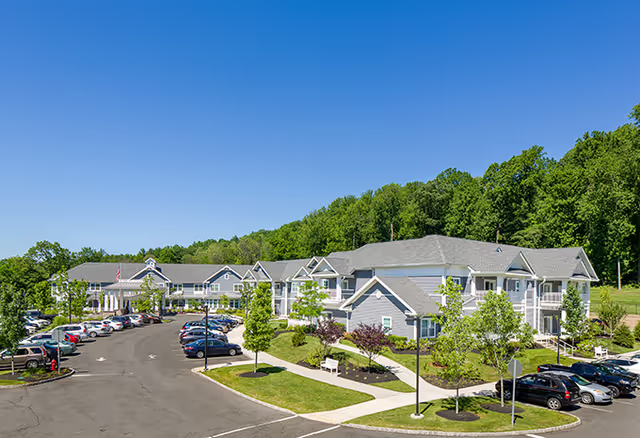
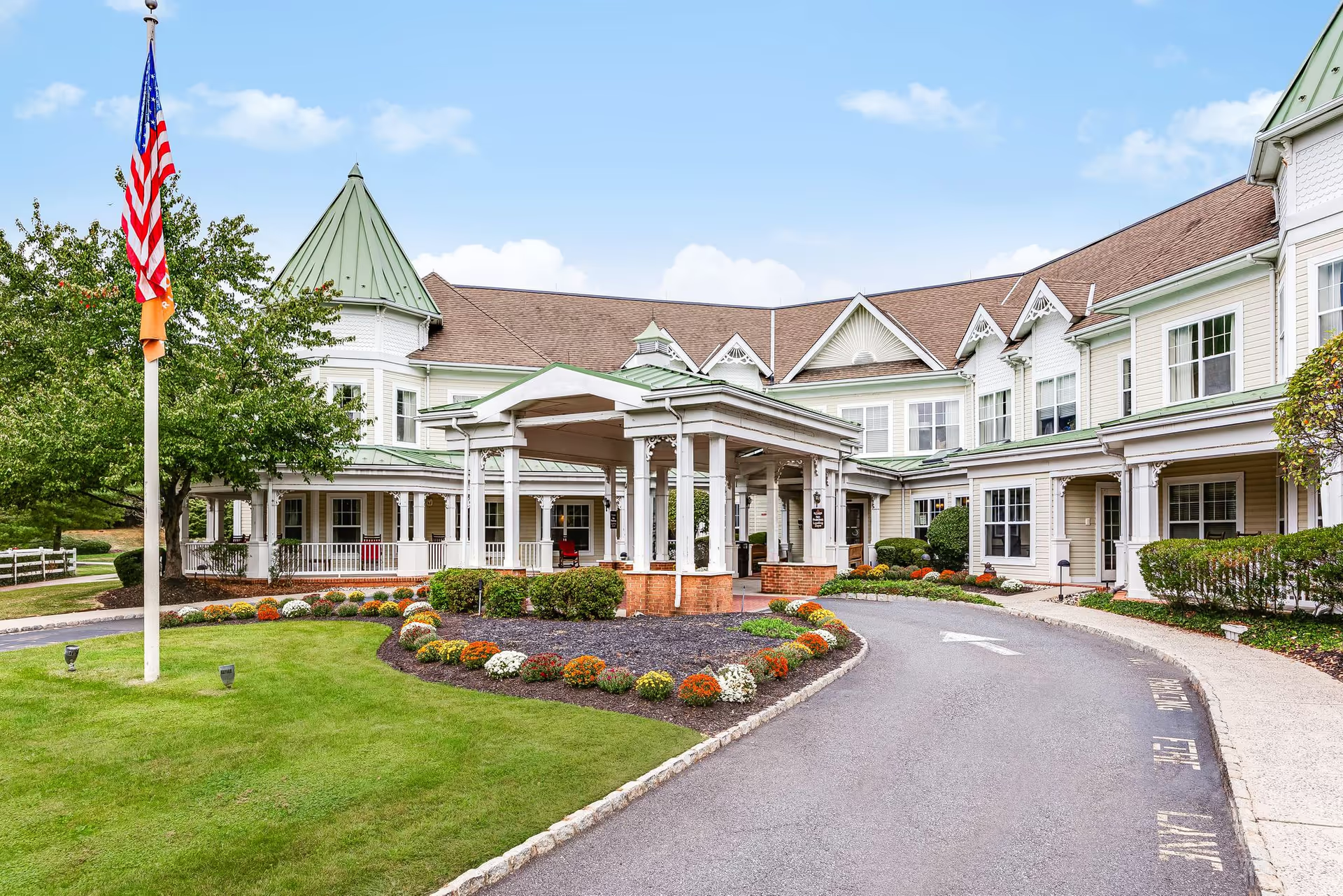
The reviews present a mixed but informative picture of Hartwyck at Oak Tree. Strengths most consistently described relate to clinical rehabilitation, staffing, and daily programming. Several accounts indicate that the facility provides comprehensive therapy services and a structured transitional program that have supported measurable gains in mobility and activities of daily living. Families and residents also described attentive, competent caregiving staff and a staffing level that enables frequent resident attention. The facility layout — with therapy space, recreation rooms on each floor, and an on-site cafeteria — supports both rehabilitation and social engagement.
Care and staff behavior were prominent themes. Many reviewers praised staff professionalism, responsiveness, and inclusion of residents in activities, and some highlighted notable recoveries and regained independence. At the same time, there are indications of variability in staff conduct and perceived care consistency; some reviewers described experiences that contrasted with the generally positive accounts. This pattern suggests that quality and communication can vary by unit, shift, or individual caregivers, and prospective families may benefit from asking about staff-to-resident ratios at different times of day and the facility's staff training and supervision processes.
Dining, activities, and rehabilitation are clear strengths. Reviewers noted healthy meal offerings, regular games and recreation, and accessible therapy services including a physical-therapy center. The environment appears to support a social setting with spaces for visitors and family interaction, and the location is described as convenient and guest-friendly. The facility's services appear particularly suited for short-term rehabilitation and transitional stays focused on restoring independence.
Facility and management issues are areas to investigate further. Several reviewers raised sanitation and pest-control concerns, including at least one serious room-level incident; this points to an operational gap in environmental services and pest management that should be clarified. The campus is said to have limited outdoor green space and sits on a major road, which may affect noise and ease of outdoor activities. Room configurations include semi-private options, which may not meet privacy preferences for all residents. Additionally, infection-control responses (notably restrictive room-access or one-at-a-time entry policies during a COVID event) were reported; while such measures can be appropriate during outbreaks, families should confirm current visitation policies and how the facility balances infection prevention with family access.
Overall, Hartwyck at Oak Tree demonstrates strong capabilities in rehabilitation, staffed care, and programming, producing positive outcomes for many residents. However, variability in care experience, environmental-service shortcomings, limited outdoor space, and visitor-access protocols were also described. Prospective residents and families should schedule an on-site tour, review recent inspection and pest-control records, ask about current staffing patterns and staff training, and clarify visitation and infection-control procedures to determine alignment with their priorities.