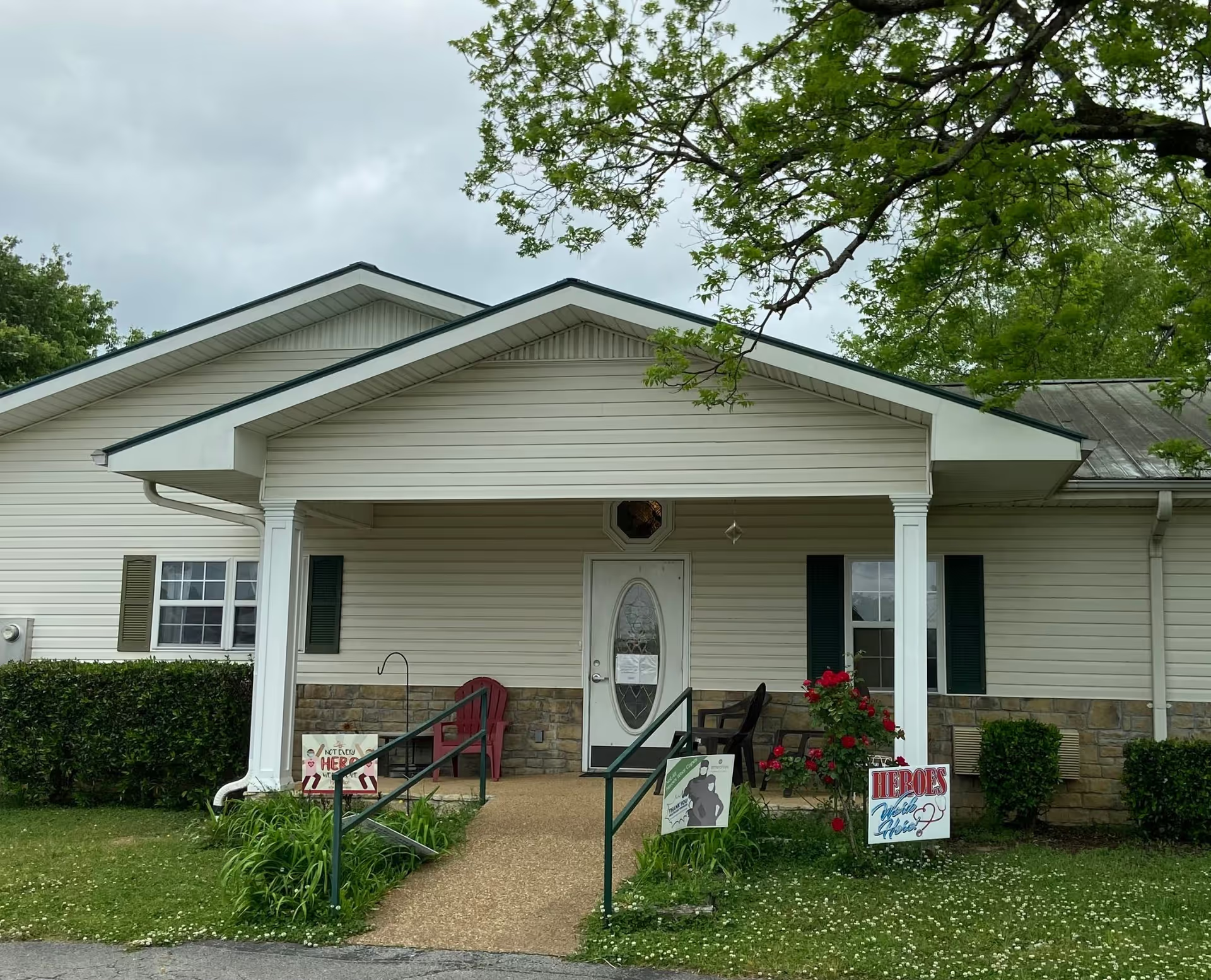
The Neighborhood at Sheffield is described largely as a well-kept, activity-rich assisted living community with staff who provide personalized, compassionate attention. Many families emphasize strong communication with staff, respectful interactions, and a secure environment that supports resident independence. The physical environment is frequently noted as clean and attractive, with natural light in dining areas, a large courtyard and screened porch, and a range of on-site amenities including an in-house beauty shop, laundry, fitness equipment, and private dining options. Room configurations that include kitchenettes and courtyard views are frequently mentioned as positives, and some reviewers cite the initial pricing as competitive value.
Care and staffing are among the community's strongest assets: reviewers commonly describe attentive caregivers, individualized assistance with dressing and bathing, and staff who keep families informed about health changes. That said, there is evidence of inconsistency in service continuity tied to staffing and leadership changes. Several accounts describe variability in responsiveness to daily needs (for example, reminders to eat or differences in assistance levels), suggesting that care quality can fluctuate depending on staffing and management stability. Medication and clinical management are generally viewed positively by many families, though variability in clinical consistency is noted by others.
Dining experiences receive mixed feedback. The dining room and food service are praised for atmosphere and presentation by many reviewers, and some describe nutritious, enjoyable meals. Conversely, other reviewers raise concerns about food quality and portion sizes, indicating variability in meal satisfaction across residents and time. Private dining and special meal options are available, but prospective families should ask specific questions about current menus, portion policies, and accommodation of dietary needs.
Activities and social life are standout features. The community offers a broad calendar — board games, trivia, bridge, bingo, theatre nights, exercise and mind-stimulation programs, arts and crafts, and yard games — and staff-run transportation for outings. The variety supports both active residents and those who prefer quieter in-room activities like reading or puzzles; an engaged activities coordinator and multiple large activity spaces contribute to a strong social environment.
Facility-level strengths include cleanliness and upkeep of common areas, attractive communal spaces, and useful in-room features such as kitchenettes. However, housekeeping and room-cleaning consistency have been flagged as an operational weakness in some accounts. Ongoing renovations are also a recurrent theme: while the ownership is upfront about updates, construction activity has occasionally caused disruption and aesthetic inconsistency during transitional periods.
Management and policy features to probe further include leadership turnover, an upfront non-refundable fee, apartment size and furnishing expectations, and the lack of an on-site memory-care unit. There are also isolated but serious allegations concerning management-driven cost-cutting and pressure to transition residents to higher levels of care; these are not presented as a systemic finding here but warrant direct inquiry during a visit. Pricing is described as competitive by some and costly by others, so prospective residents should request an itemized fee schedule and clarification of what is and is not included.
Overall, The Neighborhood at Sheffield presents as a community with strong social programming, attentive staff, and well-maintained amenities that many families find highly satisfactory. At the same time, variability tied to leadership changes, housekeeping and food-service consistency, renovation disruption, and limits to memory-care services are recurring themes. Prospective residents and families should tour the community, ask about current staffing stability, renovation timelines, memory-care options, meal-service policies, housekeeping schedules, and the facility's fee structure to assess fit and current operational status.