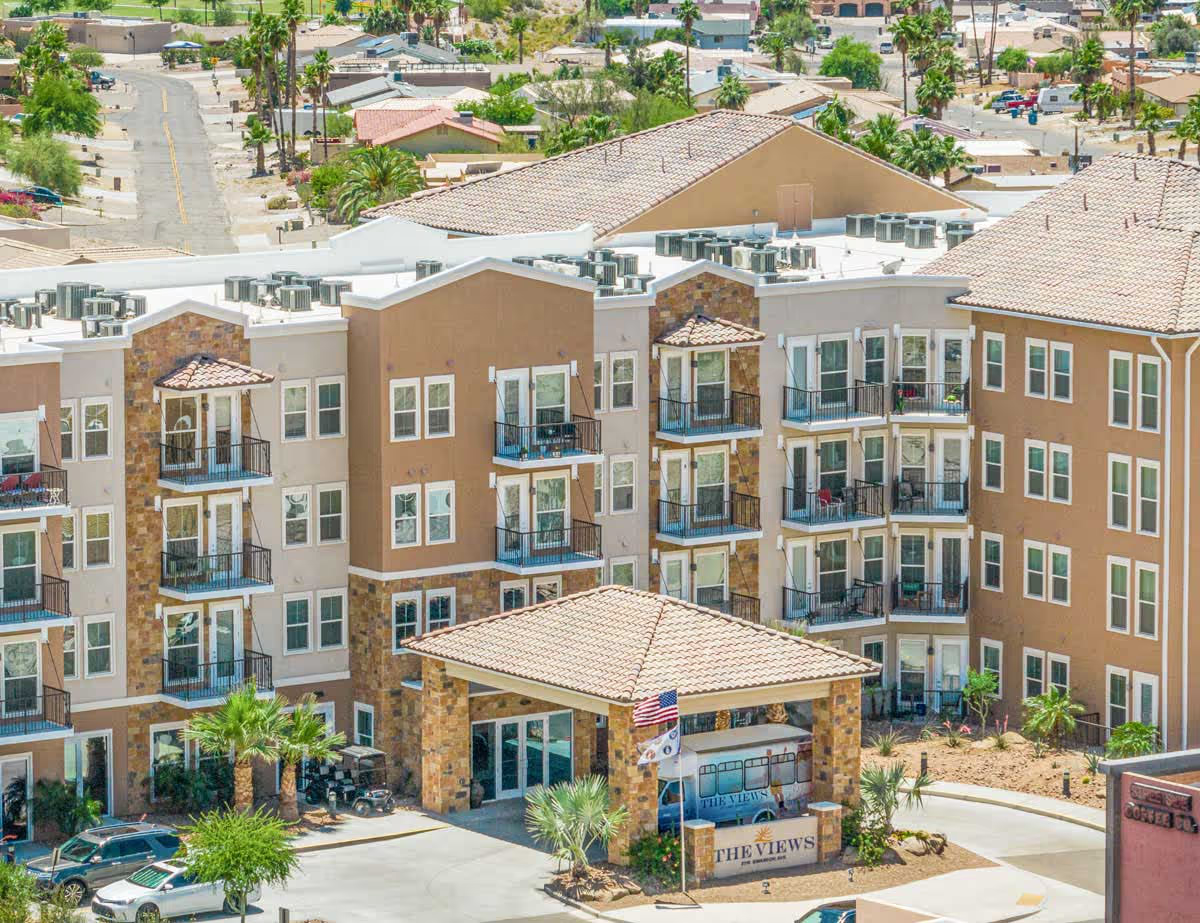
Reviews of White Cliffs Senior Living present a mixed picture: many families and residents praise the facility’s atmosphere, amenities, and frontline staff, while others raise significant concerns about clinical operations, management responsiveness, and consistency of care. The property itself is consistently described as clean, newly maintained, and hotel-like, with plentiful communal spaces (restaurant-style dining room, bistro, theater, fitness area, salon, and library) and an active calendar of social and recreational programming. Transportation services, helpful admissions staff, and routine housekeeping and laundry add to the community’s convenience and appeal.
Care quality and clinical oversight are areas of divergence in the feedback. Positive accounts emphasize attentive, compassionate caregivers, prompt routine monitoring, and successful transitions for many residents. However, a set of operational weaknesses recurs in critical reviews: inconsistent care across units (notably differences between assisted living and memory care), concerns about medication administration and record-keeping, delays in personal-care routines such as bathing assistance, and reports of sanitation and incontinence-care issues. These concerns have prompted regulatory attention in the form of ADHS citations and formal care complaints, and reviewers describe specific failures that suggest gaps in clinical protocol adherence and incident response.
Staffing and communication patterns are similarly mixed. Numerous reviews single out individual employees and frontline teams as caring, responsive, and above-and-beyond in their approach; tour staff and certain administrators receive frequent praise. At the same time, reviewers describe staffing shortages, night/day handoff problems, staff turnover, and instances where responsibility was deflected between shifts or departments. Management and corporate responsiveness is a repeated concern: families reported difficulty getting timely answers, perceived lack of accountability, and dissatisfaction with how complaints were handled. These managerial issues compound resident-family frustration when care gaps or adverse events occur.
Dining and hospitality receive both strong praise and critique. Many residents describe the dining room experience as restaurant-quality and compliment the bistro, desserts, and attentive servers; other reviewers cite inconsistent meal quality, missed or poorly timed meal service, and occasional service pacing problems. Activities programming is uniformly a strength — reviewers note a broad array of offerings that support social engagement, outings, and meaningful daily routines — and the facility’s aesthetics and common-area amenities are frequently highlighted as a positive influence on resident quality of life.
Important operational considerations for prospective residents and families include verifying current staffing ratios and turnover trends, asking for details about medication-administration protocols and clinical oversight in memory care, reviewing the facility’s regulatory history and corrective-action plans related to ADHS citations, and confirming technology and infrastructure availability (resident Wi‑Fi and television services). Also discuss the facility’s ability to support higher-acuity needs or hospice care, the reliability of call/monitoring systems, and procedures for personal-property security. In-person visits, direct conversations with nursing leadership, and requests for recent inspection records will help clarify whether the community’s strengths align with an individual resident’s care needs.