Sandridge Post Acute presents a highly mixed profile across families and residents. A consistent strength across many accounts is the activities and therapy programming: reviewers repeatedly praise an active, creative activities department (notably strong leadership), frequent outings, social events, arts-and-crafts, music therapy, and pet-assisted programming. The therapy teams (PT/OT/ST) and certain clinical specialists — including wound-care nursing — receive frequent positive mention for promoting independence, measurable progress, and confidence during short-term and long-term stays.
Clinical care quality descriptions are varied. Many families describe compassionate, attentive caregivers and effective rehabilitation support. At the same time, several reviews note inconsistent nursing/CNA performance, delays in responding to care requests, and gaps in medication management and clinical documentation. Specific operational patterns raised include concerns about transfer-safety practices, oxygen and equipment readiness, and inconsistent adherence to dietary or disease-specific meal plans. These indicate variability in frontline clinical reliability rather than uniform clinical excellence.
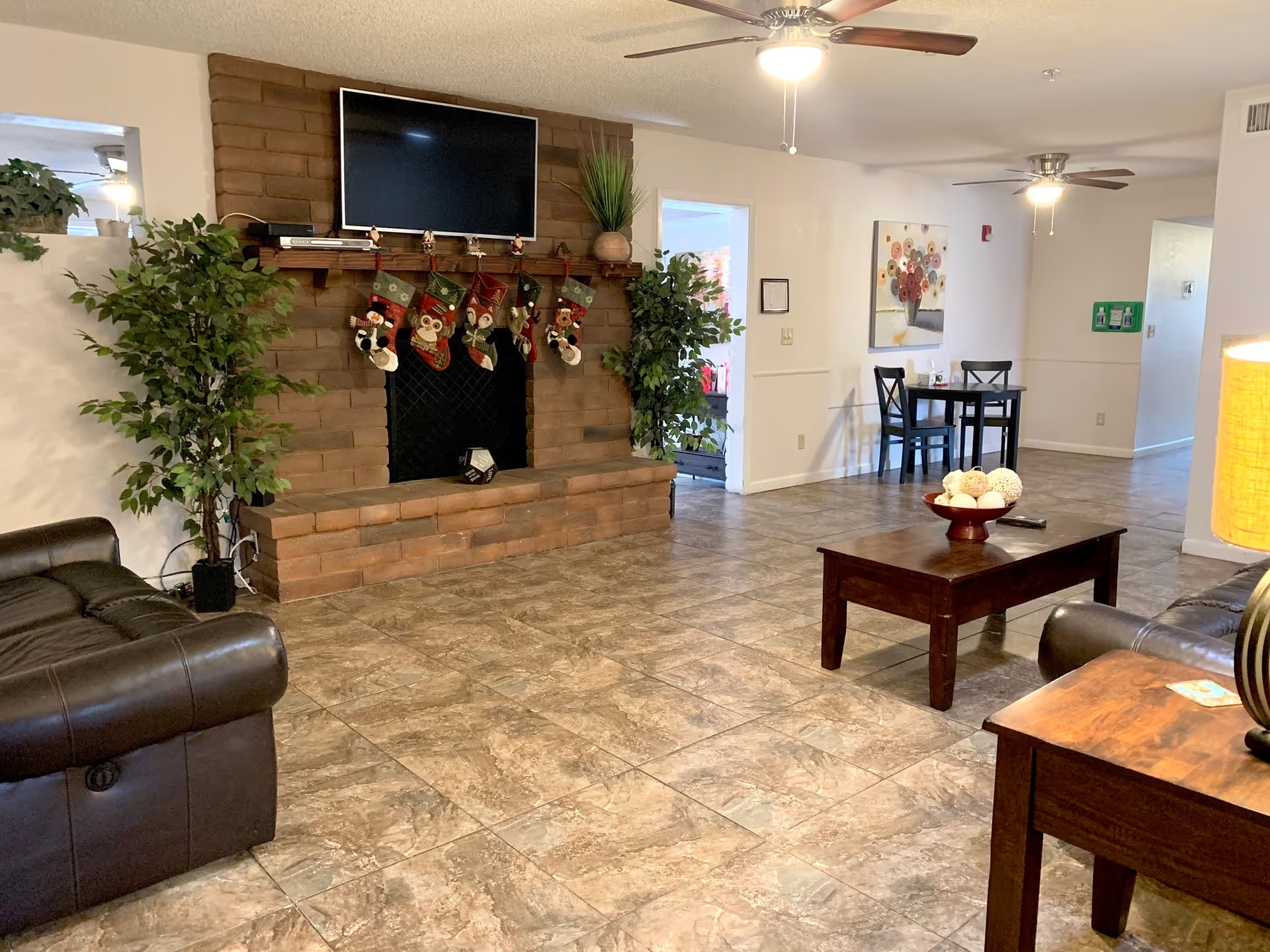
Sanitation, environment, and property management emerge as recurring concerns in a number of accounts. While numerous reviewers describe clean, well-maintained areas and comfortable rooms, other families describe sanitation concerns, odor issues in portions of the facility, laundry problems, and instances of missing or mishandled personal belongings. These contrasts suggest unit-level variability in housekeeping and property controls.
Communication and administration present a similar polarity. Several families praise welcoming admissions, helpful staff, and responsive therapy/management. Conversely, multiple reports describe delayed or absent family notification regarding discharges or transfers, inconsistent shift communication, payroll and scheduling problems, and allegations of privacy-policy breaches with limited corporate follow-up. Staffing reliability and scheduling continuity are frequent operational weaknesses cited and appear to drive many of the adverse experiences.
For prospective residents and families, the notable pattern is variability: strong programming, therapy, and individual caregivers can produce excellent experiences, while inconsistent staffing, cleanliness, medication/dietary adherence, and communication can produce significant concerns. When evaluating the facility, consider focused questions about staffing ratios, call-response times, medication-safety protocols, laundry and property procedures, sanitation practices, and how the facility documents and communicates incidents and discharges. A site visit that includes observation of activity programming, dining, and housekeeping practices — plus discussions with therapy and nursing leadership — may help clarify whether the facility’s strengths are present and consistent for the unit where placement is contemplated.