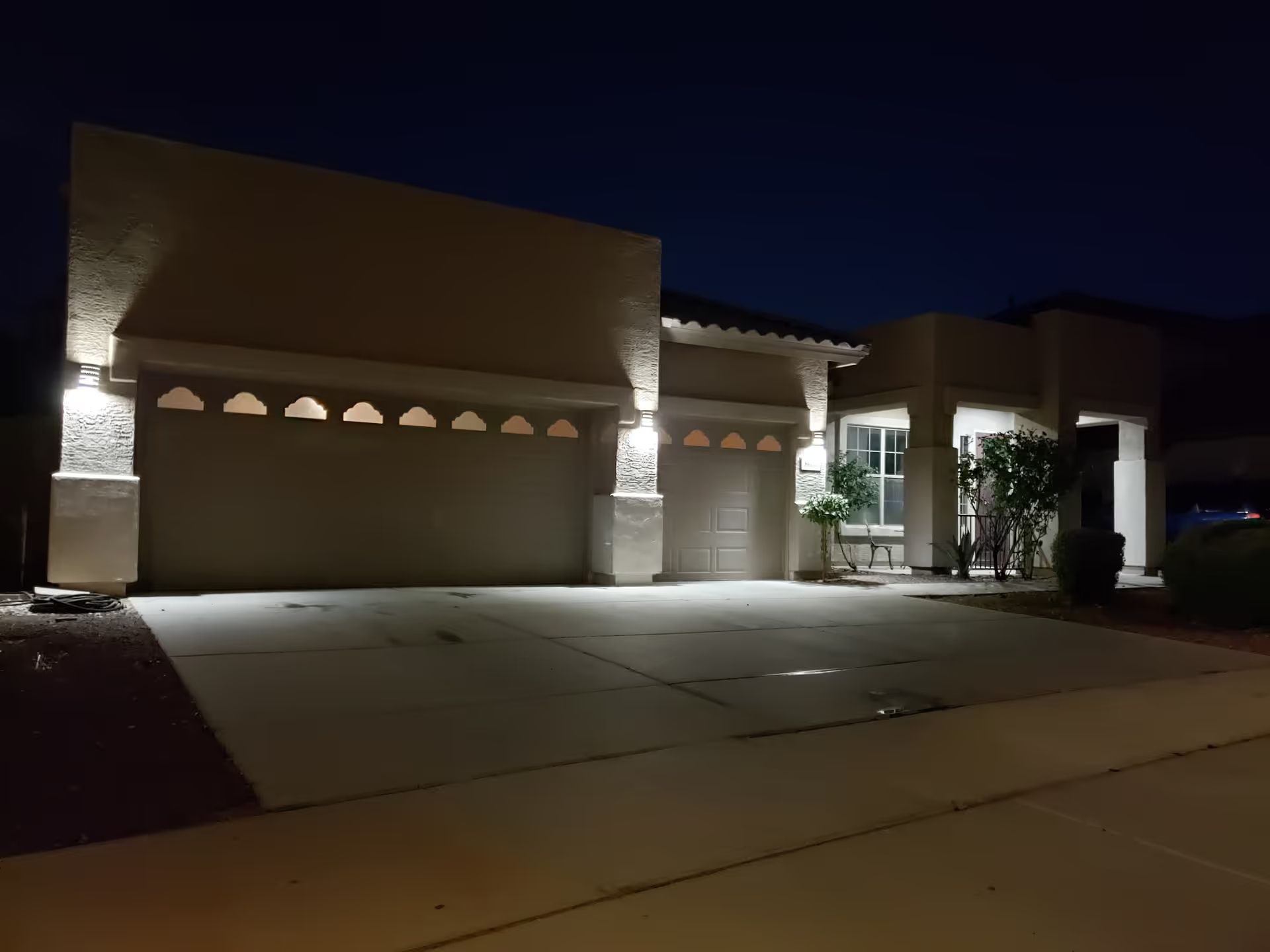
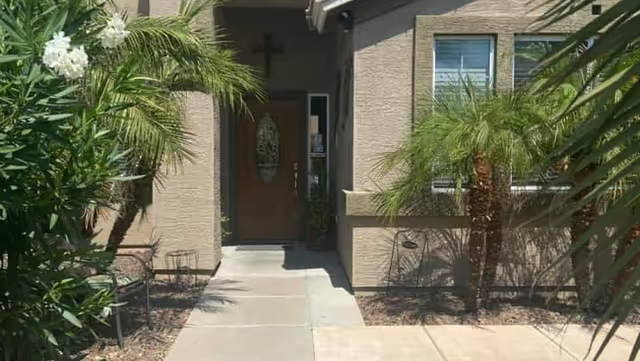
The Mission at Agua Fria presents as a physically attractive, recently built community with a wide range of resident amenities. Reviewers consistently describe a well-kept interior, spacious and accessible apartment designs, on-site conveniences such as in-room internet, multiple activity spaces, a large-screen theater and exercise areas. Many families and residents praise the social atmosphere: organized events, live music, arts and crafts, and opportunities that help residents form friendships. The community also provides a memory-care option and several accounts highlight admissions staff and individual caregivers who facilitate smooth transitions and responsive advocacy on residents’ behalf.
Care quality descriptions are mixed. Numerous accounts highlight compassionate, attentive caregivers and med-techs who go above and beyond to resolve clinical and logistical issues. At the same time, there are recurring operational concerns: understaffing and high turnover appear to contribute to delayed assistance, uneven clinical responsiveness and challenges in wound-care oversight. Some reviewers characterized the facility as well suited for moderately independent residents but less able to sustain stable care for higher-acuity needs. There is also one or more serious claims regarding medication control; these are reflected here as allegations and should prompt direct inquiry during family visits and reference checks.
Dining and nutrition drew contrasting impressions. Several reviewers praised strong meal quality, fresh pastries and a pleasant dining environment. Others reported a decline in menu variety and consistency following management changes and noted a dining policy that expects residents to come to the dining room rather than receive meals in-room. Those planning for limited-mobility residents should confirm current dining protocols and meal options.
Activity programming is frequently cited as a strength when present: arts, painting, games, wine tastings, and frequent entertainment are highlighted. However, activity availability and coordination also appear inconsistent across experiences—some families reported robust calendars and a proactive activity director, while others described periods with minimal programming. Prospective residents should review the current activity schedule and staff assignments to assess stability.
Management and operational patterns account for much of the variability described. Multiple reviewers noted leadership changes, communication shortfalls between administration and families, and a front-desk/customer-service tone that can vary from warm to brusque. Transportation services are described as limited at times. Safety concerns were raised around monitoring and elopement-prevention practices, and there were accounts that led to concerns following a resident’s death; these items indicate areas to explore with management and in regulatory records. Additionally, some reviewers identified problematic resident-to-resident social dynamics, including pressure around lending money, which suggests the need for active social oversight.
In summary, The Mission at Agua Fria offers many attributes families commonly seek—modern facilities, a varied activity slate, friendly caregivers, and comfortable living spaces—but the experience appears uneven and sensitive to staffing levels and managerial stability. Prioritize direct questions on current staffing ratios, medication-control procedures, wound-care protocols, activity staffing, dining policies for roombound residents, transportation frequency, and recent leadership tenure during a tour. Reviewing inspection histories and speaking with current families can help clarify whether the operational weaknesses noted in some accounts have been addressed.