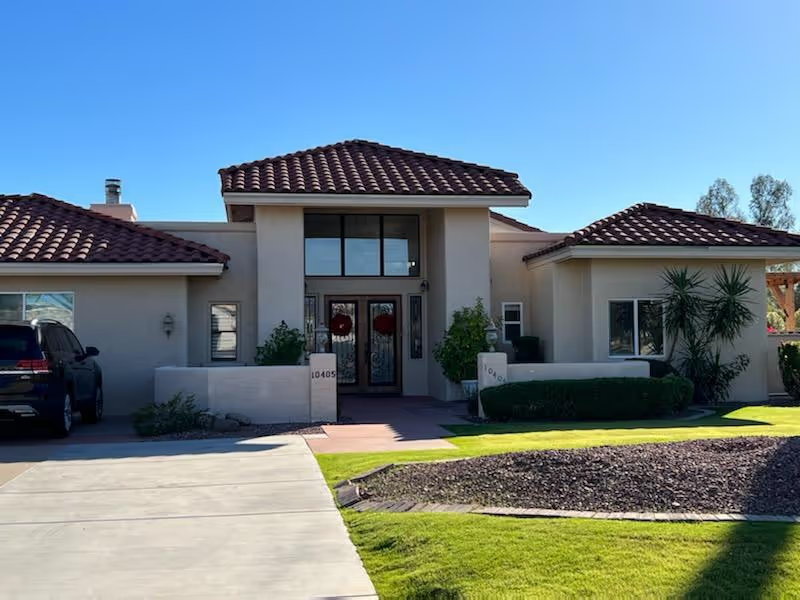
Reviews of Amber Creek Inn Memory Care Community present a mixed picture. Many families describe a modern, clean, and well-appointed facility with strong memory-care expertise and a warm, home-like atmosphere. Positive themes include compassionate, attentive caregivers and nursing staff, on-site clinical resources (mobile x‑ray, physicians, podiatry), and a secure single-floor layout with an attractive courtyard. Residents are often reported to be socially engaged, participating in music, gardening, and other programming, and several families praised smooth move-ins, roomy private rooms that can be personalized, and visible small touches that support quality of life.
At the same time, a recurring cluster of operational concerns appears across the reviews. Staffing levels and workload constraints are repeatedly described as limiting caregivers’ ability to complete routine tasks; reviewers cite missed bathing and ADL assistance, insufficient supervision that can contribute to falls, and high turnover among activities staff and leadership that undermines program continuity. Relatedly, several families noted inconsistent communication from management and gaps in incident-notification practices, which can leave families feeling uninformed about injuries or changes in condition. There are also multiple comments about variability in staff training and conduct, including language barriers and uneven caregiving approaches.
Clinical governance and documentation are another area of concern. Reviewers described issues with medication-management controls (missed medications, unclear use of psychotropic medications for behavior), and a reliance on non‑integrated or paper-based records that complicates continuity of care. Dining experiences were mixed: some reviewers praised appealing menus and improved offerings under new kitchen leadership, while others found food quality inconsistent. Activity programming is generally seen as a strength when staff continuity exists, but some families reported cancellations of field trips, reduced live-music events, and variability in the level of mental stimulation provided.
Management and organizational culture appear to influence the resident experience. Several families attributed uneven performance to leadership changes, and some expressed concern that business priorities can affect care decisions. A small number of reviews describe serious allegations that led to police involvement; these accounts are distinct from the general operational issues but contribute to the polarized overall impression.
For families considering Amber Creek Inn, the facility’s physical environment and the quality of many front-line caregivers are clear strengths. Prospective residents and their representatives would be prudent to ask specific, operational questions during a tour: current staffing ratios (day/night and for memory care), turnover rates for activities and nursing leadership, medication‑management policies and documentation practices (including electronic medical record adoption), incident-notification protocols for families and POAs, examples of consistent activity schedules and off‑site outings, and contractual or financial practices that could affect care timing. A focused visit that checks for staff engagement on multiple shifts, reviews sample care plans, and discusses how the facility handles transitions in leadership will help families weigh the facility’s strong caregiving attributes against the operational inconsistencies noted in some reviews.