Casablanca Retirement Home presents as a small, homelike facility with strong interpersonal strengths and some operational limitations. Review content indicates a consistently warm, family-style approach to care: staff are described as caring, accommodating, and attentive; management is accessible and praised by families; there is an on-site registered nurse and awake night staff; and families report good communication and a smooth, flexible move-in process. Several accounts highlight positive end-of-life care and that residents were kept clean, well-dressed, and comfortable during their stays.
Care and staffing appear to be genuine strengths in terms of personal attention and responsiveness. Staff are characterized as warm and loving, and the facility’s administrator is frequently singled out for hands-on involvement. Clinical coverage benefits from an RN on staff and an overnight presence. That said, reviewers also describe variability in who is present on any given shift. This suggests the facility may experience inconsistent staffing patterns or scheduling gaps despite generally high levels of staff engagement when present.
Dining and daily living indicators are generally positive: residents are described as eating well and being well cared for. Family communication about care needs and transitions is noted as strong. Activity offerings are present, but there are mixed reactions to the nature and volume of programming. Some accounts describe boisterous or persistent musical activity (harmonica playing) that can create a louder, more party-like atmosphere than some residents or families prefer. Prospective residents should assess whether the social and activity environment matches their preferences.
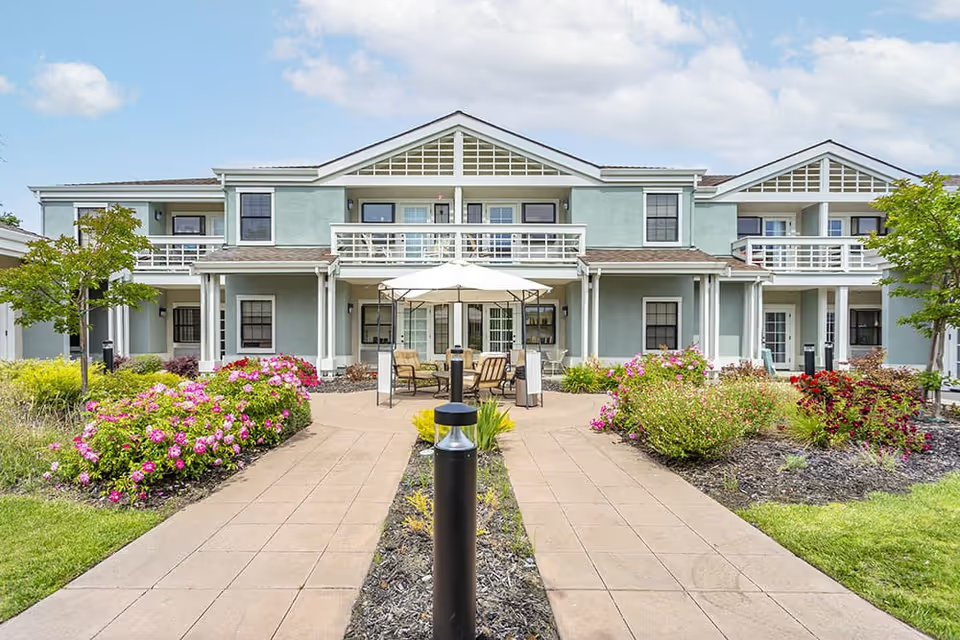
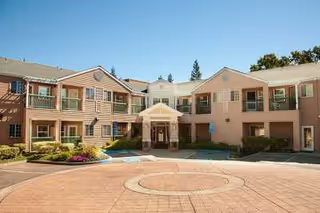
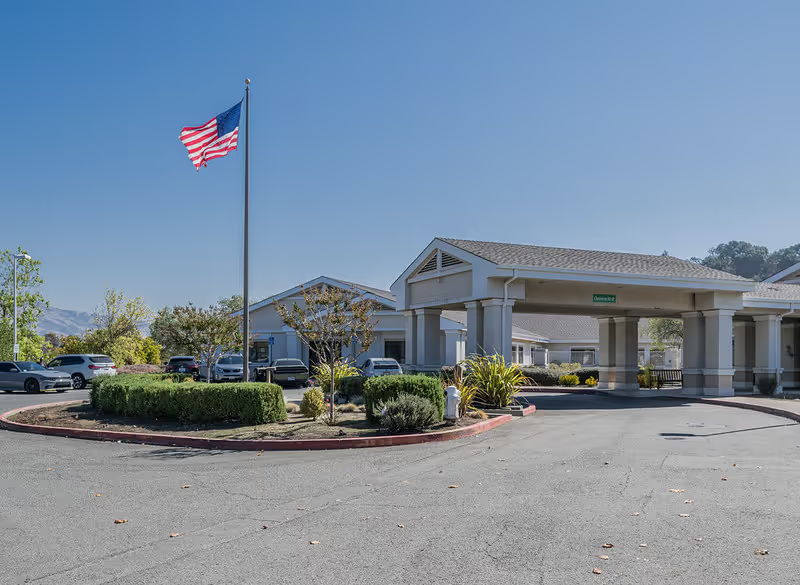
Facilities are small-scale and have several attractive features: large, bright rooms with sparkling presentation, scenic views, and an outdoor balcony. However, there are operational and maintenance concerns tied to the building. Several comments point to aging bathroom fixtures and grout/mildew-related sanitation issues, limited private-room availability (semi-private rooms are common), and constrained accommodation choices because the facility operates at low capacity. Physical access to the upper floor relies on a stair lift, and many residents reportedly remain on the ground level and are escorted when going upstairs, which may limit independent mobility for some residents.
Management and admissions are frequently praised for responsiveness and flexibility; families describe an efficient move-in process and staff who ‘‘bend over backwards’’ to support residents. Overall, Casablanca seems to offer a high-touch, family-oriented care culture with solid clinical coverage, but prospective residents and families should weigh that against operational limitations: possible inconsistency in staff presence, noise-level management, aging bathroom maintenance, limited private-room options, and upper-floor accessibility constraints. When evaluating the community, ask about typical staffing patterns, noise policies and activity schedules, private-room availability and waitlists, and recent maintenance or remediation work on bathrooms and common areas.