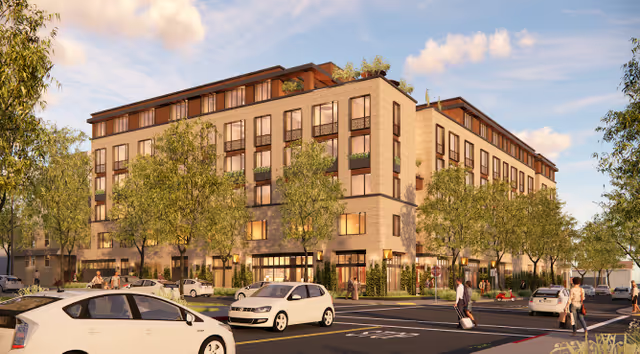
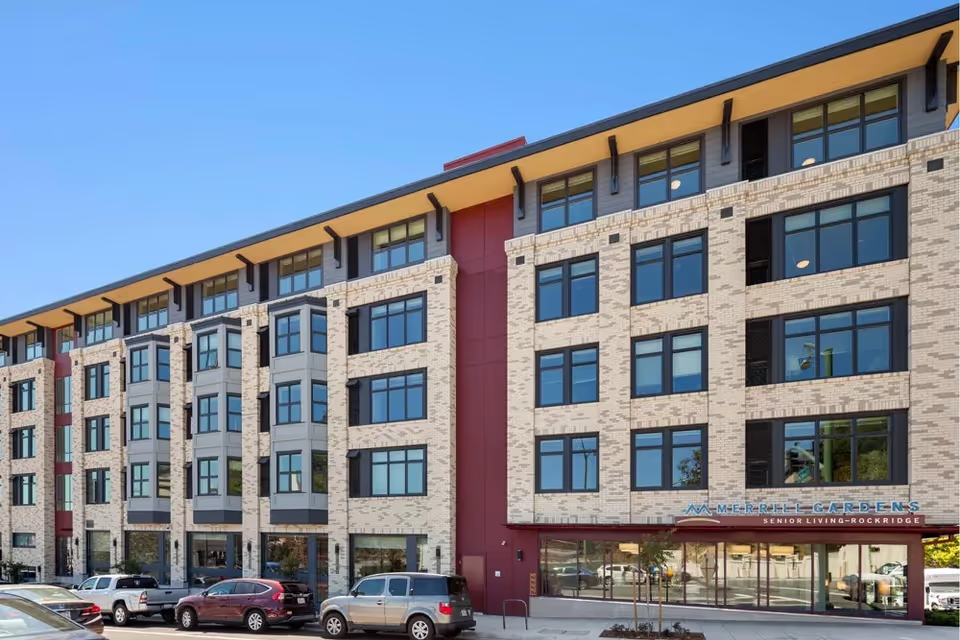
The reviews for Elegance Berkeley describe a facility with clear strengths alongside persistent operational weaknesses. On the positive side, reviewers consistently praise individual caregivers for warmth, compassion, and going beyond expectations; many note meaningful emotional support, attentiveness to residents, and successful transitions for some residents into memory care or rehabilitation. The community’s physical plant—new construction, thoughtfully designed interiors, good views, and comfortable private rooms—receives favorable mention, as do a varied dining program and visible arts- and music-based activities that contribute to resident engagement.
Care quality appears variable: where there is stable staffing and engaged leadership, residents thrive and families report noticeable improvements in mood, participation, and physical recovery. However, reviewers also describe a pattern of staffing instability and frequent management turnover that undermines consistency of care. This instability is associated with gaps in coverage, inconsistent caregiver training and competency, and situations where residents are not transported to communal dining or activities on schedule. Several reviewers specifically called out delays in responsiveness and the effects of short staffing on daily routines.
Dining and activities are both highlighted as strengths and affected areas. Many accounts praise the food quality, themed events, arts classes, live entertainment, and purposeful social hours that support cognitive and social engagement. Conversely, operational staff shortages have led to late meals or in-room service for some residents and intermittent reductions in scheduled programming. Laundry and sanitation management, including linen handling, are cited as operational concerns in a subset of accounts and should be clarified during tours.
Management practices emerge as a central driver of the mixed experience. Families describe episodic positive leadership and hands-on owner involvement, but equally describe leadership churn, poor communication with families, and questions about billing and financial transparency. Notably, reviewers reference a state-level investigation with substantiated complaints, which prompted some families to relocate loved ones; this regulatory history is an important factor for prospective residents to review. Taken together, the pattern is one of a facility with strong individual staff and programmatic assets that is nonetheless hampered by systemic issues—primarily staffing stability, management continuity, communication, and financial transparency.
Practical considerations for prospective residents and families: verify current staffing ratios and turnover rates, ask for written policies on billing and financial practices, review the facility’s responses to regulatory findings and corrective-action plans, and observe mealtime and activity operations during a visit. If stability of leadership and consistent staffing are in place, the community’s physical environment and program offerings suggest it can provide a supportive living experience; if those operational weaknesses remain unresolved, families should weigh the potential risks to continuity of care and value for cost.