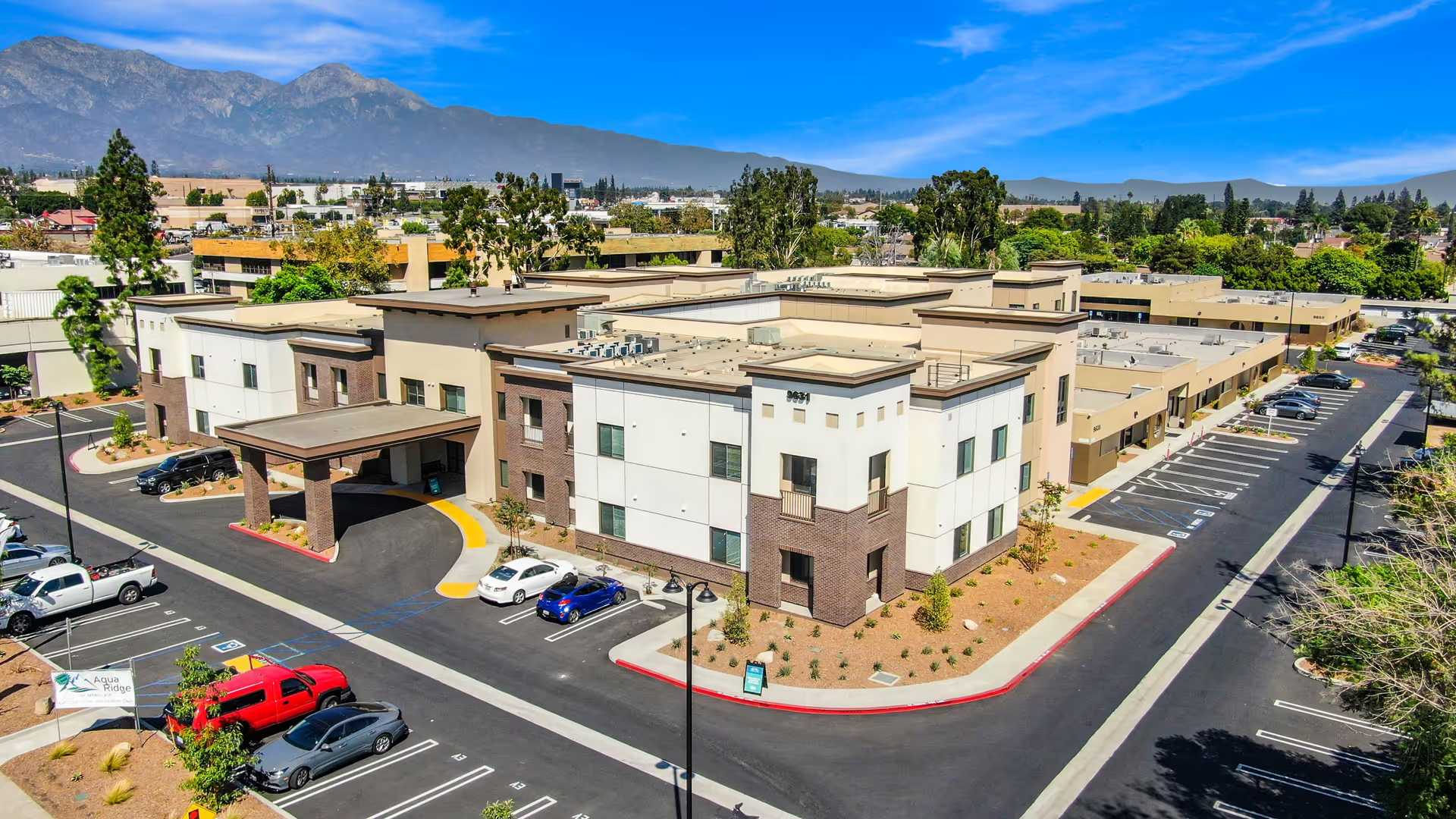
Claremont Manor presents as an upscale, full-service retirement community with numerous strengths alongside recurring operational concerns. Reviewers commonly praise the social and intellectual life of residents and a broad slate of activities: on-site fitness options (pool, water aerobics, weight room), frequent programs and events, and active wellness leadership. Grounds and shared spaces receive consistent positive remarks — recent remodels and a newly updated third floor were highlighted, and many families described the property as clean, well maintained, and resort-like.
Dining and foodservice are a mixed picture. Several accounts describe a dining room that resembles a restaurant, courteous servers, and improvements under a new executive chef. At the same time, there are repeated references to inconsistent food quality, instances of meal components running out, and portioning or nutritional-balance issues. Prospective residents should expect a generally elevated dining environment but also inquire about meal-service processes, peak-meal capacity, and nutritional oversight.
Care and staffing elicit polarized assessments. Numerous reviews commend compassionate, attentive aides, responsive maintenance, helpful administrative and activities teams, and smooth transitions coordinated by admissions staff. However, a subset of reviewers raised serious concerns about gaps in clinical care, delayed or inadequate communication with families after medical events, and variability in nursing competence. Relatedly, several comments indicate staffing shortfalls among support personnel and tensions in staff-management relationships; these suggest uneven staffing consistency and morale that could affect day-to-day service levels.
Housekeeping and operational consistency appear uneven. While many families report clean rooms and prompt maintenance, others described inadequate bathroom cleaning and odor concerns in some common areas. Ongoing renovations and property improvements are visible and have positive long-term impact, but they also contribute to short-term disruption and variability in resident experience.
Management and culture show both strengths and friction. Admissions and transition assistance (including a named contact who was frequently praised) are singled out as helpful and proactive, and maintenance/grounds teams are described as responsive. At the same time, reviewers describe a relatively top-heavy administrative structure and concerns about staff treatment and professional conduct, which relate back to the variability in frontline service quality.
Price and value are important considerations. Claremont Manor is repeatedly characterized as an upscale, higher-cost community; several reviewers noted that the facility may be a good fit for families with the corresponding budget but less accessible for those with limited resources. Memory-care arrangements are available in a separate cottage; while many families observed residents appearing content there, the cottage’s appearance and a $1,000 waitlist fee were noted as drawbacks.
Overall, Claremont Manor offers strong programming, attractive facilities, and many caring staff members, producing a highly positive experience for numerous residents and families. At the same time, prospective residents should conduct targeted due diligence: tour at different times of day, meet nursing leadership, ask about staffing ratios and contingency plans, request recent inspection or survey information, clarify dining capacity and nutritional policies, and inquire about renovation timelines and any fees associated with waitlists or unit types. Those steps will help families weigh the facility’s evident strengths against the operational inconsistencies described by some reviewers.