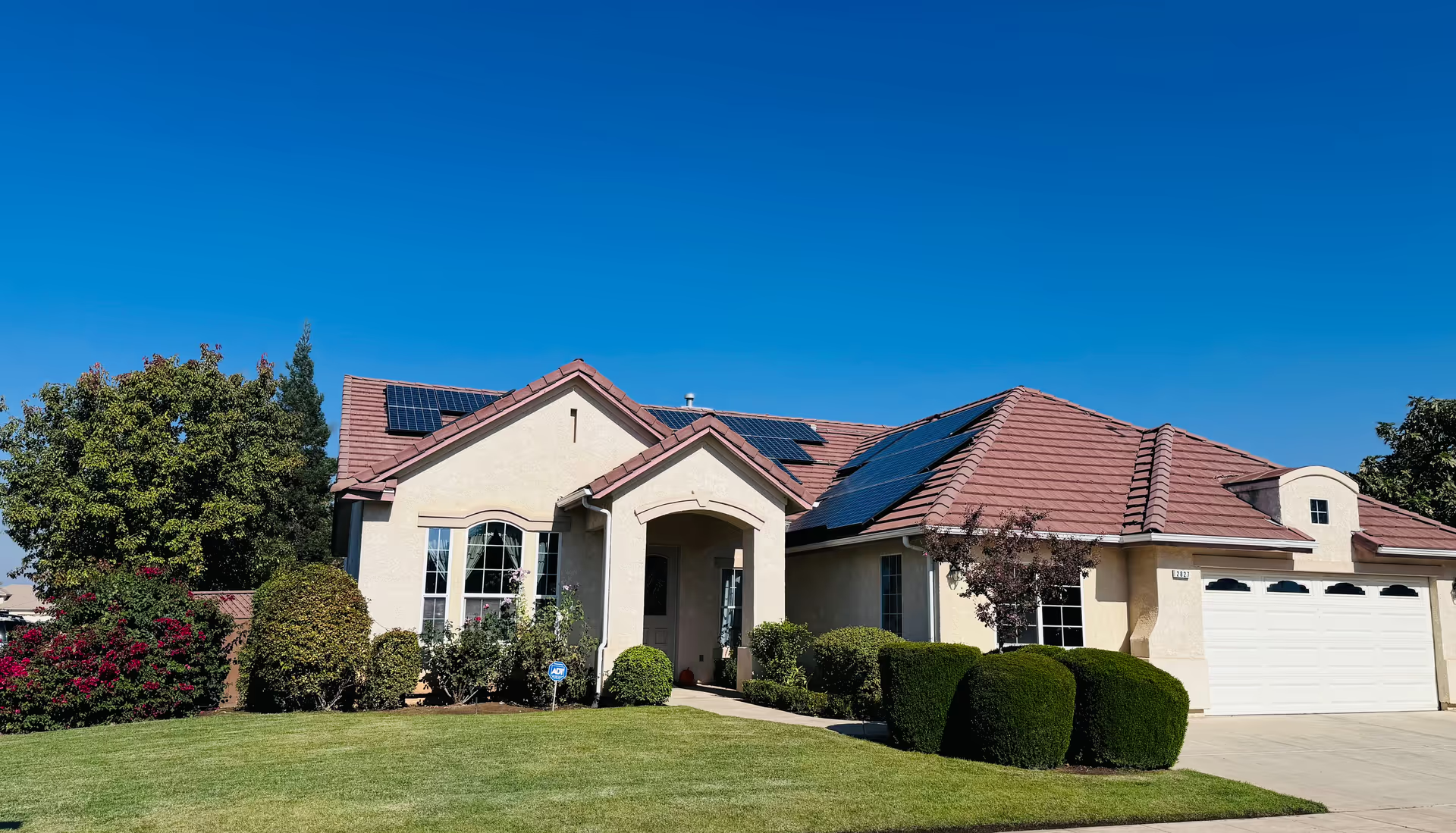
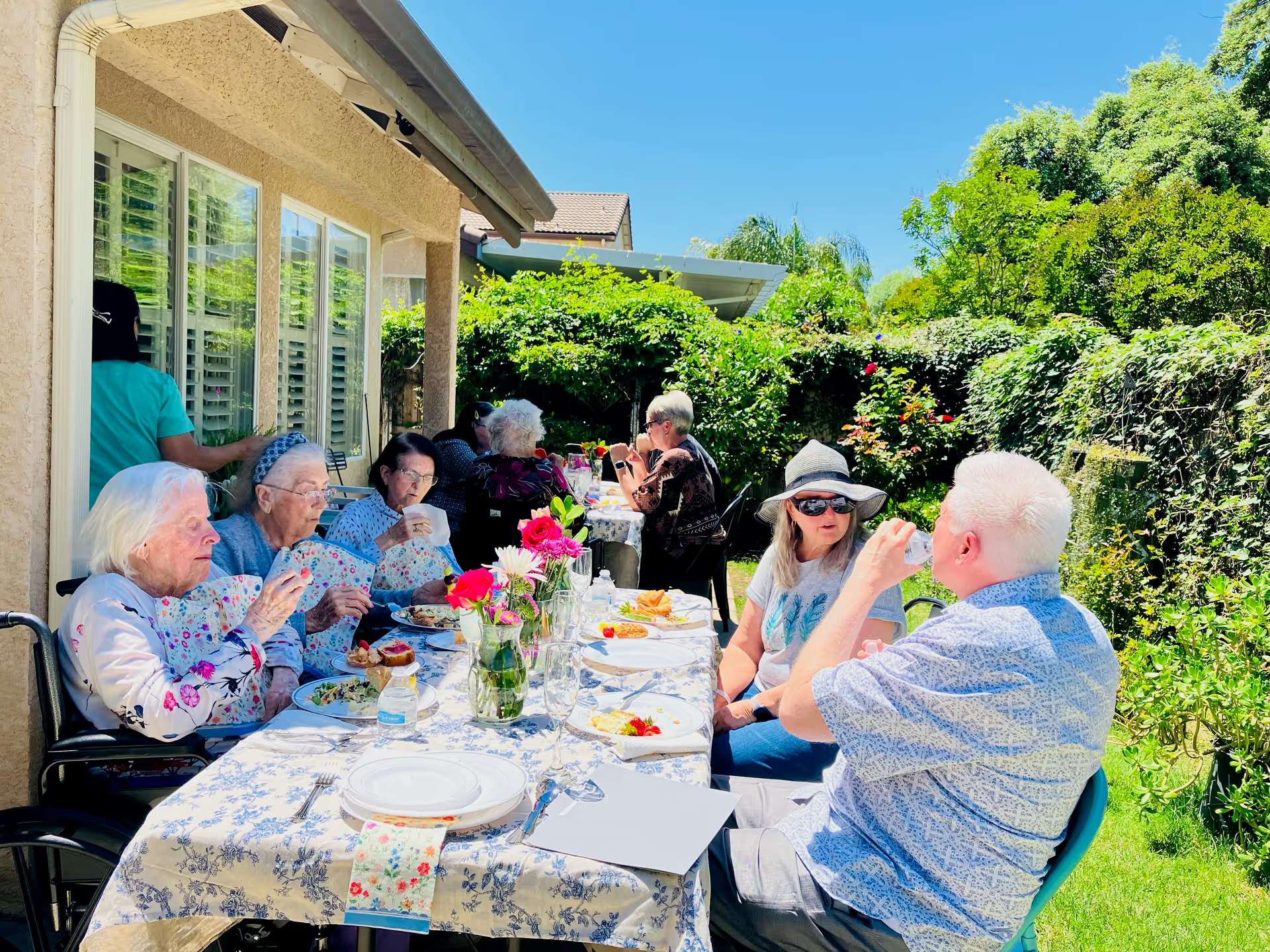
Overall impression: Review summaries present A Place Called Home Residential Care as a small-home provider that emphasizes a family-style, hospitality-oriented approach. Across the summaries, families highlighted consistently positive interactions between residents and caregivers, frequent communication from staff, and management involvement by an RN-owner, all of which are described as contributing to residents’ comfort and well‑being.
Care quality and staff: Care is described as attentive, compassionate, and respectful, with caregivers framed as warm and engaging. Several summaries single out named staff and the RN-owner as particularly involved and responsive. The provider appears to prioritize dignity and individualized attention; dementia-specific care and hospice coordination are noted positively. The emphasis on consistent caregivers suggests strong interpersonal continuity, though that model also implies operational reliance on specific staff members.
Dining and activities: Dining is repeatedly praised — homemade meals, generous portions, and meal presentations likened to restaurant quality. Snacks and small touches (for example, cookies) are mentioned as part of a homelike hospitality approach. Activity programming is referenced positively; residents are described as enjoying structured engagement, and families note that the environment welcomes daily visits.
Facilities and environment: Physical spaces are characterized as clean, well-maintained, and attractively furnished, with welcoming common areas and nicely furnished private rooms. The homes are described as feeling residential rather than institutional, with decor and layout that support socialization and visitor access. Location convenience (proximity to a freeway) is also noted.
Management and communication: Review summaries emphasize responsive management, frequent updates to families, and accommodating approaches to visitation and end-of-life care. The RN-owner presence contributes to family confidence in clinical oversight and in responsiveness to concerns.
Notable patterns and caveats: The overwhelmingly positive tone indicates strengths in personalized care, hospitality, and environment. At the same time, the small-home, owner-operated model has operational implications that prospective families should weigh: limited onsite advanced medical or rehabilitation services compared with larger assisted‑living or skilled‑nursing campuses; reliance on specific staff or owners for continuity of care; and potential variation in amenities or layout across different houses in the provider’s portfolio. These are characteristic trade-offs of a residential model that favors warmth and individualized attention over the broader clinical and programmatic breadth of larger facilities.
Recommendation guidance: For families seeking a homelike setting with strong caregiver relationships, active family communication, and high-quality meals, this provider aligns well with those priorities. For residents with high-acuity medical needs or who require extensive rehabilitation services, clarify onsite clinical capabilities and contingency plans for changes in key staff before finalizing placement.