Reviewers present a polarized view of Morning Star Post Acute, with strong positive reports about direct caregiving and clear operational shortcomings in other areas. Nursing and bedside care are frequently described as compassionate and attentive; many families praised individual nurses and nursing teams for their responsiveness, support of family involvement, and hands-on care. Several accounts highlight successful rehabilitation stays with motivated, therapy-focused teams and good coordination with hospice when needed. Recent management changes and a renovation program are credited with visible improvements in atmosphere, organization, and administrative accessibility.
At the same time, a consistent pattern of operational variability emerges. Therapy outcomes appear uneven: while some stays feature effective, goal-directed rehabilitation, others describe limited therapy engagement and less progress. Communication and staff conduct are likewise inconsistent — some families encountered courteous, helpful staff and an open-door administration, while others experienced dismissive front-desk interactions, staff on personal devices during shifts, and delayed or poor responses to family concerns. These contrasts point to uneven staff performance and training across shifts or units.
Safety, medication, and property-management issues are recurring themes. Reviewers described medication-administration errors, missing prescription items and personal equipment, and situations that suggest weak medication-tracking and property-tracking processes. Relatedly, reports indicate gaps in clinical-incident response and timely family notification after falls or therapy-related events, suggesting room for improvement in incident protocols and communication workflows. There are also mentions of crowded semi-private rooms, vaping/air-quality concerns in patient rooms, and variability in cleanliness and maintenance between areas of the facility.
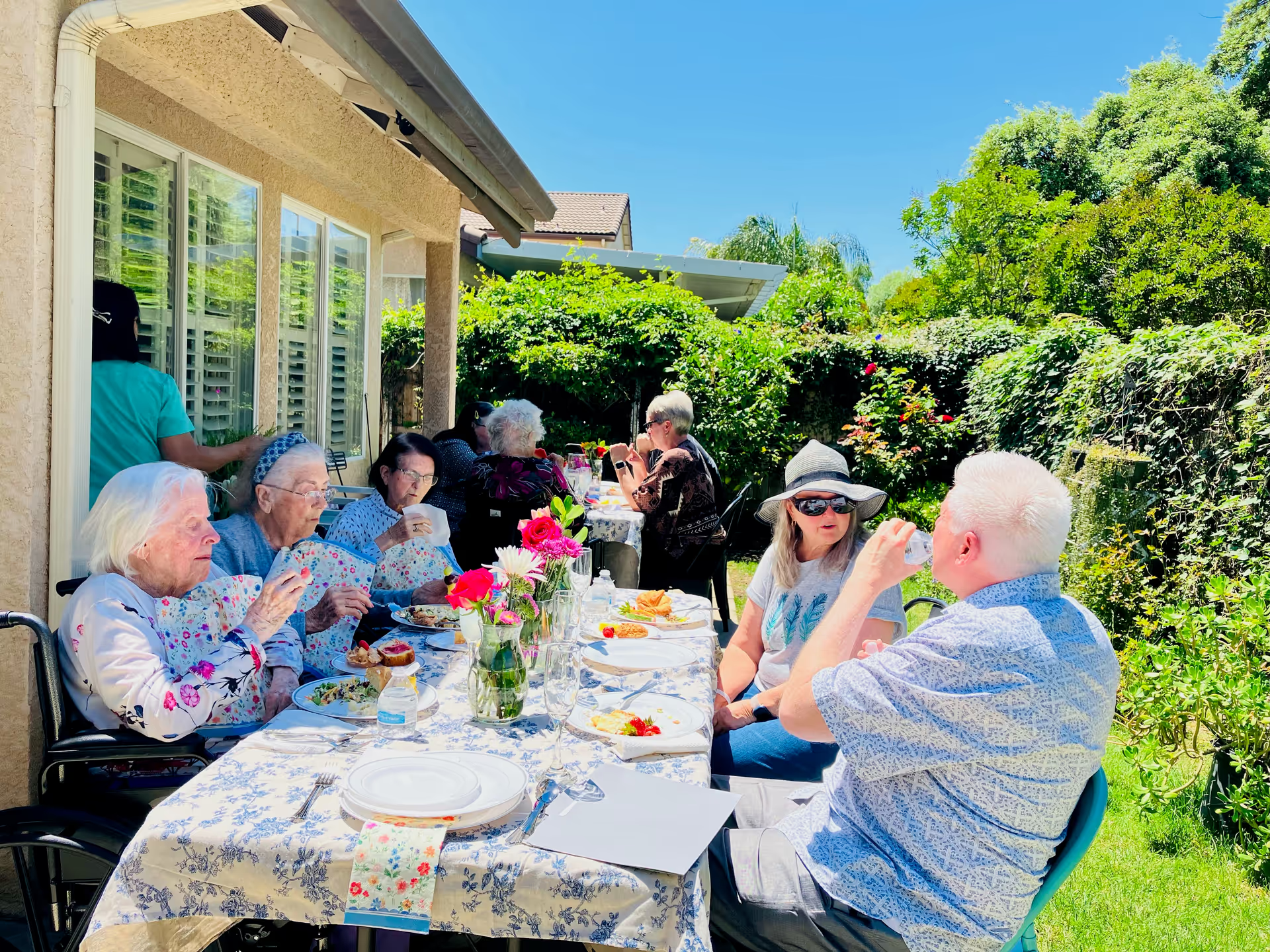
Dining and ancillary services receive mixed feedback. Several families praised the food and meal service as good to excellent; others raised concerns about menu suitability for residents with diabetes or about inconsistent meal quality. Administrative matters such as admissions and discharge coordination drew criticism for delays and poor front-desk responsiveness in some cases, although new leadership is described as addressing many of these issues and resolving problems promptly when engaged.
In summary, Morning Star Post Acute demonstrates clear strengths in bedside nursing, a rehabilitation-oriented culture, and improvements under recent management and renovations. However, prospective residents and families should be aware of operational variability: therapy effectiveness, staff conduct, medication and property controls, incident-notification practices, room density/privacy, and internal communication systems have all been cited as unreliable at times. Those considering the facility may wish to ask specific questions about shift staffing and supervision, medication and personal-item tracking policies, incident-notification procedures, room configurations and air-quality measures, and recent quality-improvement steps taken by current management to address these gaps.