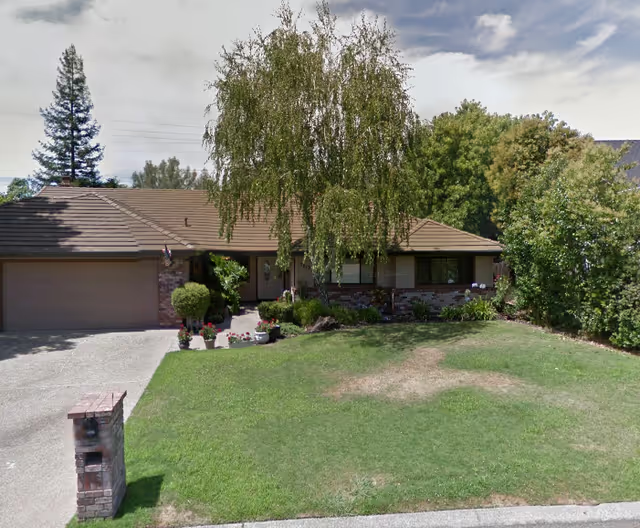
Folsom Comfort Care Home is described overall as a small, residential-style assisted living setting with a strong emphasis on a home-like atmosphere. Reviewers consistently highlight an engaged owner/manager who is accommodating and personally involved, attractive and well-furnished common areas, a pleasant backyard and porch, and suites that can be spacious enough for couples. The facility is noted to provide laundry, housekeeping, and hospice-friendly support, and many families appreciate the warm, family-like tone created by the staff.
Care quality and staffing present a mixed picture. Direct-care staff are frequently described as compassionate and meticulous in routine personal care, and the owner is characterized as helpful in navigating care and family events. At the same time, the operation appears limited by staffing levels and by the clinical qualifications of caregivers: staff are not nurses, training appears variable, and caregiver rotation can reduce continuity. Reviews indicate operational gaps in clinical incident response and escalation, which prospective families should address directly when assessing clinical safety and transfer protocols.
Dining and nutrition receive conflicting assessments. Several accounts praise daily home-cooked meals and family-style dining; others describe inconsistent meal preparation, reliance on frozen items, limited protein offerings, and occasional issues with seasoning or palatability. These mixed reports suggest variability in kitchen execution; families should request current menus, sample meals when possible, and ask about special-diet handling.
Programming and memory-care suitability are nuanced. The home implements dementia-friendly routines and has been helpful for residents with mild memory impairment, including support around daily structure and family gatherings. However, reviewers indicate the setting is not optimized for more advanced memory-care needs: staff medical training, staffing levels, and limited structured activities or stimulation may make it a less appropriate choice for residents who require higher-intensity behavioral or clinical supports.
Management and practical considerations round out the picture. The owner is viewed as responsive and willing to accommodate pets and family participation, which contributes to the facility’s positive, family-oriented reputation. Cost perceptions vary—some find it good value for standard assisted living services, while others feel larger suites may be priced high relative to the level of clinical support. Communication issues tied to language proficiency among some caregivers are mentioned and can affect family–staff interactions.
In summary, Folsom Comfort Care Home appears to offer a warm, residential alternative to larger facilities, with strengths in personal attention, housekeeping, and an attractive environment. However, prospective residents and families should evaluate clinical capacity and emergency escalation procedures, confirm staffing ratios and training, sample current meals, and discuss how the home would manage increasing medical or memory-care needs before making a placement decision.