The reviews present a divided picture of Sunnyside Convalescent Hospital. Positive observations focus on direct-care interactions, food and social programming: multiple reviewers describe friendly, helpful staff, engaging daytime activities and holiday events, a generally appealing menu with flexible meal options, and assistance with personal hygiene and clothing organization. Several observers also noted a positive experience during tours and reported perceived improvements in care after resident transfers.
Care quality and staffing emerge as central concerns. There are consistent accounts of understaffing, heavy workloads for nursing assistants and nurses, and uneven deployment of available personnel. These operational patterns are associated with limited responsiveness to resident needs, delays in routine care tasks, and questions about overall staff professionalism and conduct. At the same time, some families described compassionate and attentive staff members, indicating variability in individual caregiver performance.
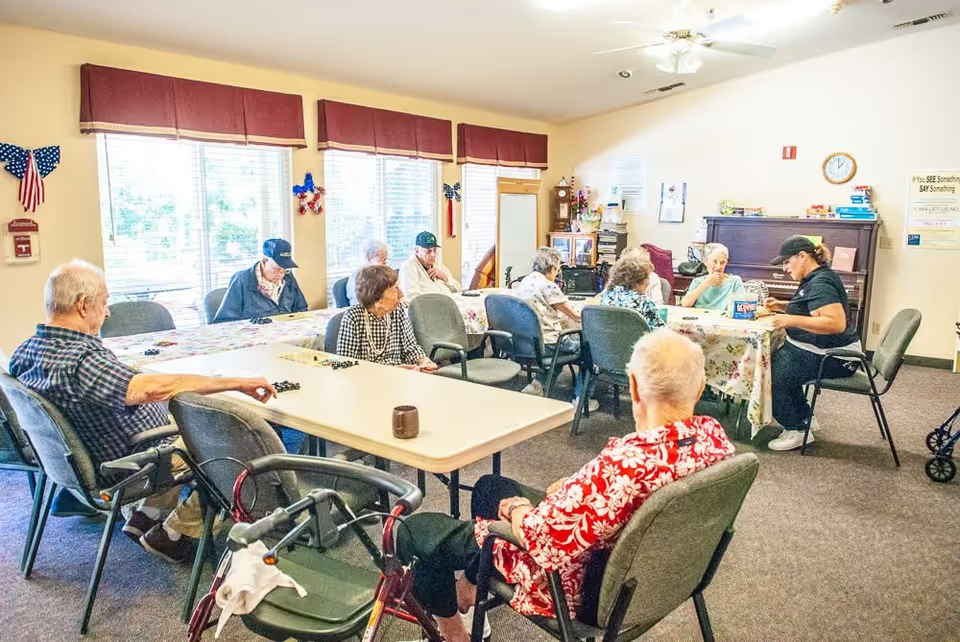
Dining and activities are among the facility’s stronger areas according to positive comments. Reviewers cited organized daytime programming and special events, and generally favorable assessments of menu variety and meal flexibility. These strengths appear to be meaningful for resident quality of life when staffing and service delivery are functioning adequately.
Facilities and environmental hygiene are areas of mixed to significant concern. Multiple reviewers raised sanitation and odor concerns in both common areas and resident rooms, along with pest-control issues and apparent deferred maintenance. Reports of overcrowded rooms and deteriorating infrastructure point to space and safety limitations. Together these items contribute to regulatory and safety compliance concerns identified by some families.
Management, operations, and governance are highlighted repeatedly as underlying contributors to the facility’s challenges. Reviewers describe weak interdepartmental communication, supply shortages affecting both housekeeping and direct care, restrictive resident communication/entertainment policies, and perceptions of cost-cutting by ownership that may affect day-to-day operations. There are also mentions of labor disputes and compensation issues that have affected staffing stability. One or more complaints extend to allegations of financial misconduct; such serious claims warrant verification through licensing and regulatory records.
Notable patterns across reviews are variability and polarization: while many families speak positively about individual staff members, meals, and activities, recurring operational weaknesses — staffing instability, supply shortages, environmental sanitation issues, maintenance shortfalls, and governance concerns — appear to undermine consistent quality of care. Prospective residents and families should consider on-site visits at different times of day, review recent inspection and enforcement records, ask for current staffing ratios and turnover metrics, and request documentation of pest-control, maintenance, and supply-management practices before making placement decisions.