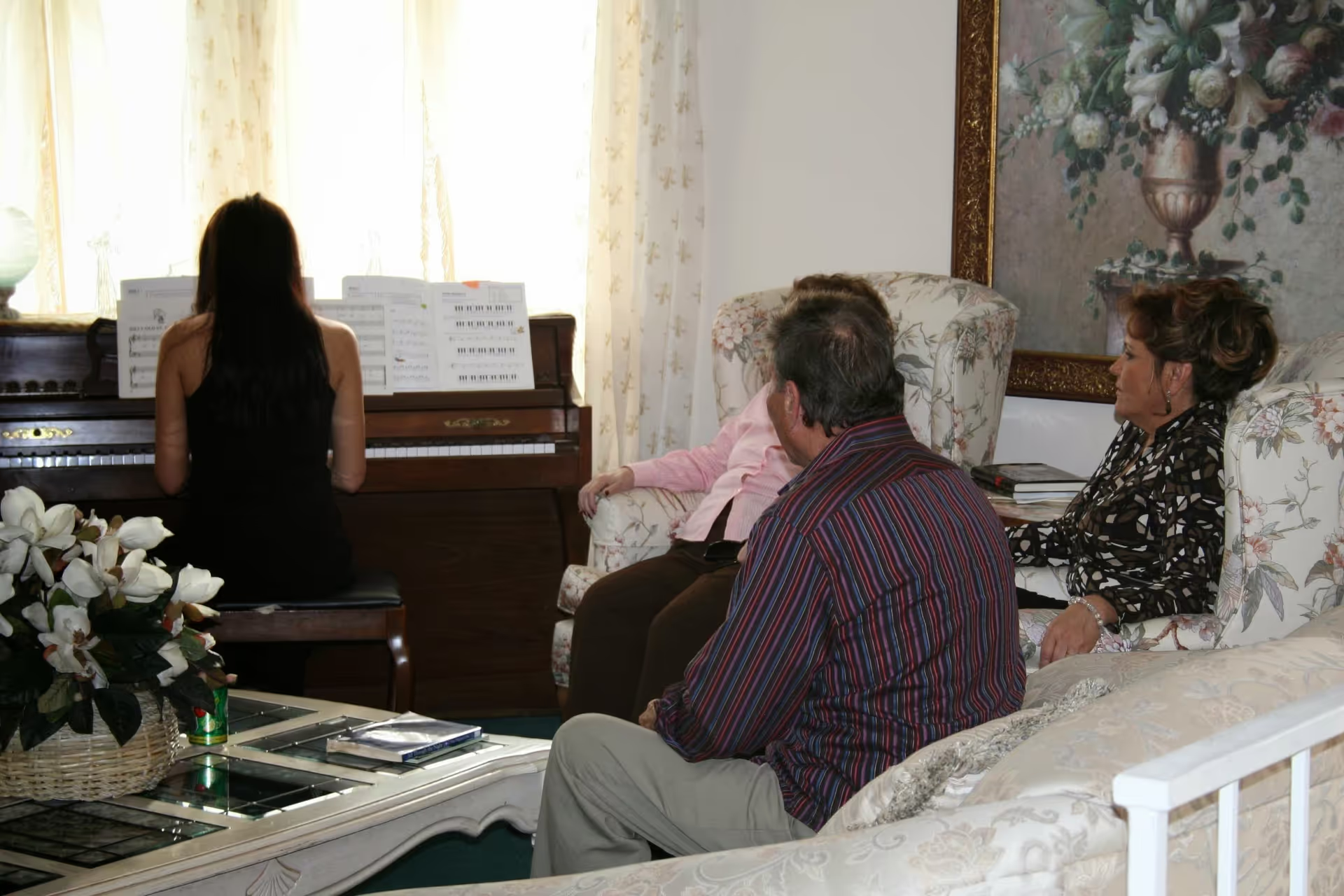
Atria Del Sol is frequently described as a well-appointed assisted living and memory-care community with a resort-like setting and a robust social program. Strengths most often highlighted include a caring, hands-on caregiving culture, an active and creative activities calendar, and a strong memory-care program. Families commonly praise the onsite chef and restaurant-style dining—menu flexibility, extended dining hours, and customized meal options are recurring favorable notes. The property’s landscaping, golf-course views and renovated common areas contribute to a broadly positive impression of the physical environment.
Care and staff receive substantial positive feedback: reviewers describe attentive, compassionate caregivers, consistent medication and appointment support, and staff who build relationships with residents. That said, reviewers also report variability in staff conduct and continuity. There are recurring references to staffing turnover or vacancies and occasional concerns about professionalism and responsiveness; one review included an allegation of a discriminatory comment at reception. Overall, caregiving quality—especially in memory care—is commonly seen as a strength, though families should anticipate variability in individual staff interactions and continuity.
Dining and activities are major selling points. The community is noted for chef-prepared meals, a restaurant-style dining room, snacks/24-hour coffee availability, and personalized meal accommodations. The activities program is broad and active—day trips, arts and crafts, live performances, exercise classes, religious services, and social games are frequently mentioned. These offerings support social engagement and mobility for residents who are able to participate; reviewers consistently say the program encourages interaction and keeps residents engaged.
Facility characteristics are mixed. Many reviewers praise cleanliness of common areas, recent renovations, onsite amenities (salon, PT area, movie space) and the attractive grounds. Conversely, the housing model is largely studio-only with compact footprints and no independent-living one-bedroom options; several families flagged the lack of private kitchens and limited living space as a material drawback. The building layout is described as spread out, with long hallways and limited elevator capacity in places, which can make navigation and access more difficult—an important consideration for residents with mobility constraints. Ongoing remodeling has been reported to cause operational disruption during transition periods.
Management and operational patterns show both strengths and friction points. Admissions staff and tour guides are often described as helpful and efficient, and the community can be accommodating for move-ins and short-term stays. At the same time, reviewers note variable communication responsiveness, occasional housekeeping or service follow-through lapses (for example, delayed linen or tray handling), and perceptions that pricing can be high relative to the unit size. Several families described pressure around placement decisions or sales-driven steering toward higher-acuity units; this pattern suggests prospective residents should clarify placement policies and financial terms up front.
Bottom line: Atria Del Sol offers a socially rich, well-staffed environment with strong dining and activity programs and attractive outdoor spaces—qualities that consistently benefit socially engaged and mobility-capable residents, including those needing memory care. Prospective residents and families should weigh those strengths against the community’s predominantly studio-only housing model, occasional operational inconsistencies (staffing continuity, housekeeping follow-through), ongoing renovation impacts, and perceived pricing relative to apartment size. A focused tour that inspects sample apartments, asks about staffing continuity, renovation timelines, elevator access, and placement/marketing practices will help determine fit for individual needs and priorities.