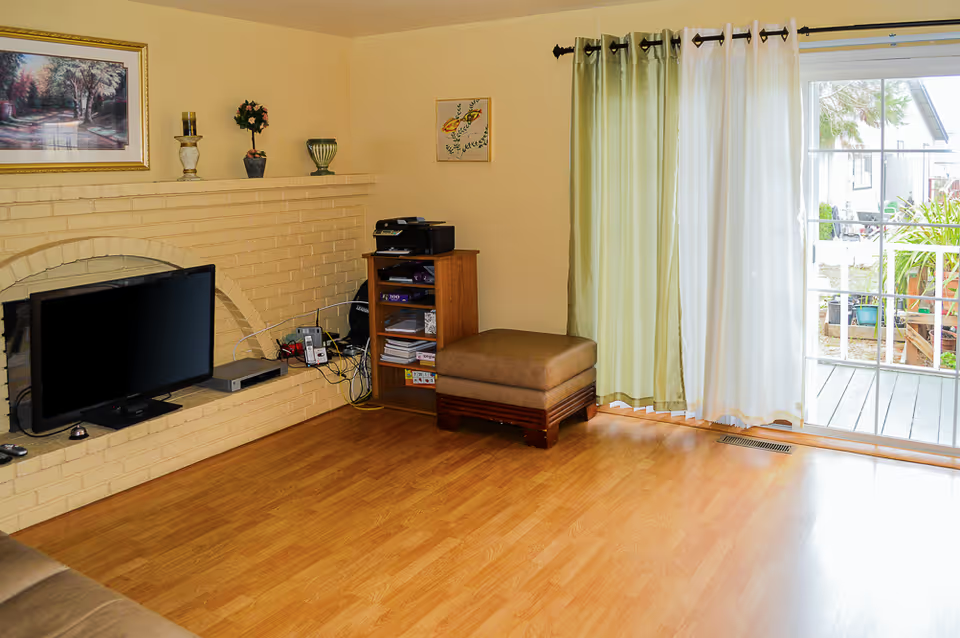
Overall impression The facility presents as clean, well-maintained and spacious with individualized living quarters. Review content emphasizes a professional, organized operation with a favorable staff-to-resident ratio and attentive personal care. Memory-care approaches are described as effective, and communication with families is characterized as honest and grounding. These strengths suggest a facility with solid baseline clinical processes and an environment that many visitors find calm and orderly.
Care quality and staff Care quality is portrayed positively in multiple comments: residents are generally described as well cared for, and staff are characterized as professional. The good staff-to-resident ratio is a consistent strength that likely supports individualized attention and effective memory-care handling. At the same time, some accounts indicate variable staff engagement or responsiveness; this points to uneven day-to-day experiences rather than a uniform pattern. Prospective families should clarify staffing models, turnover, and how staff interactions are monitored and supervised.
Activities and social atmosphere A notable pattern is the perceived lack of activity and a subdued communal atmosphere. Observations of residents spending extended time in rooms and limited visible programming suggest that social and engagement opportunities may be limited or inconsistently delivered. For individuals who benefit from regular social interaction or structured activity schedules, this is an important operational gap to investigate. Ask to see current activity calendars, sample programming for memory-care residents, and opportunities for outings or communal events.
Facilities, dining, and management Physical facilities receive strong marks for cleanliness and organization; interior spaces are described as quiet and spacious. Dining is not frequently mentioned in the available summaries, so there is limited direct information about meal quality and routines — visitors should request menus, meal schedules, and examples of accommodations for dietary needs. Management appears generally organized, but there are isolated notes about limited administrative presence during visits. Clarify who the day-to-day leadership contacts are, how families reach administrators, and how issues are escalated and resolved.
Notable patterns and recommendations The dominant positive themes are cleanliness, professionalism, effective memory-care, and individualized rooms. The dominant concerns are operational: limited engagement programming, a subdued communal atmosphere, and inconsistent visibility from leadership and certain staff. When evaluating this facility in person, consider touring common areas at different times of day, asking for recent activity schedules and attendance, meeting the administrative lead, and observing staff–resident interactions. Request specifics on staffing coverage, memory-care protocols, and examples of family communication to confirm that the facility’s organizational strengths translate into consistent daily life for residents.