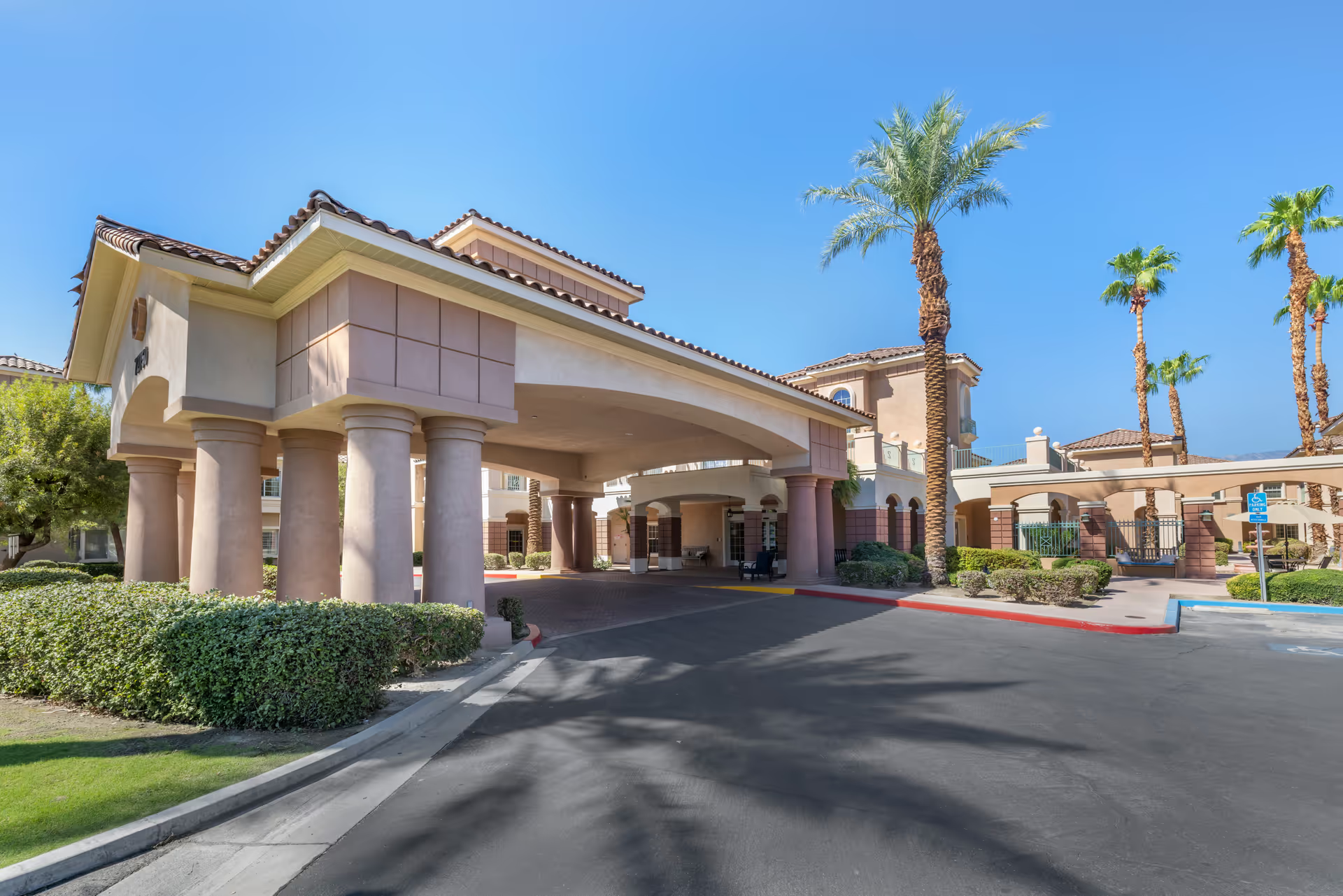
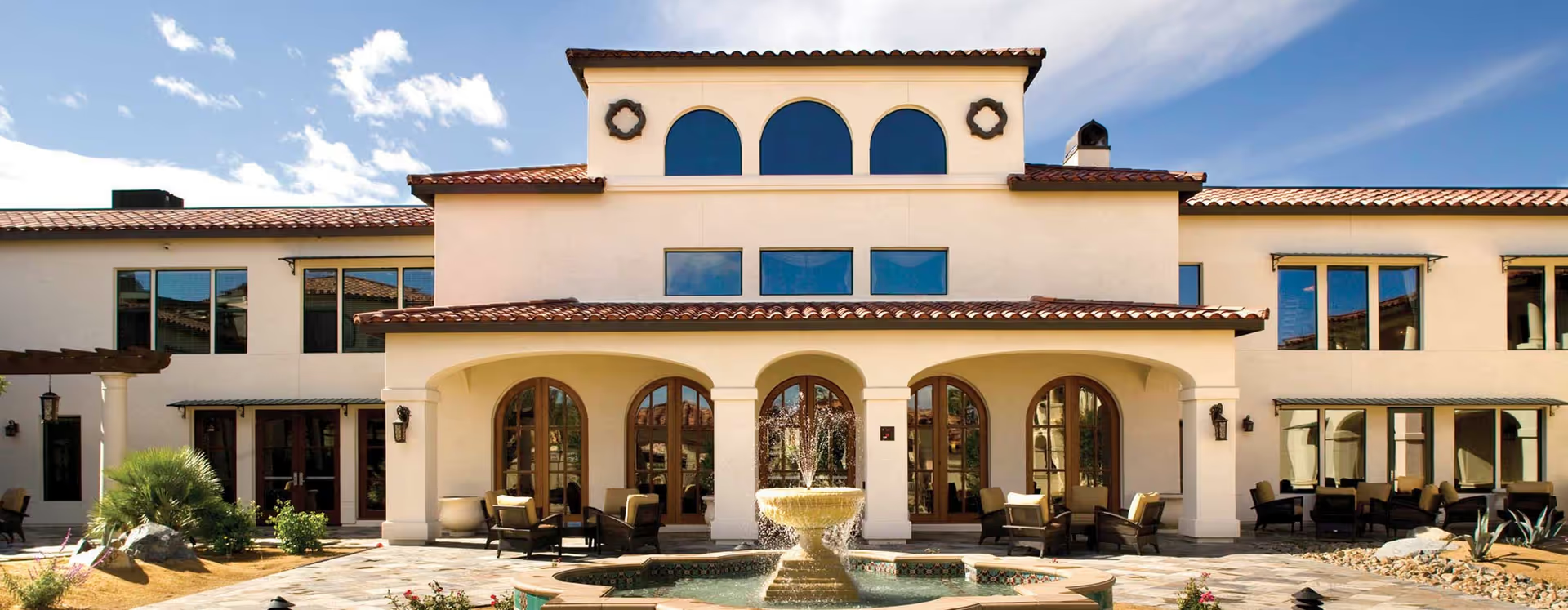
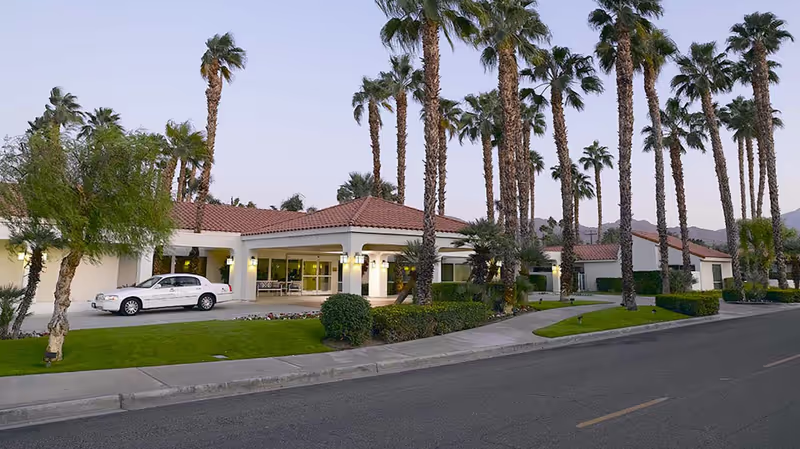
Atria Rancho Mirage presents as a modern, well-appointed assisted living community with many families praising its compassionate caregiving team, visible executive leadership, and clean, apartment-style accommodations. Strengths commonly highlighted include individualized care plans, continuity across care levels, on-site therapy services, and a broad array of amenities — restaurant-style dining, a pool, salon, library and frequent outings — that contribute to quality-of-life and family reassurance. The community’s pet-friendly policy, transportation offerings, and COVID-19 precautions are also seen as positive features that support resident well-being.
Care quality and staff: Many families describe attentive, respectful staff interactions and strong nursing support; named staff and the executive director were singled out for positive leadership and responsiveness. Reviewers noted helpfulness with admissions, move-in support, medication coordination in some cases, and supportive end-of-life/hospice interactions. At the same time, there are persistent operational concerns about staffing consistency and handoff communication. Several accounts indicate variable response times to care needs, periodic documentation lapses during shift or management changes, and uneven dementia-specific staffing or engagement in the memory-care unit. These patterns suggest that individual experience may depend on staffing levels and which team members are on duty.
Dining and therapies: The facility offers restaurant-style service, multiple meal choices, and on-site therapy services that reviewers found beneficial for recovery and mobility. However, dining quality appears uneven over time: many residents and families praised the food and special meals, while others reported declines tied to kitchen staffing turnover, late or cold meals, or a reduced menu. Prospective residents should ask about current kitchen leadership, menu rotation, and accommodation for special diets.
Activities and amenities: A broad activity calendar with daily exercise, games, social events, and regular outings is frequently described and is a strong selling point. Activity participation can be uneven, particularly for residents with mobility or sensory limitations; reviewers recommended active encouragement and accessible programming for less-mobile residents. Physical features such as spacious studios, kitchenettes, roll-in showers, and accessible communal spaces are consistently viewed positively.
Management, safety, and operations: While many families commend the leadership and specific staff members, other reviews raise operational concerns that merit attention. These include medication-administration weaknesses (including documented medication errors), inconsistent housekeeping standards, occasional security lapses such as front-desk coverage gaps, and allegations of missing personal items. There are also recurring comments about opaque pricing, extra fees (e.g., for medication management or meals delivered to rooms), and limited contract flexibility or surprising increases. Several reviews reference disruptive leadership or management turnover periods that coincided with declines in service consistency.
Notable patterns and guidance for families: The overall picture is of a community with strong relational caregiving, attractive facilities, and a rich activity program, coupled with operational variability that can affect daily living (meals, housekeeping, medication processes, and communication). Prospective residents and families should tour multiple times, meet nursing and kitchen leadership, review medication-administration policies and incident reporting procedures, clarify transportation and mobility accommodations, and obtain a detailed, written breakdown of fees and contract terms. Asking for recent staffing ratios, chemistry between memory-care staff and residents, and examples of how the community handled recent management transitions may help set realistic expectations about consistency of care.