Atria La Jolla presents as a park-adjacent independent living community with a broadly positive resident culture and consistently praised staff. Across visits and move-ins, reviewers emphasize warm, attentive frontline personnel — reception, activities, dining servers, and named leadership — who are described as personally engaged with residents and responsive to routine needs. Maintenance and housekeeping are frequently noted as effective when staffed, and several families called out helpful move-in assistance, weekly apartment cleaning, and timely minor repairs when work orders are completed.
Dining is a major mixed theme. The community employs an experienced chef and offers restaurant-style dining with multiple meal slots, vegetarian options, a weekly menu, and an in-house bistro; many residents enjoy chef-prepared lunches and the variety of choices. However, there are recurring operational concerns: inconsistent food quality (including protein preparation and limited vegetable portions), slow table service and long wait times, occasional order errors, and menu limitations for low-sodium or non-meat diets. Reviewers also describe periodic staffing shortages in kitchen and dining roles that contribute to these service lapses and to tray charges or delays in room delivery.
Activities and social programming are a strong point. The calendar is broad and active — chair yoga, water aerobics, pool programs, bingo, poker groups, arts and crafts, concerts, and regular off-site outings — and many residents report feeling socially connected and engaged. The facility supports multiple on-site amenities (heated pool and hot tub, gym, library, piano/entertainment in the atrium, gardens) and offers transportation for medical appointments and outings. That said, some reviewers experienced cancellations or limited space for favored classes; during renovation periods, some activities and spaces were temporarily constrained.
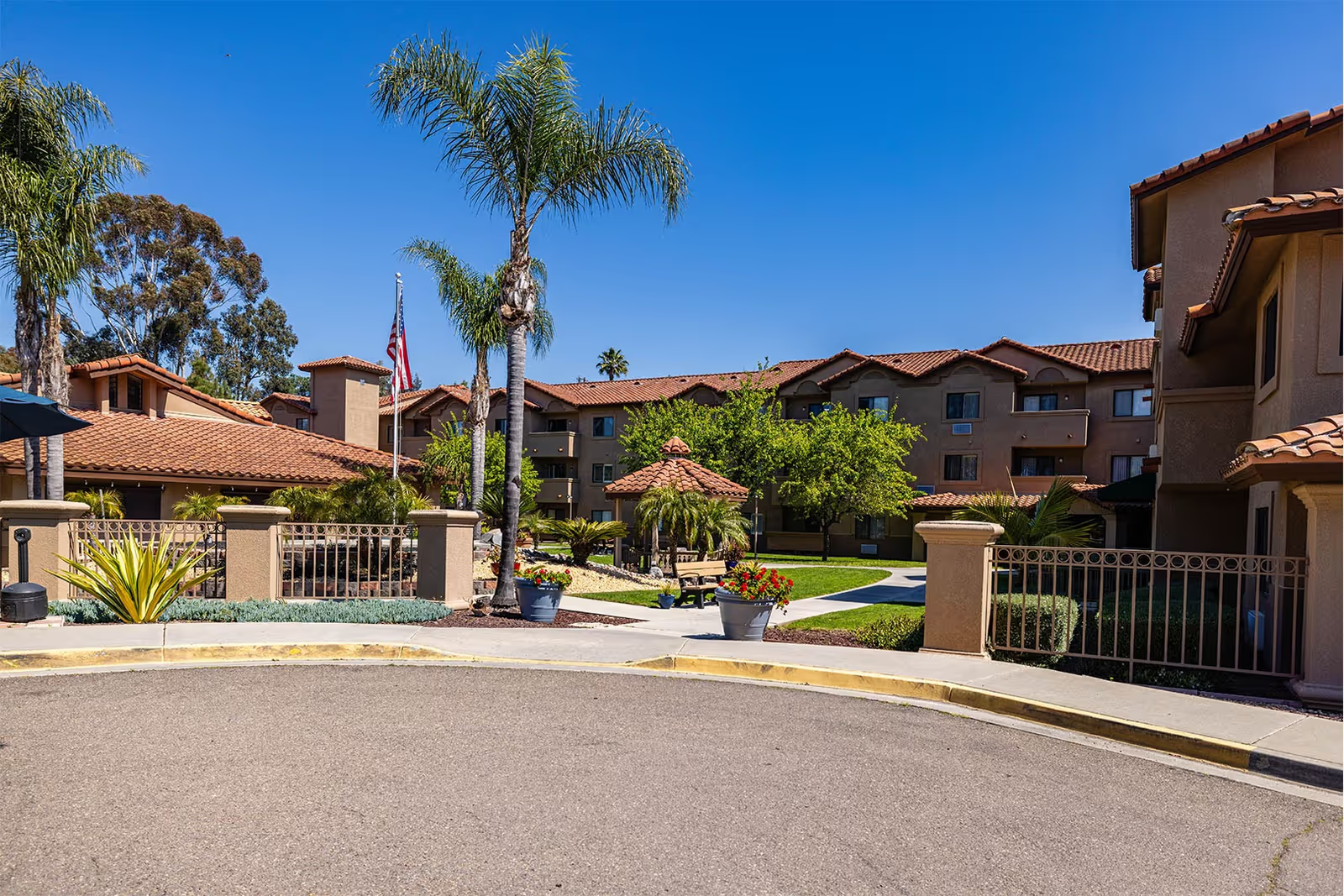
Facility condition and layout vary. Portions of the building have been recently remodeled, producing modern and attractive common areas; other areas retain older finishes with visible wear (notably carpets and some apartment hardware). Units range from compact to roomy with full kitchens, balconies, and walk-in closets; pricing appears to reflect unit size and market conditions in San Diego. Reviewers also raised practical facility-level issues: limited guest parking, slow or intermittently nonfunctional elevators, and occasional odor concerns in corridors. Renovation phases prompted dust, noise, wayfinding challenges, and some resident displacement, although the post-renovation aesthetic improvements were appreciated.
Management and operational patterns are mixed. Several reviewers commend engaged executives and activities leaders who cultivate community spirit and personally connect with residents; others cite inconsistent responsiveness from administrative staff, unresolved move-in requests, and perceived corporate cost-control affecting supplies and menu breadth. Staffing turnover in dining and housekeeping was frequently mentioned as an operational challenge that amplifies service variability. Price and value are recurrent considerations — Atria La Jolla is positioned at a higher local cost point, with periodic promotions available, and some families question long-term value relative to service continuity.
For prospective residents and families: Atria La Jolla offers a lively social environment, strong front-line staff engagement, substantial programming, and convenient location near parks and retail. Key due diligence items are to schedule a midday meal to evaluate current kitchen staffing and food quality; ask about current staffing levels and turnover in dining/housekeeping; review the timeline and scope of any ongoing renovations; confirm elevator, parking, and work-order completion metrics; and verify contract terms, promotions, and anticipated rent increases. Overall, the community’s interpersonal strengths and activity portfolio are clear assets, while dining operations, administrative responsiveness, and some physical-maintenance issues represent the principal operational risks to monitor.