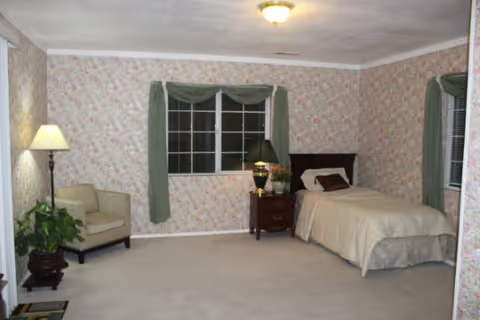
Overall impression The Lodge at Piner Road is frequently described as a clean, attractive, and modern senior living community with a strong emphasis on hospitality-style amenities and social programming. Many families and residents cite a warm, welcoming culture, helpful front-line staff, and a management team willing to engage directly with families. The physical environment (new construction, high ceilings, private and communal floor plans, patios, and accessible bathrooms) is consistently noted as a major strength that contributes to resident comfort and a sense of dignity.
Care quality and staffing Numerous accounts describe attentive, compassionate caregiving and strong end-of-life support, contributing to family confidence and peace of mind. At the same time there is clear variability in how the community handles higher-acuity needs: while independent and assisted-living residents often experience reliable care and structured routines, some accounts indicate insufficient staffing, training, or protocols for residents with advanced memory-care needs. This has manifested as missed preferences or activity engagement and, in at least one serious account, concerns following a resident's death. Prospective families should directly review the facility's memory-care staffing ratios, wandering-prevention protocols, and emergency-response procedures.
Dining and housekeeping Dining is repeatedly praised for fresh, well-balanced meals, adaptive dining options, and restaurant-style service. Several reviewers specifically compliment meal quality and accommodation of special needs. However, there are operational inconsistencies around meal communication (menus not always posted in advance) and occasional meal-service disruptions. Housekeeping generally maintains a clean environment, but reviewers note laundry-management problems, lost clothing, and delays attributable to staffing intermittency in housekeeping services. These indicate a need to confirm laundry tracking procedures and turnaround expectations during a tour.
Activities and amenities The Lodge offers a broad activity palette—movie rooms/theater, puzzles, outings (including casino trips), outdoor spaces, salon services, and family dining opportunities—and many reviewers found the program engaging and well organized. Conversely, several comments point to inconsistent activity advertising, cancellations, low resident participation in some events, and limited staff expertise operating specialized amenities (for example, theater sound and lighting). Families should ask how activities are scheduled and publicized, how technical systems are supported, and how the community promotes participation among residents of different ability levels.
Management, communication, and culture Management receives mixed but generally positive marks. Named managers and staff (for example, Monica, Mark, Leslie) are frequently praised for responsiveness and personal engagement. Still, there are notable examples of less satisfactory family communication, privacy lapses (e.g., room-access procedures), and perceived insensitivity in specific situations. This suggests that while leadership often performs well, consistency across shifts and teams can vary. Prospective residents and families would benefit from asking for examples of communication protocols, escalation pathways, and how the community audits privacy and dignity practices.
Notable patterns and considerations for families The dominant pattern is a high-quality physical environment combined with genuinely caring staff and a lively activity program, which leads many families to highly recommend the community. Offsetting that are operational gaps that disproportionately affect residents with greater clinical or behavioral needs: memory-care supervision, staffing consistency, laundry/housekeeping reliability, activity promotion, and technical support for amenities. Before committing, families should tour multiple times, meet memory-care staff, review staffing ratios and training, inspect laundry and housekeeping procedures, and confirm how the community prevents and responds to wandering or other clinical incidents. Doing so will help align expectations with the community's strengths and identify any areas where additional oversight or advocacy might be needed.