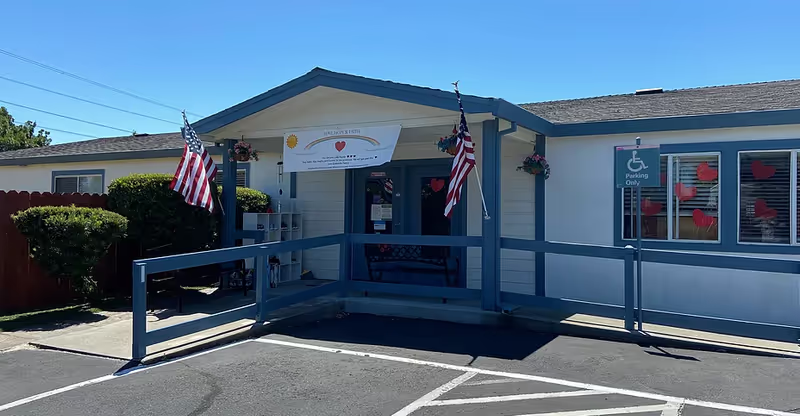
Vista Prado presents as a home‑style memory-care community with several consistently noted strengths. Reviewers emphasize a warm, family‑oriented atmosphere supported by staff who are described as caring, attentive and personally engaged with residents. The facility is praised for strong memory‑care expertise, conscientious medication handling, and the ability to coordinate hospice and end‑of‑life services when needed. Administrative touchpoints such as move‑in assistance and admissions interactions are frequently described as efficient and welcoming.
Dining and daily living are generally seen as positives. The community operates an in‑house kitchen that produces fresh, well‑prepared meals served three times daily, and families report good variety. A number of reviewers value occasional family meals and the dining-room presentation. A few comments note isolated meal-service issues (for example, food temperature on initial serving) that staff corrected; these suggest the kitchen functions well overall but has occasional continuity gaps.
Activity programming is a clear emphasis: a dedicated activities director, regular exercise, arts and crafts, games, bingo, live music, outings and errand runs are all highlighted. Many residents appear socially engaged and benefit from large common areas and outdoor deck space that support group events and field trips. That said, some reviewers perceive unevenness in programming — particularly frequency of music and certain preferred activities — and describe the activities program as improving but still maturing in some areas.
The physical plant and amenities earn repeated praise. Recent renovations, clean and well‑kept interiors, a single‑level, walkable layout with wide hallways, and private or comfortably sized shared rooms create an accessible, low‑barrier environment. Outdoor spaces overlooking a park and planted patios are recurring positives. A small number of comments point out the community sits away from retail amenities, which may affect visitor convenience depending on family location.
Important operational patterns to investigate further include staffing consistency and clinical oversight. Several reviewers describe periods of short staffing and turnover that correspond with slower responses or lapses in monitoring; others explicitly cite delayed clinical attention that led to emergency care. Those observations suggest variability in how consistently clinical and direct‑care tasks are delivered. Families also asked for more regular, structured updates (weekly or monthly summaries) and clearer communication channels — indicating that communication practices can be inconsistent.
Other practical considerations raised across accounts include infection‑control events (noted as an area of concern during outbreaks), affordability and the need for clearer financial‑assistance guidance, and family concerns about secure‑unit access practices in the memory area. A few comments also referenced fall‑related incidents, implying the need to review transfer and fall‑prevention protocols.
Overall, Vista Prado is recommended by many families seeking memory‑focused, community‑oriented care with a homelike environment, strong meal service and an active social program. Prospective families should confirm current staffing ratios, clinical-monitoring procedures, fall‑prevention measures, infection‑control policies, activity schedules (especially music offerings), and financial-assistance options during a tour to ensure the facility’s present operating practices match their expectations and clinical needs.