The reviews for Pelican Pointe Health and Rehabilitation present a mixed but consistent pattern: the facility is frequently praised for its direct-care staff, rehabilitation services, and memory-care programming, while operational and safety-related concerns recur across several accounts. Many families and volunteers describe compassionate, attentive caregivers, a recovery-focused therapy team, active volunteer involvement, and a range of community events that contribute to a home-like atmosphere. The memory-care unit and dementia-specific services receive particularly positive mention, and some administrative and survey outcomes have been favorably noted.
Care-quality observations are bifurcated. On the positive side, reviewers highlight skilled therapists, successful rehab stays, and staff who communicate well and advocate for residents. Conversely, there are recurring clinical concerns: delays in responding to call signals, inconsistent bathing and incontinence-related care, gaps in wound-care follow-up, and instances raising questions about medication and treatment oversight. A small number of reviews reference serious safety and end-of-life concerns and an allegation of financial misconduct; these items are significant and merit independent follow-up through the facility, the local ombudsman, or regulatory channels.
Staffing and management receive mixed evaluations. Many reviewers single out individual CNAs, nurses, and managers as caring and responsive, and several accounts describe prompt corrective action when concerns are raised. At the same time, staffing levels are described as inconsistent—night shifts and particular shifts are identified as weaker—and high turnover, perceived favoritism, payroll/bonus disputes, and phone use or conduct issues during care are recurring themes. Policy transparency also appears uneven: examples include unclear camera policies and variable availability of administrative documentation.
Dining, activities, and the social environment are often cited as strengths. Multiple reviewers praised special-event meals, decorated dining areas, and active programming that includes holiday celebrations and meaningful volunteer interaction. However, meal quality is not uniformly consistent across comments; some families found dining options unsatisfactory.
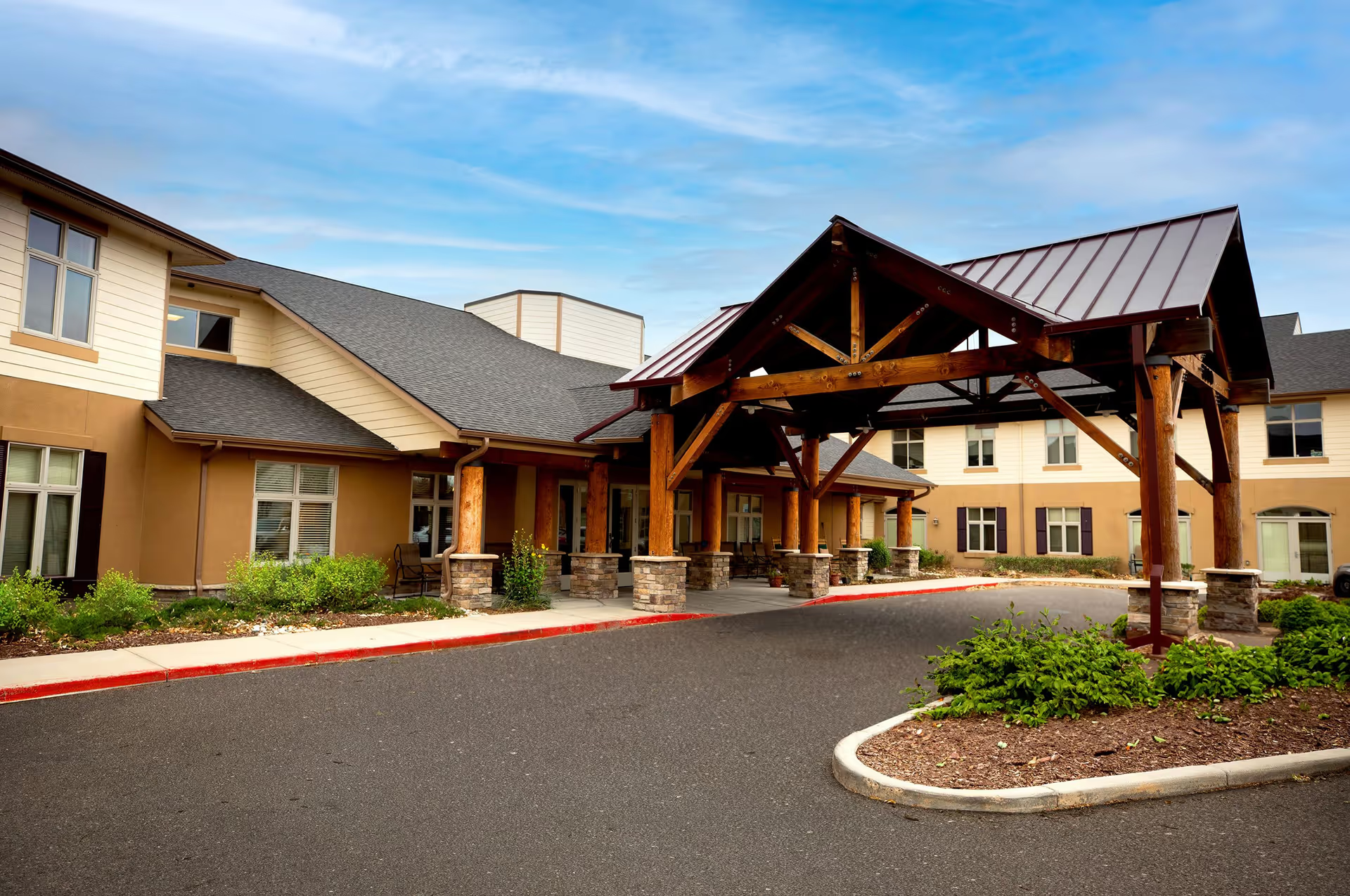
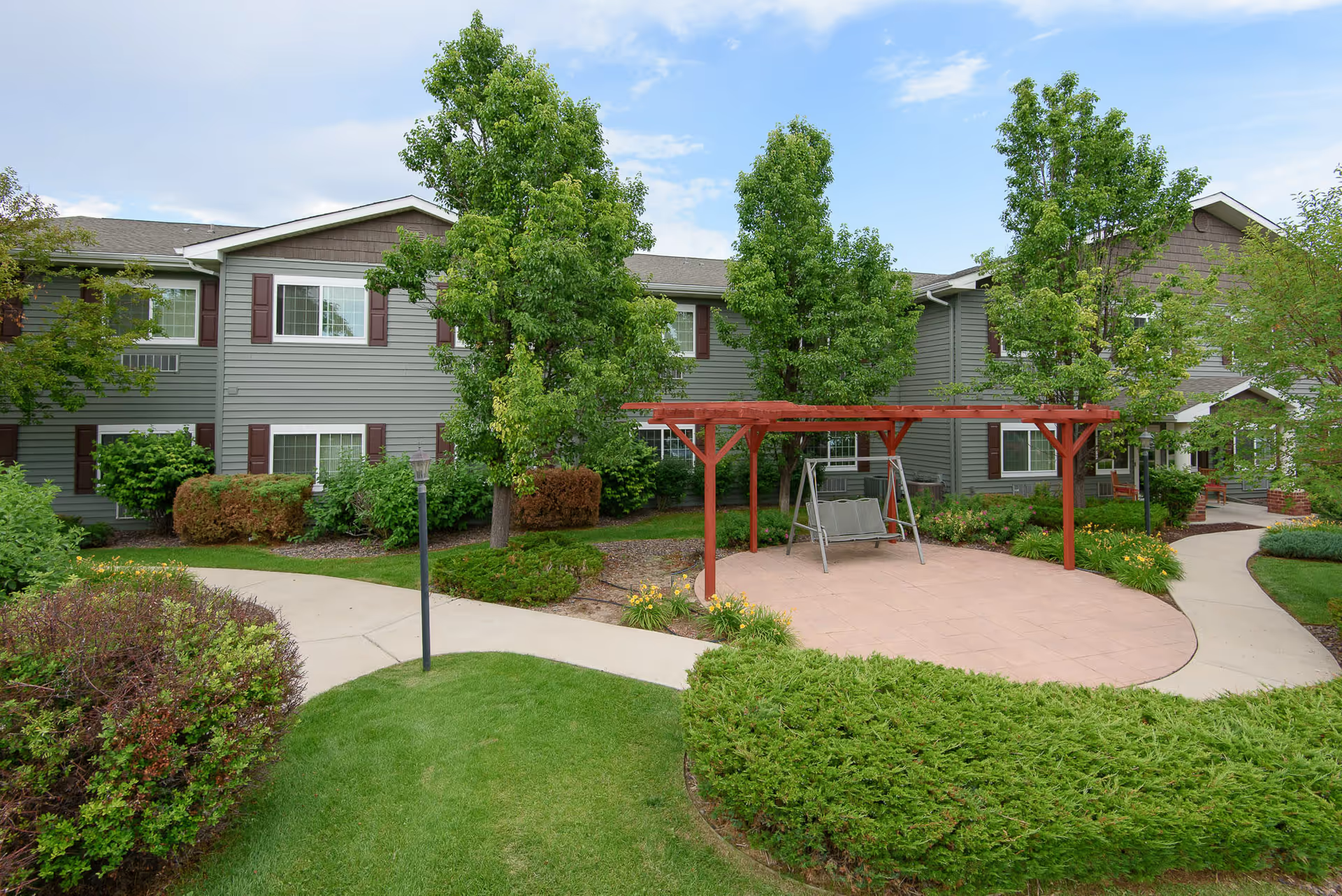
Facility condition and maintenance show contrast between well-kept areas and signs of aging. Several reviewers describe clean, bright rooms, pleasant outdoor spaces, and attractive common areas; others note sanitation concerns in particular rooms or bathrooms and a need for greater maintenance staffing and facility updates.
For prospective residents and families: the facility demonstrates clear strengths in rehabilitative care, memory programs, and community engagement, backed by many positive references to caring staff. At the same time, persistent operational issues—staffing consistency, responsiveness, clinical follow-up, policy transparency, and facility upkeep—are important to evaluate in person. Recommended next steps include touring prospective units, asking for current staffing ratios and turnover data, reviewing recent survey and inspection reports, discussing emergency-response protocols and clinical oversight, and asking management for written policies on cameras, medication oversight, and incident reporting. If serious safety or financial concerns are suspected, contacting the long-term care ombudsman or relevant regulatory agency is prudent.