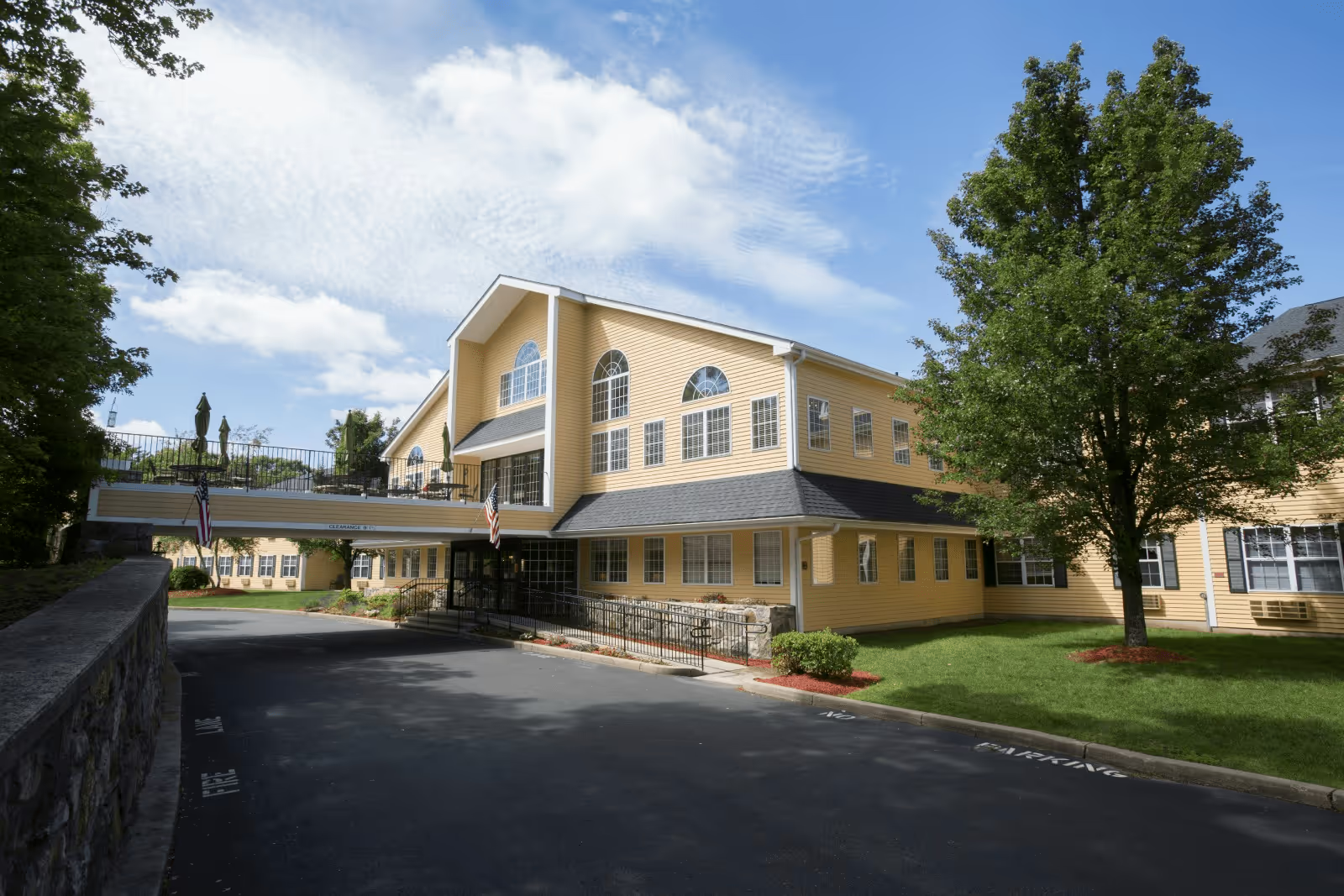
Overall impression: Reviews present KindCare at Bristol as a recently opened, well-appointed senior living community with a strong emphasis on person-centered care and memory-care services. Families and visitors commonly describe the staff as warm, compassionate, and engaged; leadership in memory care (frequently identified by name) and a cohesive nursing team are singled out as strengths. The facility’s design and finishes are regularly compared to hotel-like standards, and the new, clean environment is a recurring positive.
Care and staff: The dominant theme is attentive, compassionate caregiving, particularly within the memory-care unit. Reviewers highlight consistent family communication, meaningful social interactions between staff and residents, and examples of family-focused clinical decision-making, including dignified end-of-life care. At the same time, several accounts raise operational concerns that bear on clinical quality: inconsistencies in medication administration and pain-control practices are described, along with occasional delays in staff responsiveness. Reviewers also mention turnover and management inconsistencies that can affect continuity of care, so prospective families should ask about staffing ratios, medication-safety protocols, and staff retention measures.
Dining, activities, and daily life: Dining is frequently praised for quality and presentation, and the community is described as offering an active calendar of social and memory-supportive activities. Many reviewers note a lively sense of community, helpful programming, and staff who facilitate social engagement. Room amenities and shared living arrangements (including duplex-style options) are described as comfortable and homelike, contributing to resident satisfaction.
Facilities and operations: The building’s interior upkeep, cleanliness, and layout receive strong commendation; however, reviewers also identify operational and maintenance issues at the property level. Observations about exterior upkeep, cigarette litter, and on-site staff smoking point to gaps in grounds maintenance and policy enforcement. Separate operational concerns include an elevator outage and at least one instance of resident misidentification, suggesting potential weaknesses in equipment reliability and resident-identification/location processes. Some reviewers also note an unexpectedly high upfront community fee and uneven transparency about costs, and a few cite inconsistent meal-service coverage.
Management and patterns to watch: Leadership and key staff members are frequently praised for their engagement and responsiveness; yet a contrasting pattern of management inconsistency and employee turnover appears in other comments. These mixed signals suggest the community may be strong in frontline caregiving and design while still refining administrative systems, maintenance routines, and clinical oversight processes.
Practical guidance for prospective families: Tours at different times of day, discussions with the nursing director about medication and pain-management protocols, clarification of fee structure and what the community fee covers, and inquiries about staff training, retention, and smoking policies are advisable. Also ask about maintenance schedules, emergency and equipment redundancy (e.g., elevator contingency plans), and resident-identification/location procedures. Overall, KindCare at Bristol presents many attributes families value—particularly in memory care and hospitality-style amenities—balanced against operational issues best explored during an in-person visit and targeted conversations with leadership.