The reviews reflect a predominantly critical impression centered on operational and organizational issues. Several comments convey a perception that corporate priorities emphasize financial considerations, which reviewers link to a decline in day-to-day service and upkeep. There is also an indication that the community's condition has changed from an earlier, more favorable state.
Care quality and staff: Reviewers expressed concerns about the timeliness and attentiveness of resident care. Critiques focus on staff appearing overworked and unhappy, which reviewers associate with slower responses to resident needs and reduced hands-on time. These summaries suggest systemic staffing pressures rather than isolated incidents; prospective families should verify current staffing ratios, turnover rates, and supervision practices during a tour.
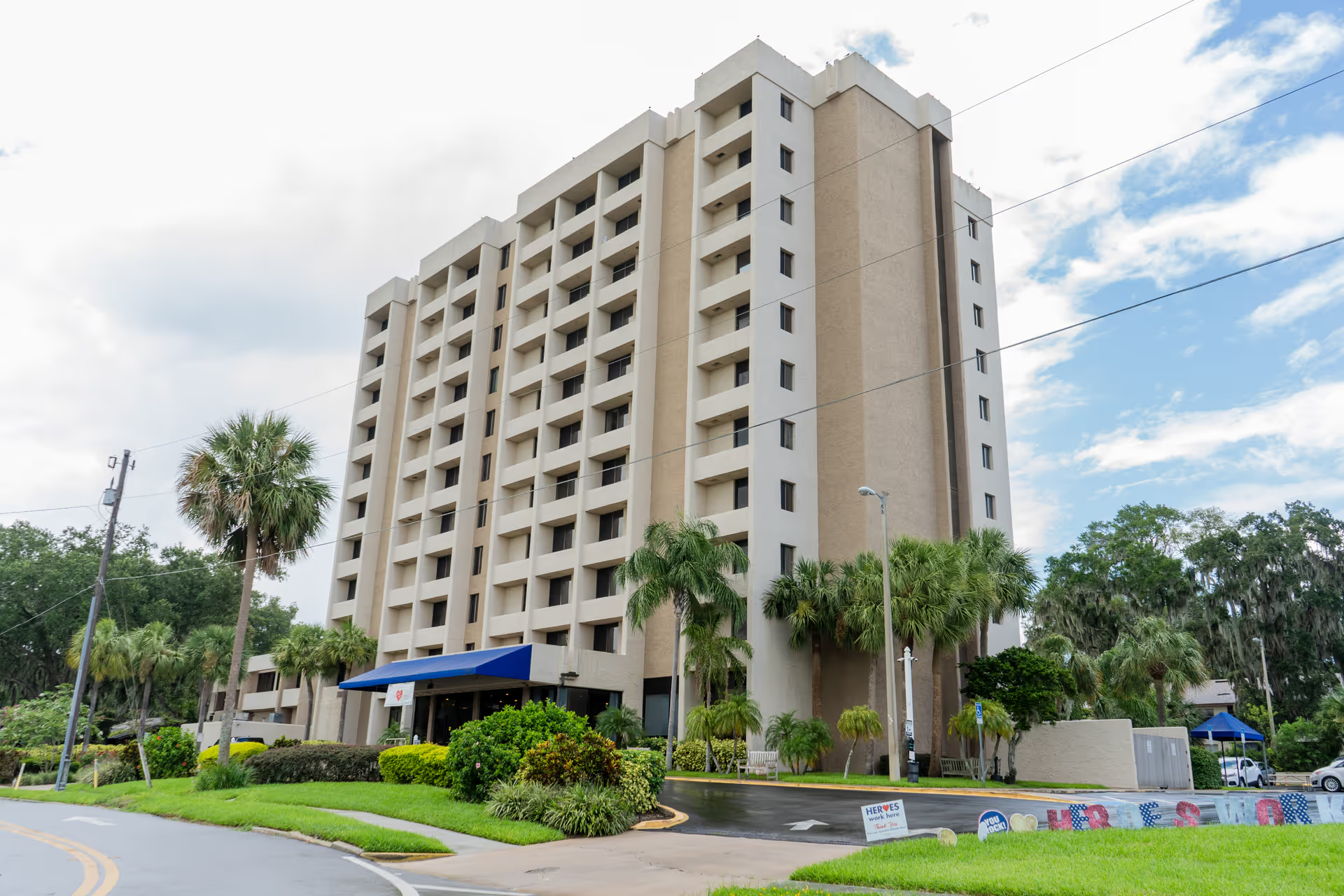
Facilities and maintenance: Multiple operational concerns relate to the physical plant. Summaries mention roof leaks, mold concerns, and evidence of pest activity consistent with wood-damaging insects, alongside statements that maintenance staffing is insufficient. Together these indicate deferred or inconsistent maintenance and potential intrusion or moisture-management issues. Inspecting recent maintenance records, pest-control contracts, and recent repair work would be advisable.
Management and administration: Reviewers describe management as poorly aligned with frontline needs, noting an apparent imbalance between administrative personnel and maintenance/care staff. The characterization of a "profit-first" approach and comments about weak overall management point to challenges in organizational oversight, prioritization, and accountability. Ask for information on leadership tenure, organizational structure, and recent corrective actions when evaluating the community.
Dining and activities: The provided summaries include little specific information about dining quality or activity programming. Because these areas are not well documented in the comments, prospective residents and families should request sample menus, dining audits, and activity calendars, and observe meals and programs in person.
Notable patterns and recommendations: The dominant patterns are operational—staffing pressures, maintenance deficits, and perceived administrative misalignment—rather than narrowly described single incidents. A minority of remarks still cite the community as offering good value and recall it being better maintained in the past, suggesting variability over time or between units. Before making placement decisions, verify current staffing levels and turnover, request recent inspection or maintenance records, inquire about pest-control and mold remediation histories, and observe daily operations (meals, activities, staff–resident interaction) during a visit.