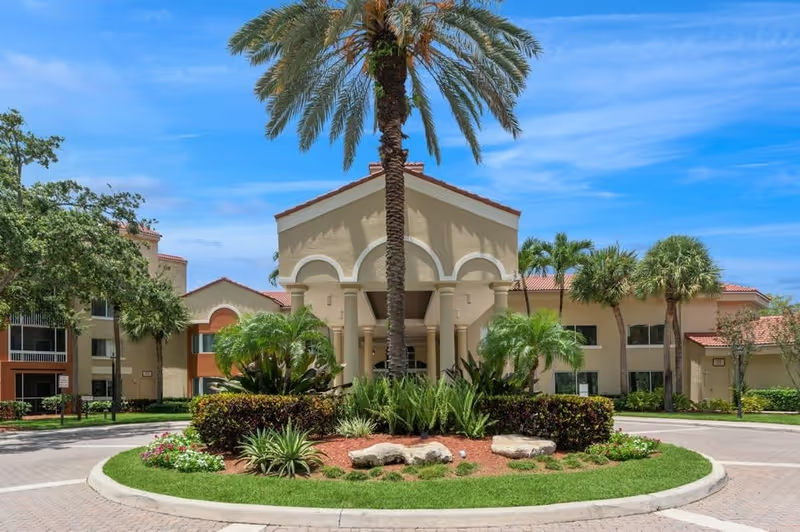
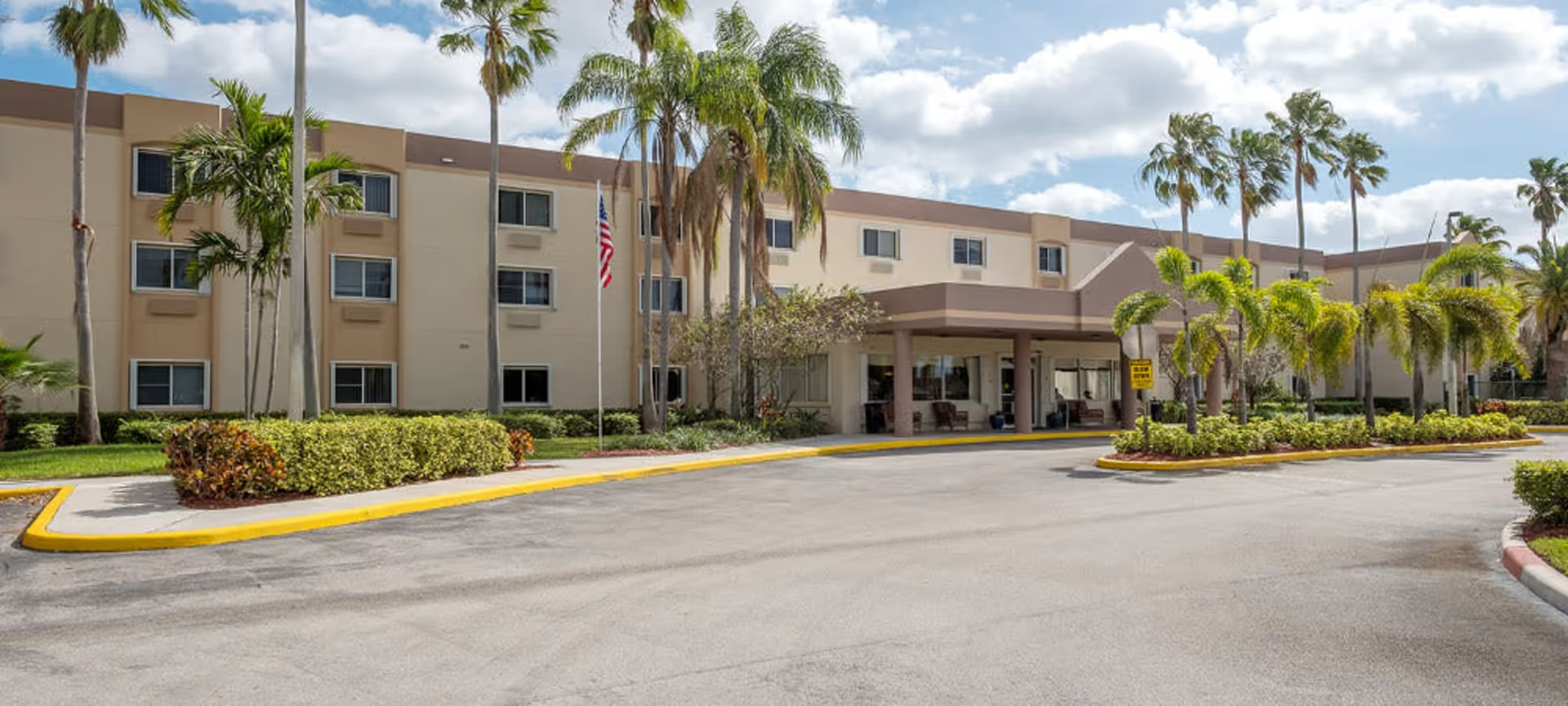
The Legacy at Boca Raton presents a strongly bifurcated profile in the reviews: many families and residents praise a robust rehabilitation program, supportive amenities, and a welcoming physical environment, while others describe persistent operational weaknesses that affect day-to-day clinical care. The facility’s greatest strengths lie in its therapy services and amenities. Reviewers consistently highlight skilled physical, occupational, and speech therapists, frequent one-on-one sessions, and measurable recovery outcomes. Housekeeping, concierge-style services, renovated common areas, private rooms with views, on-site salon services, and active social programming contribute to a resort-like atmosphere that families often find reassuring for short-term rehabilitation stays.
Clinical and staffing themes are mixed. Long-tenured clinicians, attentive therapists, and engaged social workers are frequently named as contributors to good outcomes and smooth discharge planning. At the same time, a recurring pattern of inconsistent nursing coverage and responsiveness is described: slow call responses, variable bedside assistance, and irregular personal-care practices (including repositioning schedules and assistance with toileting). Several reviews identify medication-administration delays and lapses in medication explanations; linked concerns include delays or inaccuracies in laboratory draws and follow-up testing. These operational gaps translate into family anxiety and, in some cases, clinical deterioration that required external care escalation.
Dining and activities receive generally positive marks for kosher and varied offerings, regular entertainment, and social programming; however, reviewers also note variability in meal temperature and occasional poor-quality meals. The facility’s grounds, dining rooms, and activity schedules are strengths for residents seeking engagement and pleasant surroundings, though consistency of meal delivery and individualized dietary handling appear uneven across shifts.
Facility maintenance, sanitation, and infection-control were areas of concern for multiple reviewers. While many visitors report a clean, renovated, and hotel-like environment with frequent room cleaning, others describe sanitation issues and odor concerns in specific units, along with wound-care and infection-control gaps. These concerns appear linked in some reports to staffing levels and inconsistent clinical processes. The resident call/phone system and shift-to-shift handoffs were also singled out as operational weaknesses that compound clinical and safety risks.
Management and administrative themes are similarly mixed. Admissions coordination, concierge and social-work support, and some administrators receive positive comments for responsiveness and patient advocacy. Conversely, there are allegations of billing and insurance misconduct, problems with communication from management, and variability in front-desk and business-office practices. These issues — particularly the billing/insurance allegations and inconsistent family communication — are significant for prospective residents and families to review closely.
Overall, The Legacy at Boca Raton may be a strong choice for those primarily seeking intensive, therapy-focused rehabilitation in a renovated, activity-rich setting, provided that prospective families perform targeted due diligence. Recommended pre-admission checks include clarifying nurse-to-resident ratios for the unit of interest, asking about medication-administration protocols and lab-result turnaround, observing shift change and call-bell responsiveness during a visit, reviewing infection-control and wound-care procedures, and obtaining clear written explanations of billing and insurance processes. These steps can help families weigh the facility’s demonstrable strengths in therapy and amenities against reported variability in nursing, sanitation, and administrative consistency.