Summary:
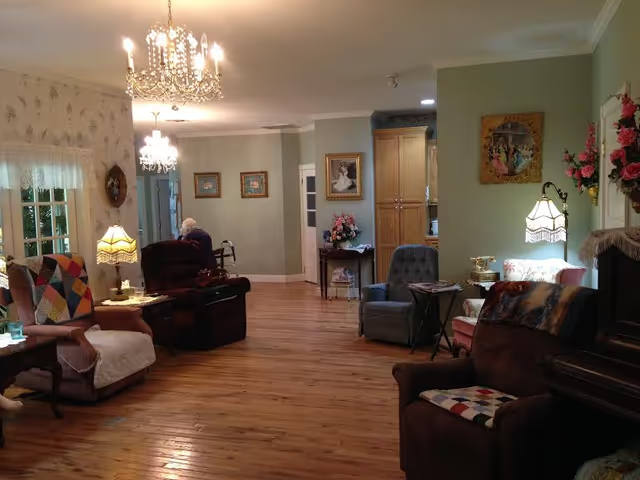
The reviews present a mixed picture of Hidden Pines. Several comments emphasize strengths around resident autonomy and day-to-day care: families describe a community where residents have freedom to come and go, an established sign-out/exit-tracking policy, and caregiving staff who are described as compassionate and attentive. Those positive accounts highlight satisfactory individualized care for some residents and an overall comfortable, home-like living environment.
Care and staff: Reports vary. Positive accounts focus on hands-on, caring staff and good clinical care for individual residents. Contrasting accounts identify inconsistent responsiveness to requests and delays in answering telephone calls, suggesting variability in how promptly staff attend to family inquiries and resident needs. There are also notes about inconsistent communication between staff and families; this appears as both lack of timely return calls and unclear updates about day-to-day issues.
Facilities and sanitation: Reviewers mention odor concerns in certain common or resident areas, which points to sanitation or incontinence-care gaps in parts of the community. While some reviewers characterize the environment as pleasant, the presence of these concerns indicates uneven housekeeping or infection-control consistency in specific locations rather than a uniformly maintained facility.
Management and operations: Multiple comments imply shortcomings in administrative oversight. Examples include difficulties getting calls answered, belongings not being returned to families, and an overall perception of poor management follow-through. These patterns suggest operational weaknesses in property-handling processes, communication protocols, and supervisory oversight rather than isolated clinical-care failings.
Dining and activities: The provided summaries do not include substantive detail about dining quality or the breadth of organized activities. The facility’s emphasis on freedom of movement and a sign-out policy may support resident engagement outside the building, but there is insufficient information to assess meal service quality or the consistency of activity programming.
Notable patterns and considerations for families: The dominant pattern is a contrast between positive, individualized caregiving experiences and operational/administrative inconsistencies. Prospective residents and families should ask about staffing levels and shift coverage, call-answering and family-communication protocols, housekeeping and incontinence-care practices, property-handling and lost-item policies, and how management documents and follows up on family concerns. Verifying these operational details during a visit and asking to see recent policies or incident logs can help clarify whether the strengths highlighted in positive accounts are consistently supported by reliable facility systems.