Reviews of Parkside Assisted Living and Memory Care describe a facility with clear strengths in person-centered caregiving, physical environment, and food service, alongside recurring operational weaknesses that prospective families should assess closely.
Care and staff: Many families describe strong, compassionate caregiving from individual staff members and leaders; several staff names receive repeated praise for empathy and hands-on attention. Staff are frequently characterized as attentive, respectful, and effective at building rapport with residents, and reviewers cite personalized care plans and family inclusion as positive aspects. At the same time, there are persistent operational concerns: staffing shortages and elevated turnover are linked to delayed responses, inconsistent care routines (particularly around continence care and laundry), and uneven clinical oversight. Some families expressed specific worries about medication management and handling of residents with advanced dementia, indicating a need for clearer clinical protocols and additional dementia-focused training.
Dining and activities: The presence of an on-site chef and many comments about plentiful, tasty meals are a consistent positive. The kitchen appears responsive to dietary needs and special requests for many residents. However, menu satisfaction is uneven — some residents and families find the food inconsistent or not to personal taste. Activity programming is generally described as engaging and varied for the assisted-living population, but several reviewers found memory-care programming limited or insufficient in frequency and variety. Prospective families should ask for current activity schedules and sample programming for the memory-care unit.
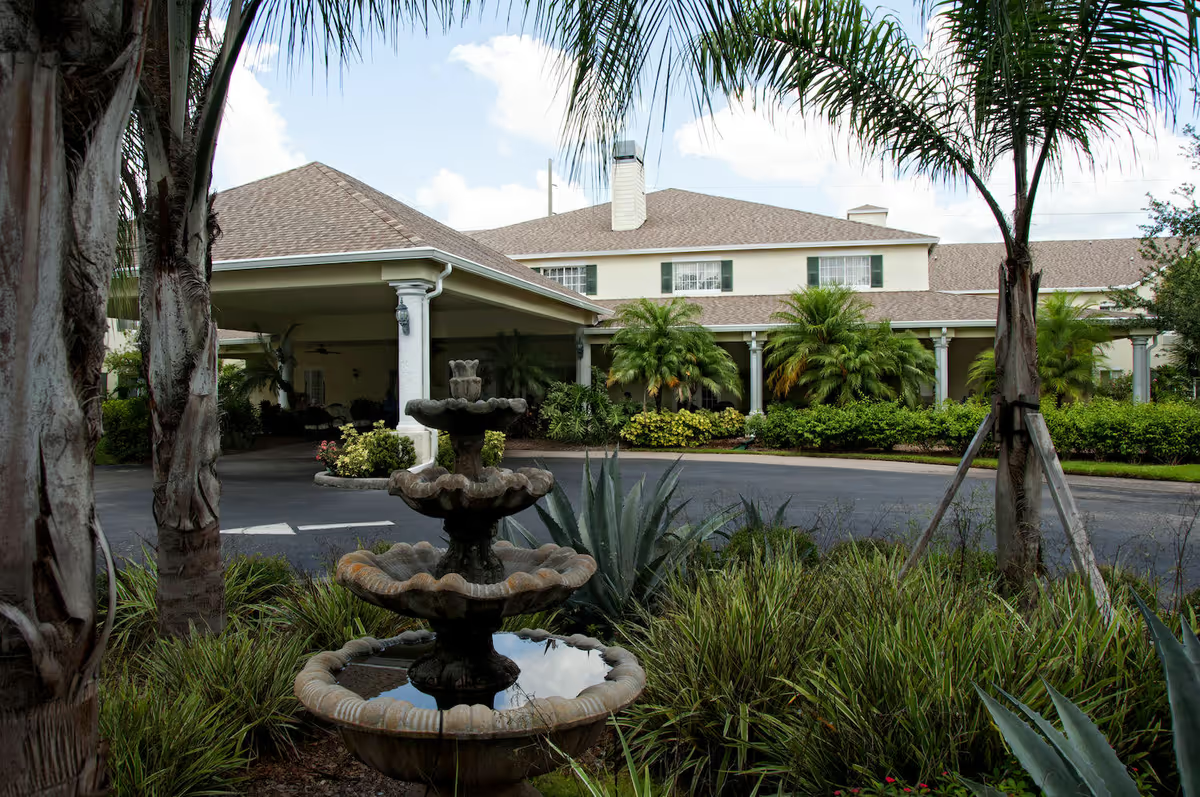
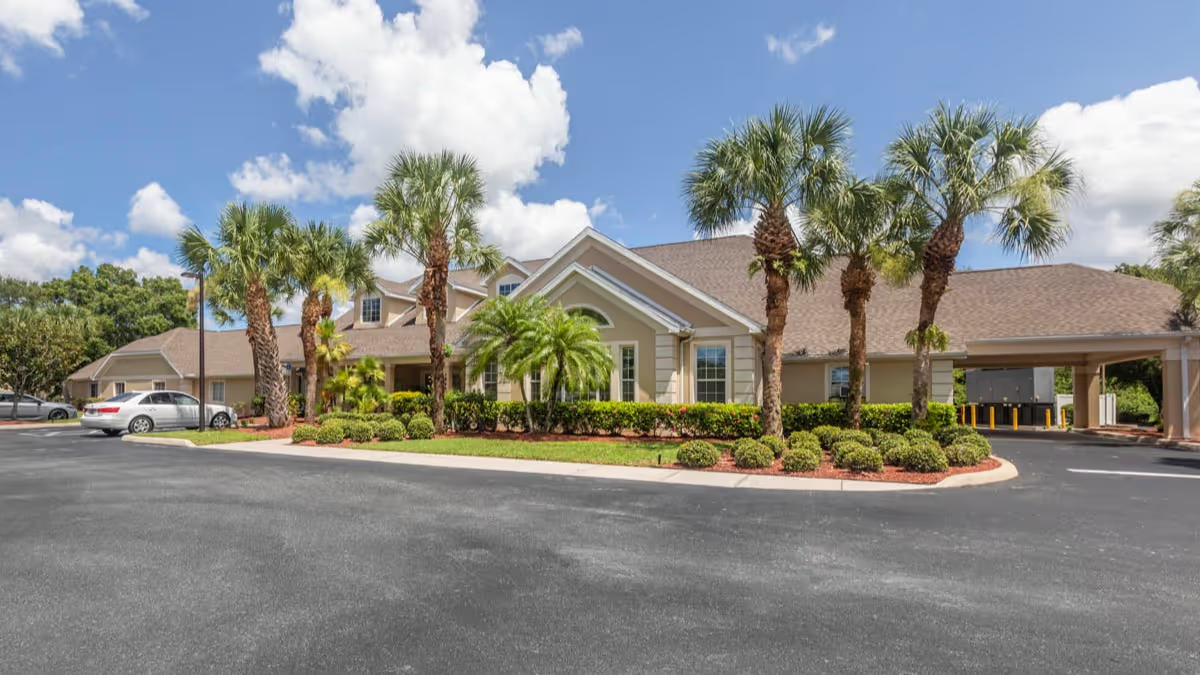
Facilities and safety: The building’s physical attributes are often praised: a newer, modern layout, roomy private rooms, and a family-like environment. Its location near hospitals is viewed as an advantage. Conversely, reviewers raise operational safety issues that affect the resident experience: variable sanitation and occasional odor concerns, laundry management problems (including lost or mishandled items), and reported vulnerabilities in door controls and unit security that could increase elopement risk. There is at least one serious alleged security incident cited; while such incidents appear isolated in the dataset, they underscore the importance of reviewing the facility’s door-control, visitor, and emergency response policies.
Management, administration, and transitions: Experiences with management range from highly positive (visible, responsive leadership, helpful admissions tours) to problematic. Areas of concern include contract and billing administration, unexpected discharge or room-assignment communication issues, and inconsistent follow-through on admissions/transfer paperwork. Several families reported difficulty obtaining timely answers to billing, medical-record transfer, and discharge coordination questions. While some reviewers describe marked managerial improvement over time, prospective residents should confirm contract terms, notice requirements, and communication protocols in writing.
Overall patterns and guidance: The reviews present a mixed but consistent pattern: strong individual caregivers, good physical plant and menus, and effective crisis response, paired with operational gaps in staffing stability, sanitation control, medication oversight, and administrative consistency. For families considering Parkside, it would be prudent to (1) meet with nursing leadership to review medication and dementia-care protocols, (2) inspect memory-care programming and secure-entry procedures, (3) obtain written contract and discharge/notice terms, and (4) ask about staffing ratios and recent turnover. These checks will help weigh the facility’s evident strengths against the operational areas that multiple families identified as needing improvement.