Overall, the reviews portray Philip Benjamin Tower as an independent-living community with strong interpersonal strengths and a full social program. Residents and visitors frequently emphasize the professionalism, warmth, and responsiveness of front-line staff and management. Personnel are described as helpful during move-in, attentive at the 24-hour desk, and available for routine safety checks; maintenance and housekeeping are likewise characterized as prompt and effective. These operational strengths contribute to a general sense of safety, independence, and peace of mind for residents.
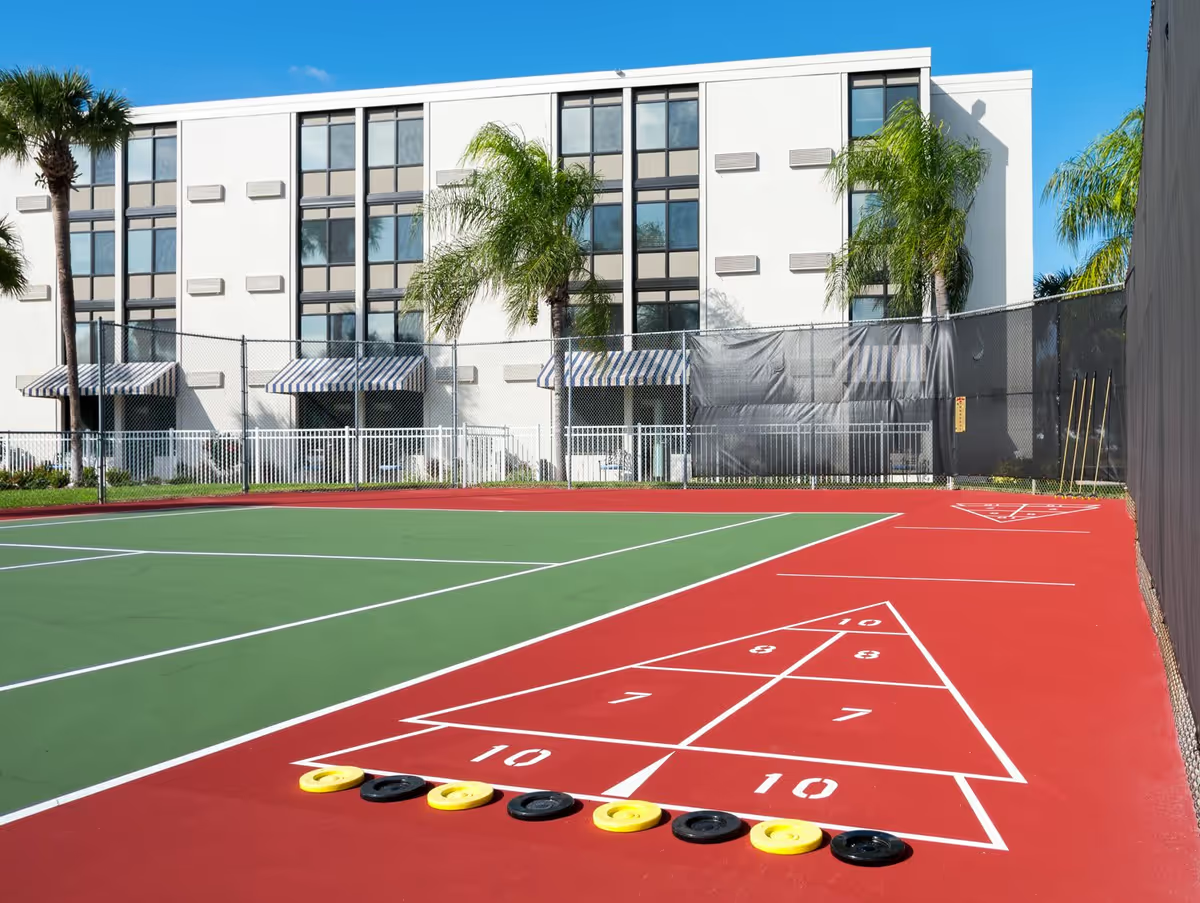
The community offers a range of amenities and activities that support resident engagement. On-site features cited include laundry facilities, a library, and a computer room, while programming ranges from bingo and card games to movie and concert nights and shuffleboard. Scheduled bus transportation and organized outings are available, and the sliding-scale rent model was noted as making the apartments broadly affordable. Together, these elements appear to foster a strong social environment and active community life.
Areas of operational concern emerge primarily around building systems and environmental management. A notable issue involves pest-control—several accounts describe repeated treatments with inconsistent resolution, which points to gaps in remediation or follow-up protocols. Reviewers also described recurring elevator problems and instances of moisture or mold following storm events, suggesting vulnerabilities in infrastructure resilience and in storm-related remediation. These issues are facility-level and may affect resident comfort and reliability of services.
Information about dining and meal quality is limited in the available summaries; few reviewers commented on food service. That gap makes it difficult to assess culinary offerings and consistency without a direct inquiry or visit. Management and administrative responsiveness is otherwise commonly praised: move-ins are described as smooth, the assistant management presence is noted as helpful, and staff-to-resident interactions are repeatedly characterized as courteous and informative.
For prospective residents and families, the overall pattern suggests a community with strong staff engagement, active programming, and generally well-kept common spaces, offset by some infrastructure and environmental-management concerns. It would be reasonable to request details on the community’s pest-control protocols, elevator maintenance schedules, and storm remediation plans, and to arrange a meal or dining tour to evaluate food service directly before making a placement decision.