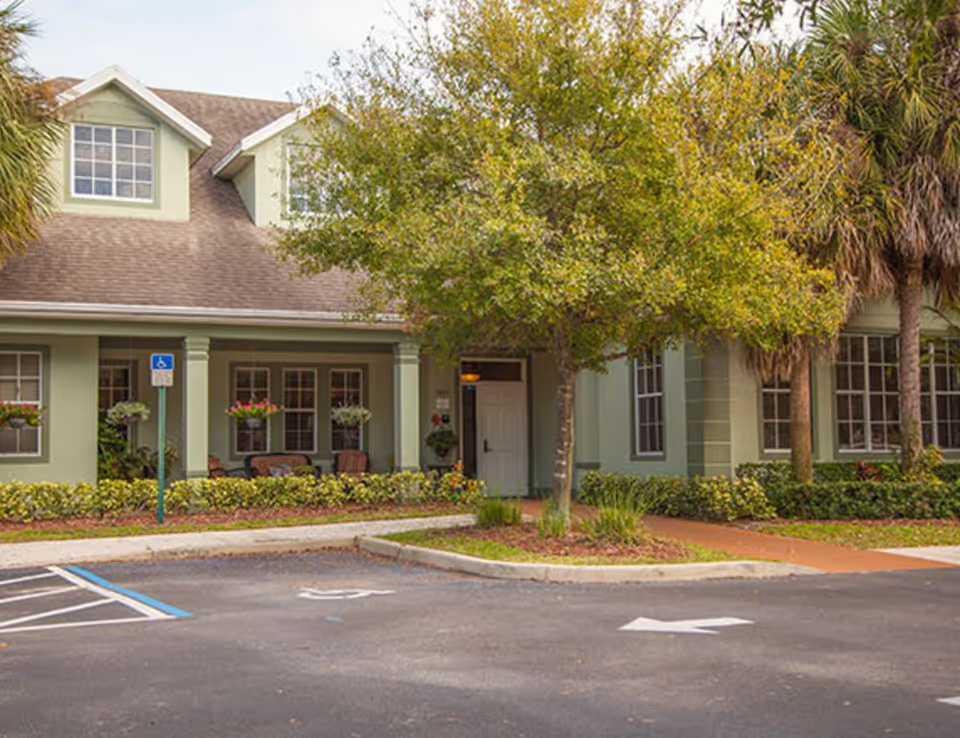
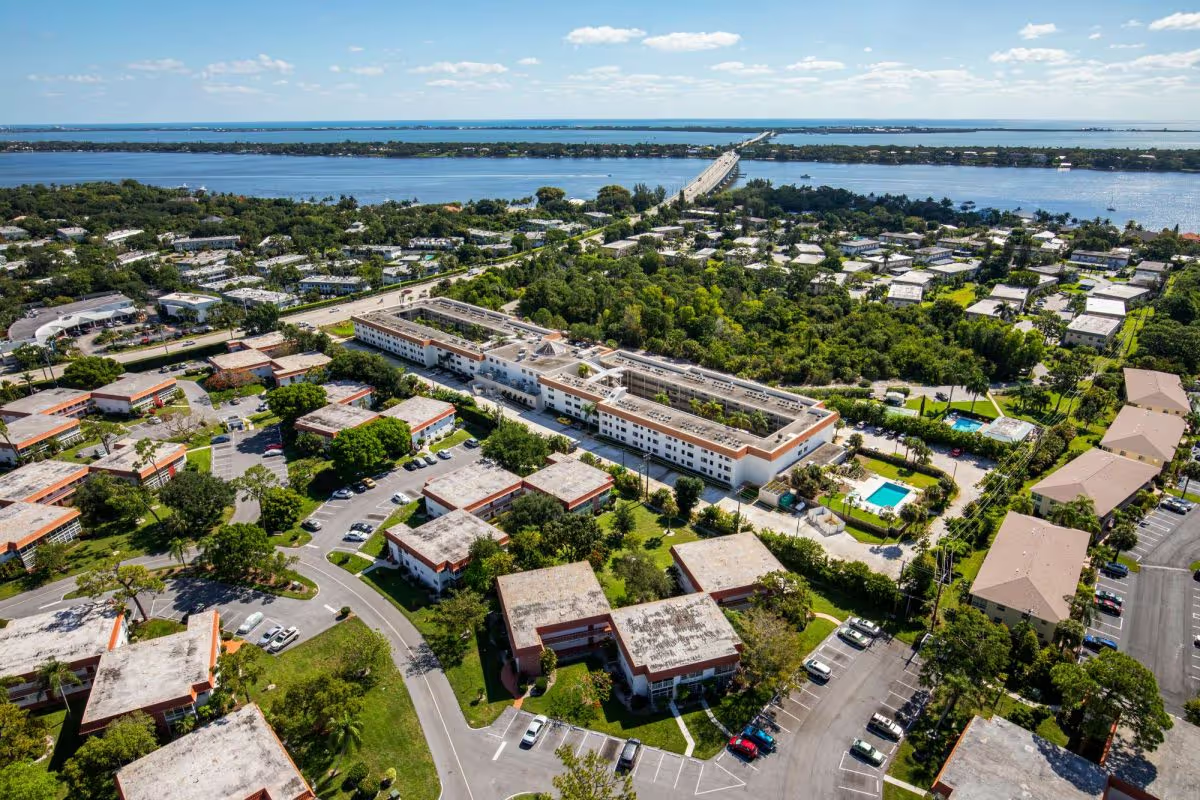
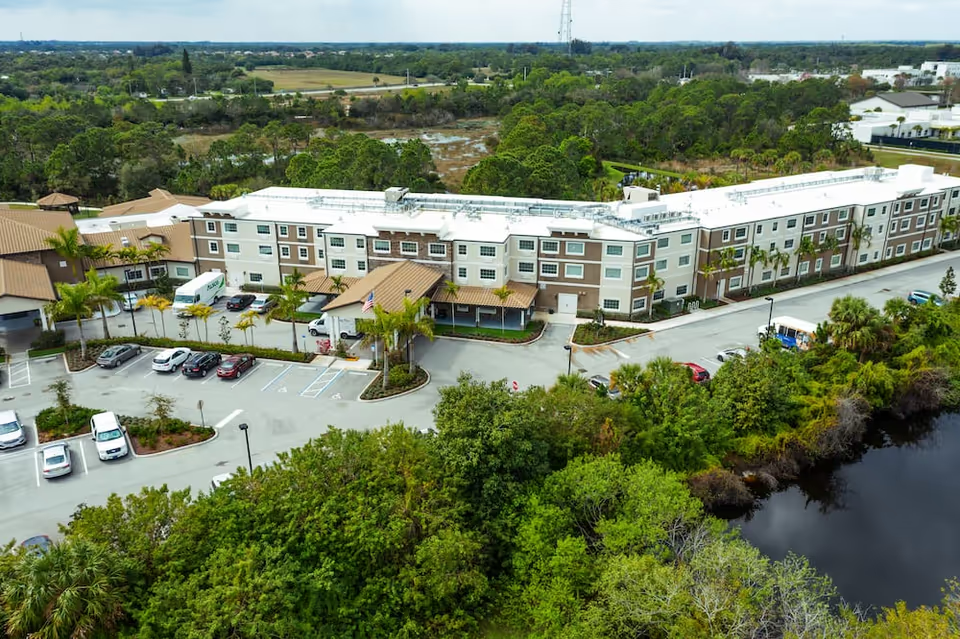
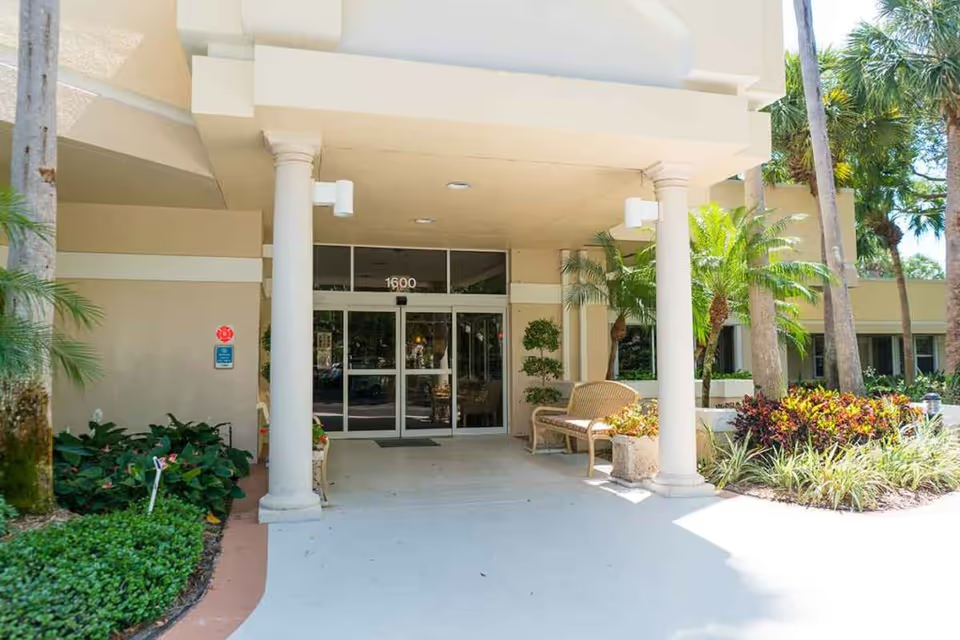
Addington Place of Stuart presents as an upscale, amenity-rich senior living community. Many families and residents describe a resort-like campus with clean, well-maintained common areas, spacious apartments (one- and two-bedroom) with modern kitchens and private balconies, and numerous on-site amenities including a dining room, café and bar, theater, library, craft center, salon, fitness center, and heated pool. Housekeeping and maintenance receive frequent positive mention, and resident-led programs and ambassador transitions are cited as helpful for new move-ins.
Staff performance is a prominent strength in many accounts: frontline employees, kitchen and dining personnel, housekeepers, and maintenance teams are commonly described as friendly, attentive, and accommodating. Several caregivers and nursing staff are singled out for compassionate care and strong communication with families. At the same time, there is a recurring pattern of variable staff conduct and training; reviewers describe inconsistent communication tone and interpersonal behaviors across shifts and departments.
Clinical care and memory-support services show more mixed feedback. For many independent and assisted-living residents the level of care and supervision is satisfactory, but multiple families raise concerns about staffing adequacy and monitoring in the memory-care unit. These concerns center on insufficient staff presence, delayed clinical response, and high turnover among memory-care staff—operational patterns that can affect safety and continuity of care for higher-acuity residents. Several reviewers also note the community is not configured for residents who require significant medical or nursing oversight, and admission criteria may restrict aging-in-place for those needs.
Dining and food service receive polarized responses. Positive descriptions include high-quality, cruise-ship–style dining and an extensive activity-linked meal program. Conversely, other families report inconsistent meal quality, issues with in-room meal presentation, late or incorrect room-service deliveries, and variability in how meals are packaged and served. These variations suggest differences in kitchen processes and room-delivery protocols that prospective residents should verify.
Operational and management themes recur across reviews. Some families praise responsive management and a smooth transition process. Others express concerns about billing transparency, unresolved account disputes, and what they perceive as a managerial focus on bottom-line priorities. There are also reports alleging theft and property-management problems; while these are serious individual claims, they appear alongside broader questions about incident escalation, dispute resolution, and financial transparency. Prospective residents should request clear explanations of fee structures, incident-escalation procedures, and property-accountability practices during tours.
Activities programming and social opportunities are widely viewed as strong points: the community offers a diverse calendar (classes, outings, games, seasonal events) that many residents find engaging. Facility condition impressions are generally positive—many note recent renovations, bright and airy units, and well-kept grounds—but a subset of comments mention odor concerns in some common areas and differences between newly renovated sections and older spaces.
Overall, Addington Place of Stuart appears best suited to prospective residents who prioritize an amenity-rich, socially active environment and who require low- to moderate-level assisted care. Families considering higher-acuity needs or memory care should closely evaluate staffing ratios, monitoring protocols, staff continuity, and emergency-response procedures. Additionally, inquire in writing about billing practices, aging-in-place policies, incident-escalation workflows, and property-loss safeguards to address the management and financial concerns raised by some families.