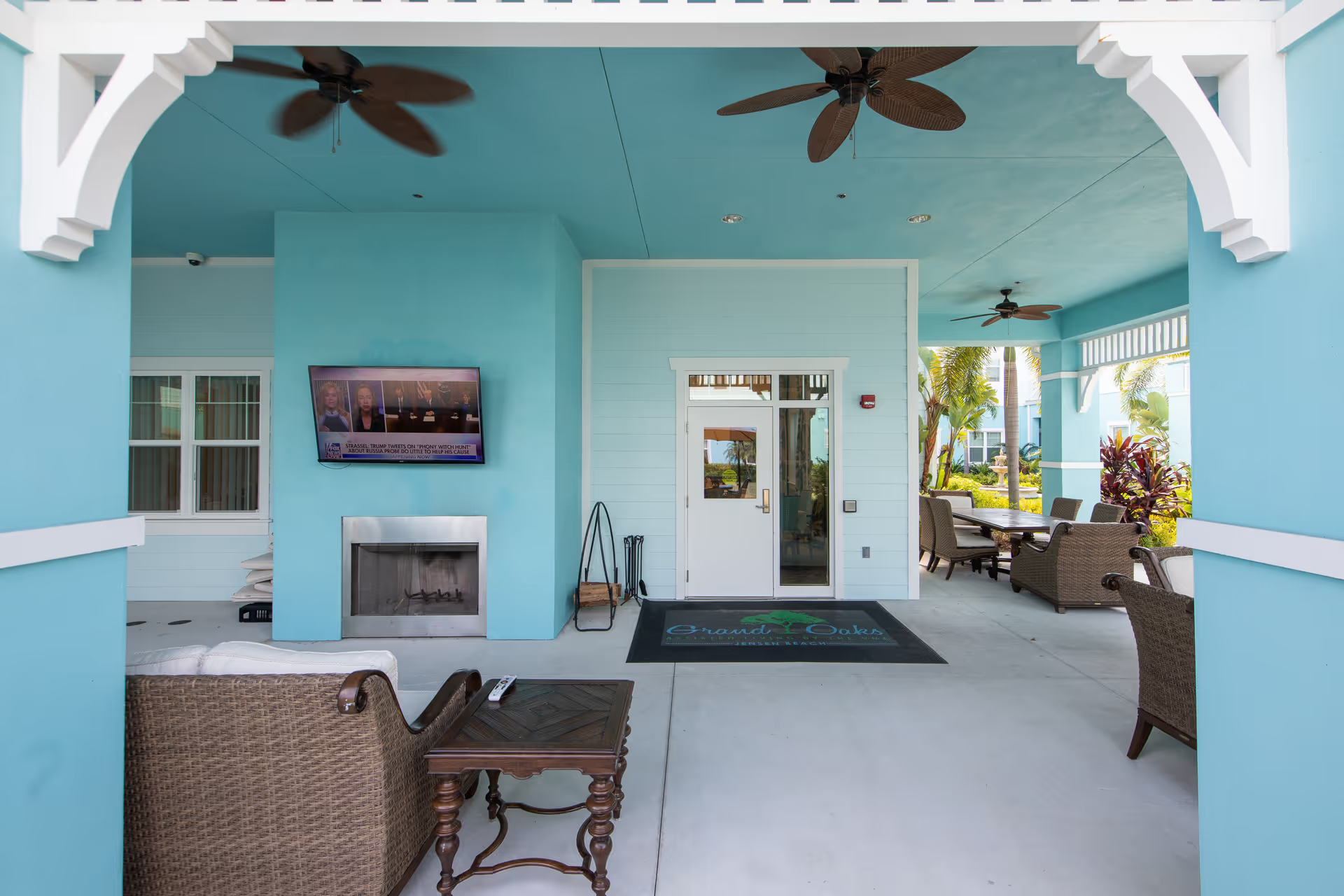
The Residence of Stuart is portrayed as a small, home-oriented assisted living option that emphasizes individualized attention and a quiet, well-maintained atmosphere. Reviews highlight a 12-private-bedroom layout and describe consistently clean common areas, including a large open dining room and a Florida room. The facility's size and layout appear to support personalized accommodations and room personalization, and several family members described long-term stability for residents who lived there for years.
Care quality and staff behavior are central strengths in the reviews. Staff are described as caring, kind, and professional, with an emphasis on dignity and compassion in daily interactions. Owner involvement is a distinguishing feature: a visible, consistent owner presence contributes to continuity and a sense of accountability. Families reported clear communication and expressed gratitude for the attentiveness and one-on-one support their relatives received.
Dining and activities align with a small, home-like model rather than a resort-style offering. The dining spaces are noted as large and open, but the operation is not positioned as chef-driven; reviewers explicitly described a simpler, homestyle approach to meals. The activity program is active for the size of the community — a daily activity board, exercise sessions, and games such as bingo are part of the routine — and outdoor amenities such as a fenced pool are available. However, the community does not emphasize frequent organized off-site outings or a broad entertainment calendar typical of larger facilities.
Facilities are described as comfortable and well-kept, with an emphasis on privacy (private bedrooms) and a quiet, homey atmosphere. The small scale contributes to personalized care and a familial environment, which many families found beneficial. At the same time, that same small scale implies operational limits: culinary options are modest, there are fewer organized outings, and on-site clinical or specialty services are likely more limited than in larger campuses. The model appears best suited to residents who prioritize individualized attention and a home-like setting over extensive amenities or intensive medical services.
Overall, The Residence of Stuart presents as a small, compassion-focused assisted living alternative with strong family communication, stable staffing/ownership presence, and cleanliness. Prospective residents and families should weigh the benefits of individualized care and a quiet, homey environment against the trade-offs of limited culinary variety, fewer off-site activities, and constrained clinical capacity relative to larger facilities.