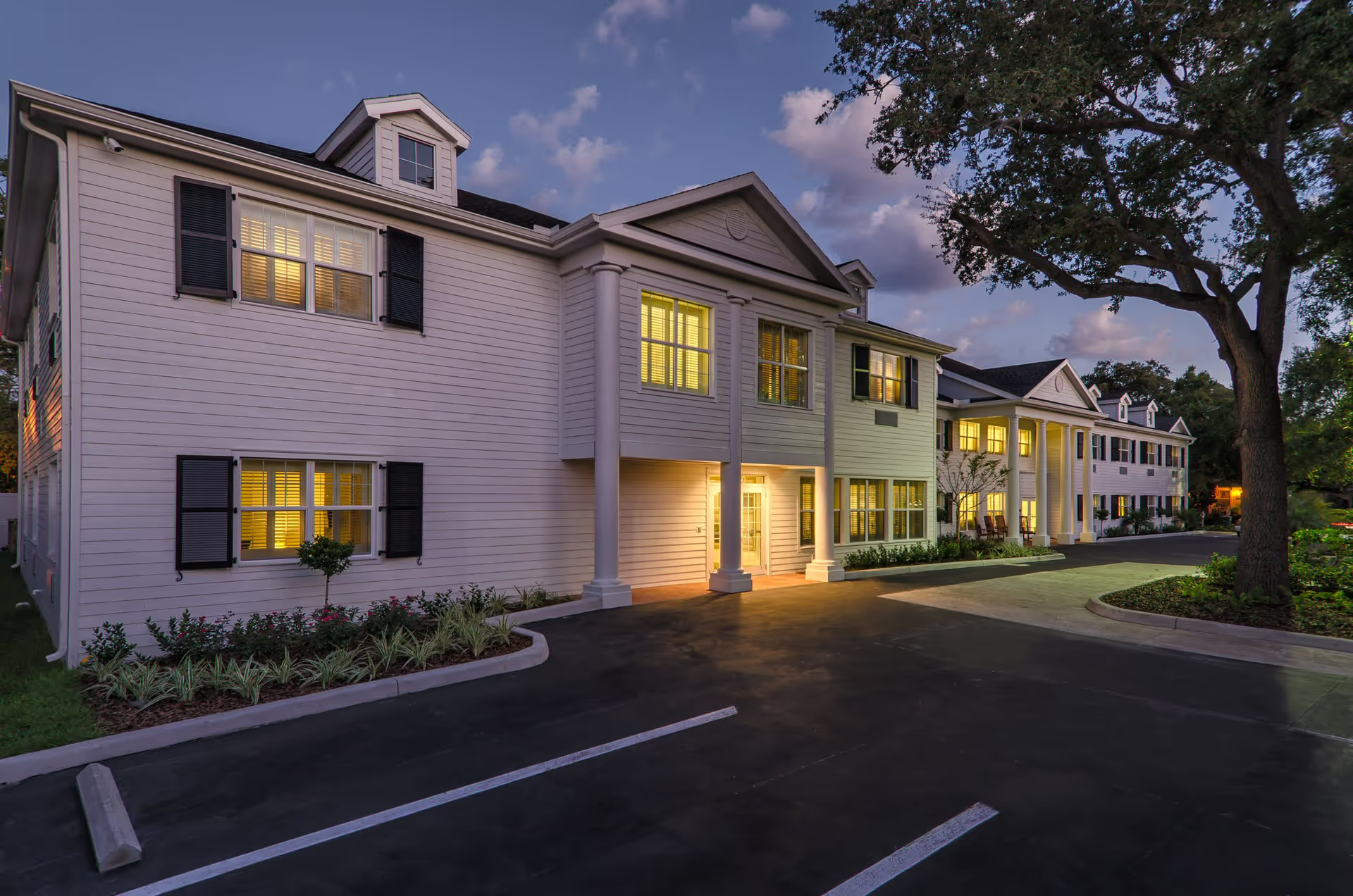
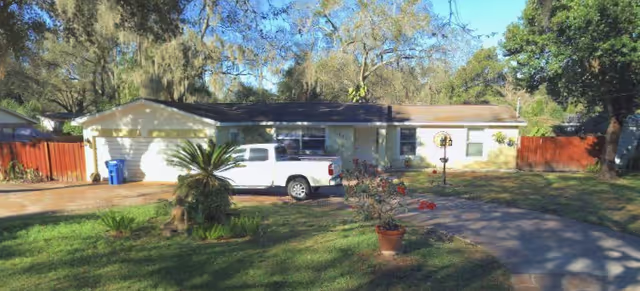
Overview: The Estate at Hyde Park presents a strong physical environment and a clear emphasis on memory-care programming. Many families describe a bright, well-appointed community with modern finishes, comfortable rooms, pleasant common spaces and a resort-like atmosphere. On-site clinical resources (including 24-hour licensed nursing coverage, an on-site physician and therapy services), a robust activity calendar, and customizable dining options are recurring strengths cited by families who feel satisfied with the placement.
Care and staff quality: Care quality appears mixed. A substantive number of families commend caring, attentive and long-tenured caregivers, noting dignity-preserving assistance, consistent medication delivery in some cases, and staff who facilitate social reengagement. At the same time, recurring themes include inconsistent staffing levels that can stretch caregivers thin, variability in direct-care competence, and uneven adherence to hygiene and incontinence-care practices. Several reviewers raised serious concerns about medication documentation and oversight; those assertions, if accurate, would merit formal review by clinical leadership or regulators. Overall, the pattern is one of notable individual caregivers providing strong care alongside operational gaps in training, supervision and staffing consistency.
Dining and activities: Dining is generally viewed positively for food quality and customization, and the community promotes multiple dining options and a spice-based program to appeal to older palates. However, families also report inconsistent follow-through on special requests and occasional lapses in meal-service management. Activities and outings are a clear strength: residents are often described as engaged, with a proactive activities director and a calendar that includes exercise classes, current-events discussions and social events. A few families expressed a desire for still more stimulating or individualized programming for certain residents.
Facilities and clinical services: The building and grounds receive high marks for cleanliness, aesthetics, and a memory-care–focused layout. Maintenance responsiveness and housekeeping are praised in many accounts. Clinical resources such as in-house labs, integrated therapy, on-site physicians and 24/7 nursing are important assets and are frequently cited as reasons families feel secure. Noted site considerations include a flood-zone/evacuation risk mentioned by reviewers; prospective families should factor local emergency plans into their decision.
Management, communication and patterns to watch: Communication and leadership presence are mixed. Some families praise responsive directors and helpful admissions staff; others describe difficulty reaching management, inconsistent follow-through on concerns, and a perception of inexperienced or evasive leadership. Several reviewers indicated that families felt compelled to supplement care or bring in outside aides due to staffing shortfalls. Value perceptions vary: many families feel the community is worth the cost for the environment and services, while others cite high monthly fees and rent increases as a concern relative to inconsistent operational performance.
Recommendations for prospective families: When evaluating the community, observe care at multiple times of day, ask for current staffing ratios and the number of licensed nurses on duty, review medication-administration and documentation policies, and request examples of infection-control and incontinence-care procedures. Sample a meal, review the activity calendar, and ask how management tracks and resolves family concerns. If medication documentation or serious clinical concerns are referenced, request clarification and any corrective-action documentation from leadership. These steps will help families weigh the facility’s strong physical environment and clinical resources against the operational inconsistencies highlighted by reviewers.