Reviews for Whispering Oaks are highly mixed, with a clear split between strong clinical and rehabilitative praise on one hand and operational concerns on the other. Many families and former patients praised the facility’s nursing and therapy teams for compassionate bedside care, effective physical/occupational/speech therapy, and positive rehabilitation outcomes. Several accounts specifically singled out accessible leadership (DON/NHA), a committed medical director and nurse practitioners, and staff who routinely go beyond assigned duties to support residents and families. Activities programming and community events are frequently noted as strengths that support resident engagement and morale.
At the same time, a recurring set of operational weaknesses appears in the feedback. Cleanliness and sanitation are inconsistent across reports: while some visitors described clean, well-maintained areas, others detailed sanitation concerns and odor issues in particular units or back areas. Staffing levels and stability are a common theme — reviewers cited high resident-to-staff ratios, variable staff training and professionalism, and reduced responsiveness overnight. These staffing and coverage issues correlate in several reports with delays in clinical monitoring (including medication and enteral care oversight), inconsistent night-shift availability, and uneven customer-service interactions.
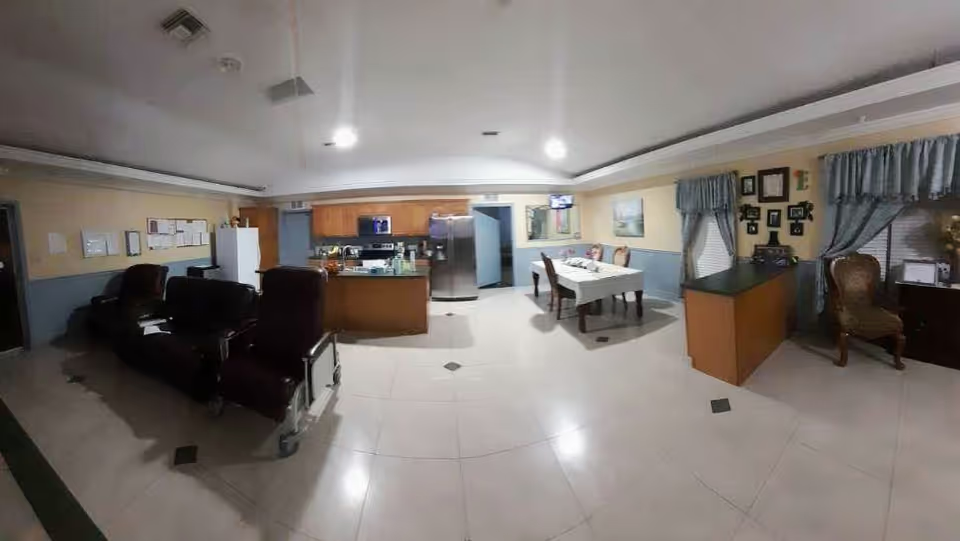
Facility layout and property practices also drew mixed commentary. Positive accounts describe a welcoming, family-like atmosphere and comfortable common spaces, but other reviewers noted crowded multi‑bed rooms that limit privacy, HVAC or temperature-control problems, and weaknesses in property management that have led to missing personal items. Dining impressions vary: some families praised home-style meals and improvements under new leadership, while others described inconsistent food quality and coordination problems. Therapy and rehab services are generally highlighted as a relative strength, with specific staff and therapists named for positive outcomes.
Management perceptions are similarly polarized. Many reviewers appreciate approachable, problem-solving leadership and open communication channels; others described administrative turnover, paperwork coordination issues, and slow or unsatisfactory responses to concerns. Given these divergent experiences, prospective residents and families should plan a focused tour and ask targeted questions about current staffing ratios (particularly at night), clinical-monitoring protocols for complex needs (including enteral and medication oversight), infection-control and pest-control practices, property-inventory safeguards, and recent quality or inspection reports. Speaking with multiple families and reviewing the facility’s most recent regulatory inspections can help clarify whether the operational issues highlighted in some accounts have been addressed.