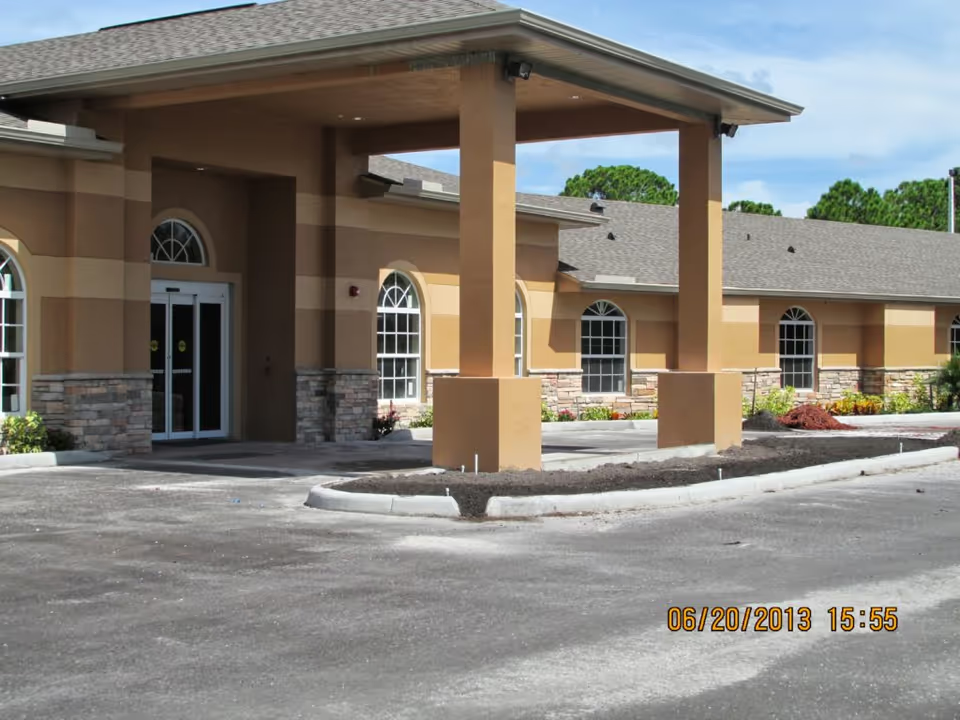
The reviews for Sunset Lake Health and Rehabilitation Center are highly polarized, with clear patterns of both substantive strengths and recurring operational weaknesses. Positively, many families and former residents describe compassionate, dedicated nursing and aide staff who provide hands-on care and emotional support. The facility is frequently praised for a robust physical and occupational therapy program, available wound-care resources, and therapy-driven rehabilitation outcomes in numerous cases. The building and grounds—including recently renovated areas, attractive outdoor courtyard spaces and lake views—are commonly cited as pleasant and conducive to recovery. Admissions, social-services navigation, and front-desk/concierge support receive positive mention for smoothing transitions.
At the same time, a consistent set of operational concerns emerges across reviews. Staffing levels—notably overnight and weekend coverage—are described as inconsistent, contributing to delays in responding to call lights and attending to resident needs. Several reviewers connect staffing constraints to shortcomings in basic assistance, timeliness of toileting and bedding changes, and slower medication administration. Related to this are gaps in medication-management processes: reviewers describe outdated distribution systems, medication omissions or delays, and practices that raise concerns about safety checks and documentation.
Infection-prevention and sanitation are another area of mixed feedback. While some families find the facility clean and well-maintained, others describe sanitation issues and pest-control concerns in specific units, along with failures in maintaining wound dressings or addressing contagious skin problems promptly. These accounts point to variability in housekeeping follow-through and in clinical infection-control practices. Food service is likewise uneven: the facility can provide tailored meals and has an accommodating dietary staff and dietitian, but reviewers also describe limited menu variety, inconsistent meal delivery, insufficient diabetic-specific options, and variable portioning or temperature control.
Communication and care coordination present additional patterns. Many families praise individual staff members and department leaders for responsiveness and advocacy, yet others report difficulty contacting the facility by phone, reluctance to share medical records, and inconsistent documentation or follow-through with home-health and discharge arrangements. Physician presence and clinical oversight are described as limited in some stays, with nurse practitioners and therapists more visible than attending physicians in day-to-day care. Discharge planning and transitions to home health are noted as areas needing stronger processes and verification to ensure continuity of care.
Activities and resident engagement receive largely positive feedback when staffing and program coordination are present: the center offers varied programming (bingo, concerts, church services, pet therapy) and supports social engagement. However, activity levels and staffing often dip on weekends, and some reviewers felt the offerings were not tailored for residents with cognitive impairment. Management and leadership impressions vary: some families commend hands-on directors and department heads who make substantive improvements, while others perceive administrative unresponsiveness or inconsistent enforcement of clinical and housekeeping standards. Altogether, Sunset Lake appears capable of providing high-quality rehabilitation and compassionate care when staffing and management practices align; prospective residents and families should weigh strong therapy and individual caregiver reports against recurring operational concerns in staffing, infection control, medication systems, and communication when making placement decisions.