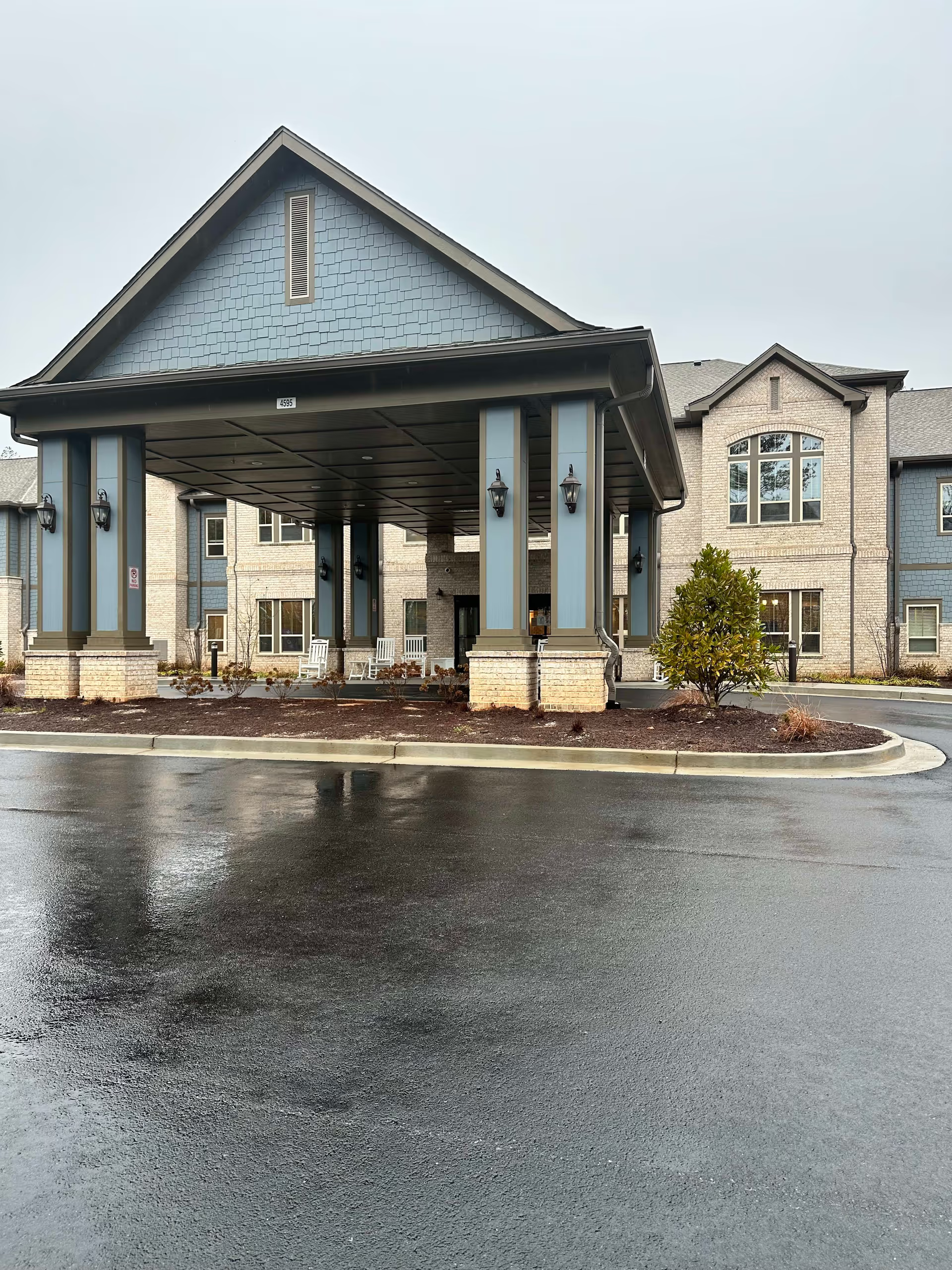
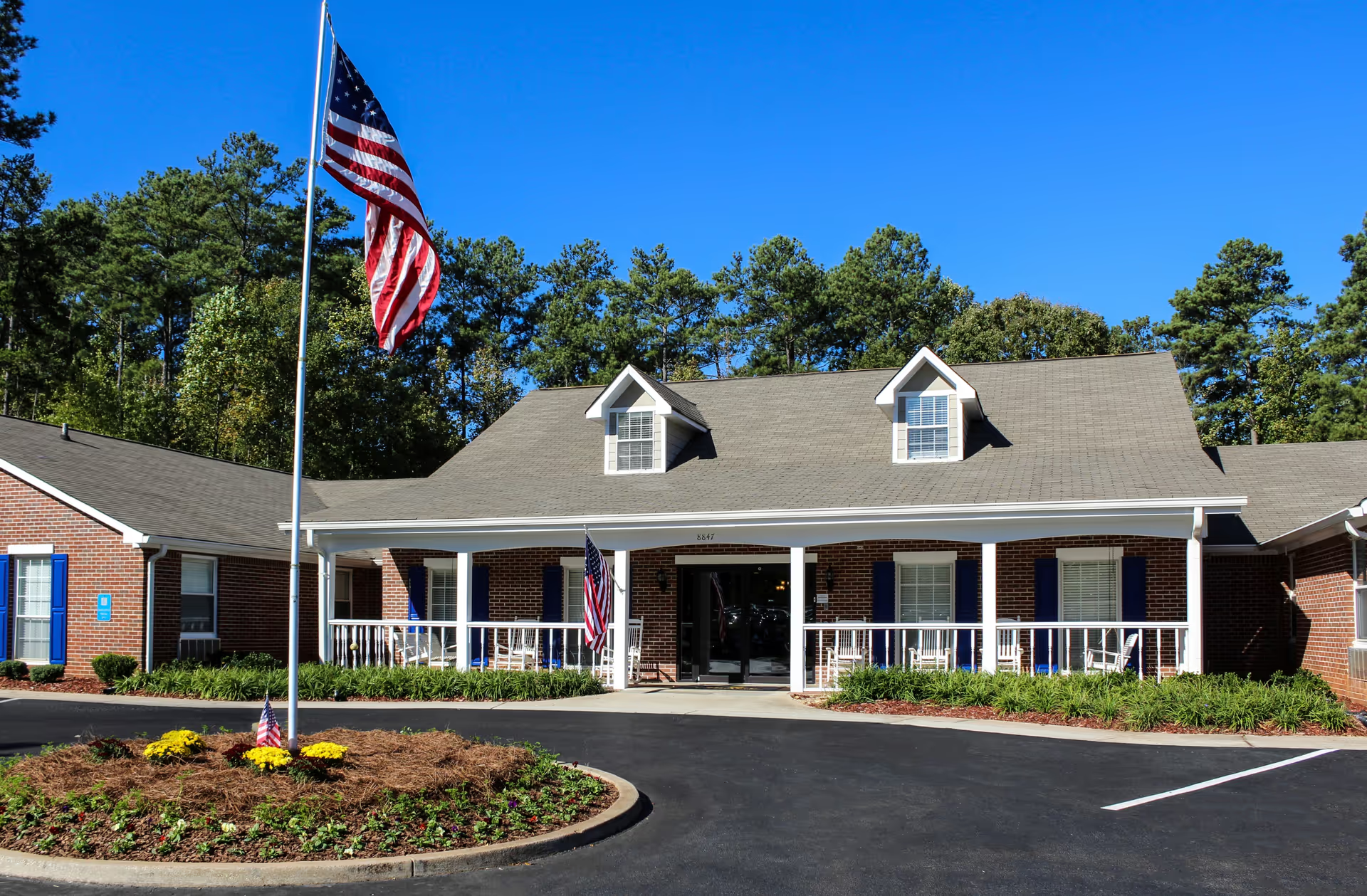
Oaks at Douglasville presents as a modern, well-maintained senior community with many families praising the physical plant, amenities, and the general level of daily care. The facility's campus, landscaping, enclosed courtyards, and contemporary interior decor are consistently described as clean and inviting. Apartments are often characterized as spacious and well-appointed (kitchenette, walk-in showers, wide doors), and the on-site amenity mix — including a theater, gym, physical therapy, putting green, and social spaces — supports a resort-like atmosphere.
Care quality and staff interaction are among the most frequently noted strengths. Many families highlight attentive, compassionate caregiving, proactive clinical oversight, and clear communication channels that provide regular updates and a sense of reassurance. On-site therapy and rehabilitation services, along with visible safety features (grab bars, walk-in showers), contribute to a perception of solid clinical support. The community's COVID-19 protocols and visitation management were also viewed positively by families who valued infection-control measures.
Dining and nutrition are mixed areas. The community offers restaurant-style dining with multiple menu options and alternatives, and some residents enjoy the food and frequent snacks or themed treats. However, there are consistent operational concerns around meal service: variability in food quality, limited variety or texture-appropriate options within memory care, and occasional long wait times or coordination problems when meals are served across neighborhoods. For memory-impaired residents, families noted adapted utensil and serving approaches (finger-foods) that some found limiting; this underscores a need to confirm meal plans and texture modifications during admissions.
Activities and social programming are robust for assisted-living and Horizon residents, with daily exercise, music, dancing, bus outings, and in-house events often cited as engaging. In contrast, activity engagement appears less consistent for memory-care residents; several families described outings as less frequent and programming less well adapted for residents with sensory or cognitive impairments. Prospective families should review the memory-care calendar and ask how activities are individualized for vision- or cognition-impaired residents.
Management and operations show a pattern of variability. While many reviews commend responsive leadership and prompt issue resolution — particularly where a new executive director improved communication — there are repeated comments about high staff turnover, frequent leadership and activities-director changes, and constrained housekeeping and food-service staffing. These operational instabilities are associated in reviews with periods of diminished food quality, longer service delays, and uneven coverage (notably on night shifts). Pricing structure also drew attention: some services (internet, cable, laundry) may be billed separately rather than included in base rent, which affects overall cost comparisons.
Overall pattern: the community scores highly on facility quality, amenities, and many aspects of daily care, and many families express confidence and satisfaction. At the same time, operational inconsistencies — staffing turnover, night-shift coverage, variable meal service, and uneven memory-care programming — are recurring themes. Prospective residents and families would be well advised to verify current staffing ratios and turnover, confirm memory-care activity schedules and meal plans, review what fees are included, and request recent menus and staffing patterns for the times of day most relevant to their loved one. This will help determine whether the facility's strengths align with the specific clinical and social needs of the prospective resident.