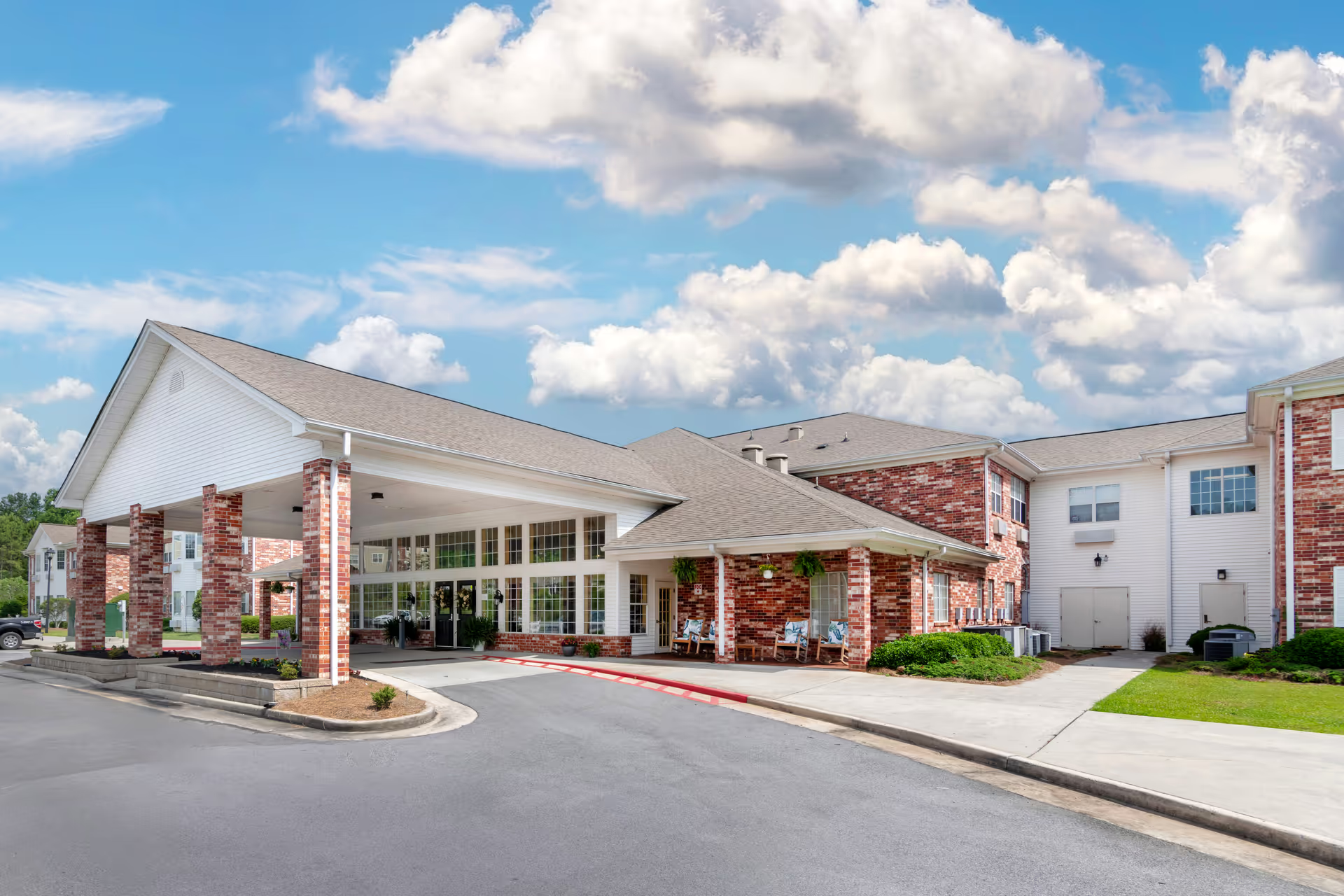
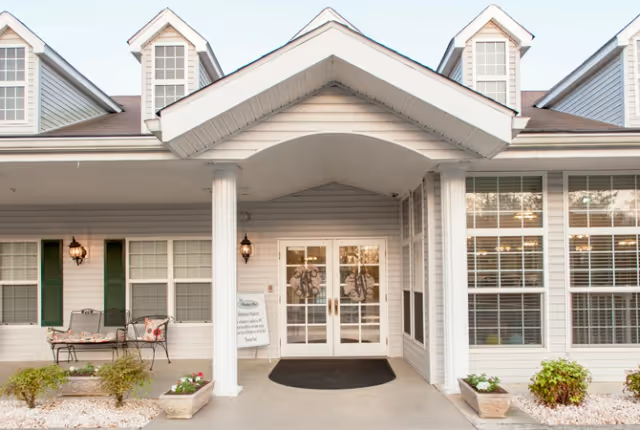
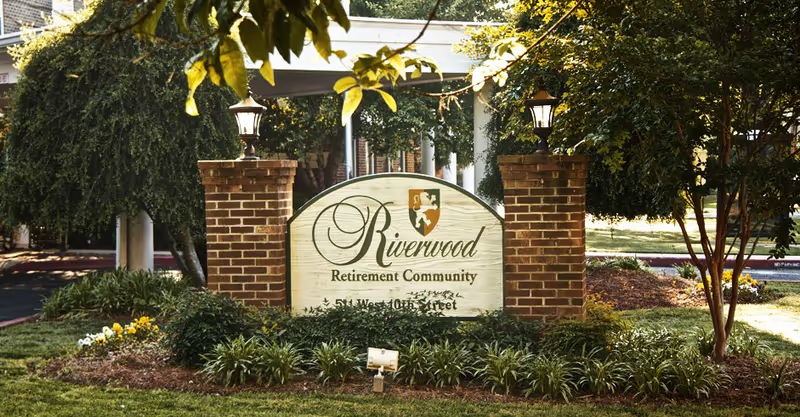
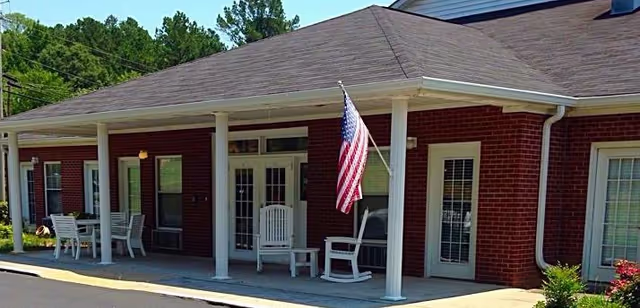
The Spires at Berry College presents a clear split between facility quality and operational consistency. Physically, the community is new and upscale: reviewers consistently note attractive, mansion-like architecture, well-kept grounds, multiple courtyards, and extensive indoor amenities such as a swimming pool, gym, salon/beauty shop, movie and game rooms, multiple dining venues, and concierge services. There are a variety of housing types and price points, plus on-site transportation, which may suit a range of resident preferences. The memory-care wing is described as secure, and many visitors described first impressions as clean and well-decorated.
Care quality and staffing perceptions are mixed. Numerous accounts describe caring, patient, and attentive frontline staff who create a friendly, home-like rapport with residents; however, there are also recurring statements about inconsistent staff performance and gaps in clinical or personal-care consistency. Understaffing is mentioned as a factor that can lead to delays in attention and uneven service levels. Taken together, these points suggest variability in day-to-day staffing and supervision rather than a uniform standard of care across the campus.
Dining and clinical services receive varied evaluations. The facility has a large dining room overseen by a chef and multiple food-service venues, and some residents praise the cuisine and the dining environment. At the same time, other reviewers describe inconsistent food quality and an atmosphere in some dining areas that feels institutional rather than home-like. Medication-management and some clinical processes are described positively by some families, but the overall picture is mixed, with a subset of reviewers expressing concerns about clinical oversight and responsiveness.
Activity programming and engagement are another area of divergence. The community offers many amenities and the opportunity for organized activities, but several comments indicate limited daily programming or low resident participation in activities. This creates a contrast between available facilities (pool, gym, classes, transportation) and the perceived day-to-day life of some residents who find programming insufficiently active or engaging.
Management and operations also draw attention. Communication between management, staff, and families is a recurrent concern, with reports of delays or unclear information transfer. Cleaning and sanitation concerns are raised for some areas, suggesting opportunities to strengthen environmental services and quality-control processes. Finally, cost is a significant factor: the community carries high entrance fees and overall pricing that reviewers describe as substantial, which should be weighed against both the strong physical amenities and the noted variability in care and day-to-day operations.
Overall, prospective residents and families will likely appreciate the upscale campus, broad amenities, and secure memory-care option, but should evaluate operational consistency—staffing patterns, communication practices, activity levels, dining satisfaction, and environmental services—during tours and discussions with management to ensure the community’s day-to-day delivery matches expectations and needs.