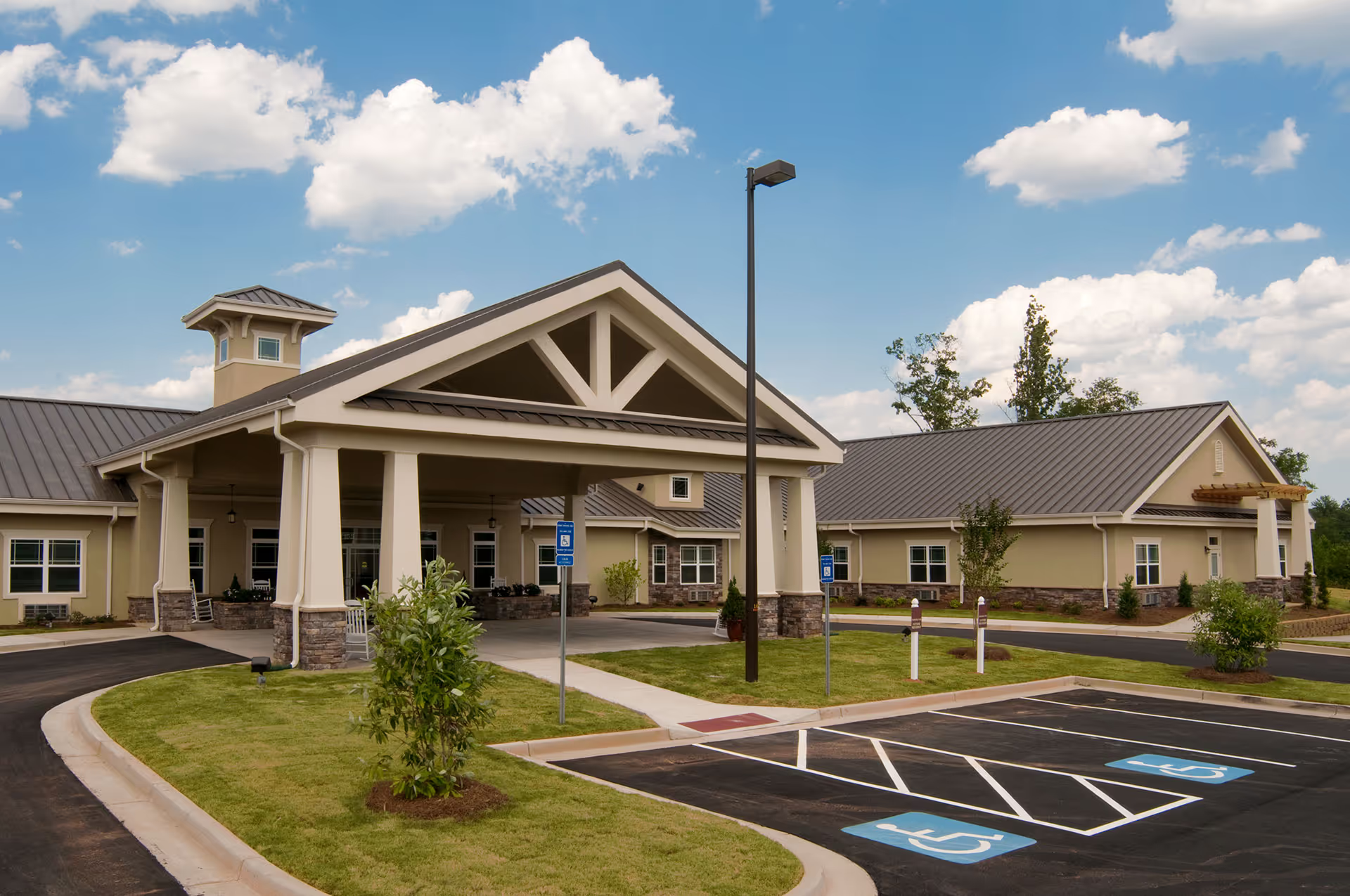
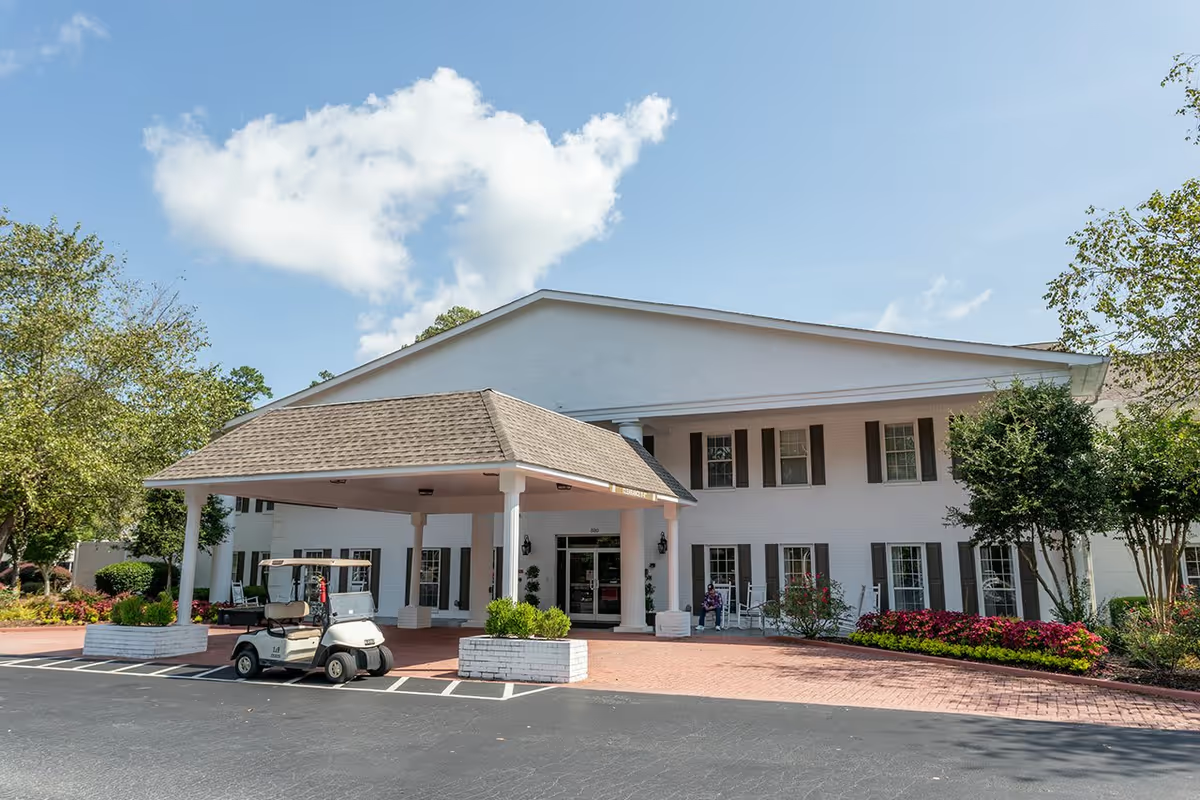
Reviewer accounts present a mixed and polarized picture of The Gardens of Social Circle (also referenced under alternate names). Positive experiences center on direct-care staff and social life: many families describe aides and activity staff who are caring, attentive, and invested in residents’ social engagement. The community’s activity program, gardens and patio spaces, live music and social opportunities, plus on-site services such as hair appointments and physical-therapy encouragement, are frequently cited as strengths. Renovation of the Manor House and certain remodeled units receives positive remarks; those areas are described as clean and well-decorated.
At the same time, a number of operational weaknesses recur across accounts. Staffing consistency and supervision are described as uneven, and reviewers express concerns about the facility’s capacity to meet the needs of residents with dementia or complex memory-care needs. Several families note what they perceive as delays in attending to residents and inconsistencies in clinical tasks, including medication handling and monitoring. Relatedly, gaps in incident documentation and family communication have been raised—families seeking timely notification and clear records of events cite frustration.
Dining and personal-care operations show variability. Some reviewers praise the menus and improvements to dining, but others report cold or undercooked meals, missed meal service, and inconsistent meal-charting. Laundry and personal-belonging management are additional areas of concern, characterized as inconsistent handling that can lead to wrinkled garments or missing items. Sanitation and maintenance issues are reported in parts of the campus: odor concerns, cleanliness problems in certain buildings, visible maintenance needs (ceiling leaks, flooring, doors), and pest-control concerns are all cited by reviewers describing older or less-updated areas.
Management and organizational patterns form an important theme. Several accounts attribute changes in care quality to ownership transitions and management turnover; this is described as producing disarray during periods of reorganization. While some families describe responsive and helpful office staff and administrators who facilitate successful transitions, others describe a perceived lack of accountability, inconsistent policies (for example, camera/monitoring practices), and decisions that appear financially driven rather than care-focused. Staffing turnover and training gaps are highlighted as contributors to uneven resident experience.
Notable patterns to consider when evaluating the community: experiences vary significantly by building and timeframe (renovated Manor House versus older wings), and individual staff members are often identified as making a meaningful difference in outcomes. For prospective residents and families, recommended areas to evaluate during a visit include staffing ratios and typical staff schedules, dementia-care training and programming specifics, medication-administration protocols and documentation practices, incident-communication procedures with families, meal-service logistics and meal-charting, laundry and belongings handling policies, pest-control and housekeeping routines, and the owner/management’s stabilization plan following any recent transitions. Overall, the facility demonstrates clear strengths in social programming and in the performance of many front-line caregivers, but it also exhibits operational inconsistencies that merit focused inquiry prior to placement.