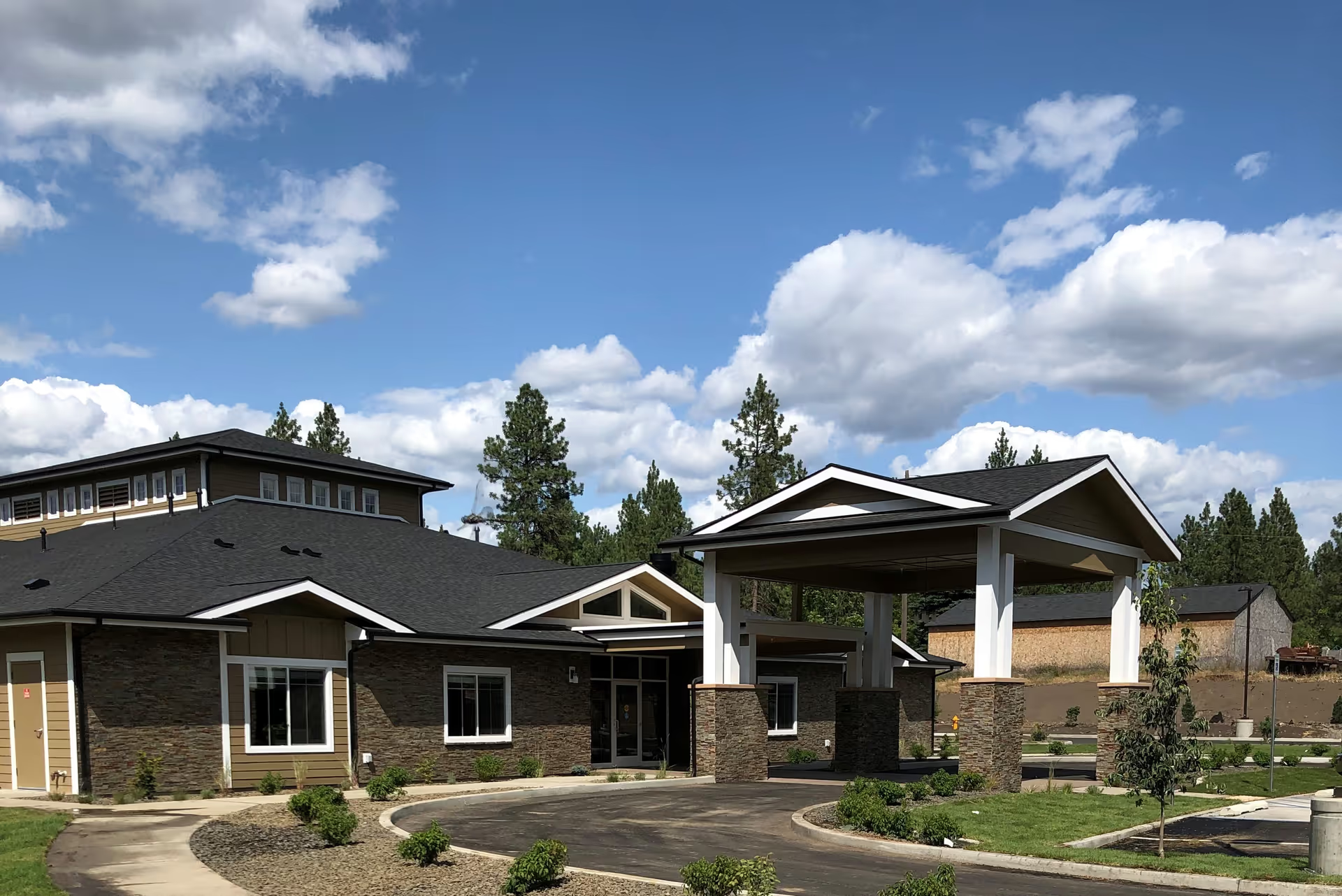
Reviewers convey a mixed but clear pattern: direct-care clinicians and many front-line staff receive consistently positive remarks, while leadership and operational reliability emerge as recurring concerns. Nursing and caregiving are frequently described as caring, attentive, and capable; several comments highlight engaging interactions, social activity, and an overall pleasant resident experience at the Moscow location. Employees also report a supportive workplace culture, growth opportunities, and flexible scheduling in some units.
At the same time, multiple weaknesses in facility operations are evident. Communication and management responsiveness are commonly criticized: documentation gaps (such as clinical orders not entered) and inconsistent follow-through are cited, which reviewers link to delays in care delivery. There are specific allegations of delayed medication or pain relief and at least one serious allegation of inadequate clinical response that prolonged symptoms; these point to a need for clearer medication-administration and clinical-order workflows and stronger oversight.
Dining and dietary accommodation show variability. Some reviewers describe limited meal variety and difficulties with dietary restrictions, including disputed handling of wheat/dairy needs. Dining-room dynamics are also noted as a site of interpersonal friction in a few accounts. In contrast, other reviewers enjoy the social aspects of meals and activities, so the dining experience appears uneven across time or units.
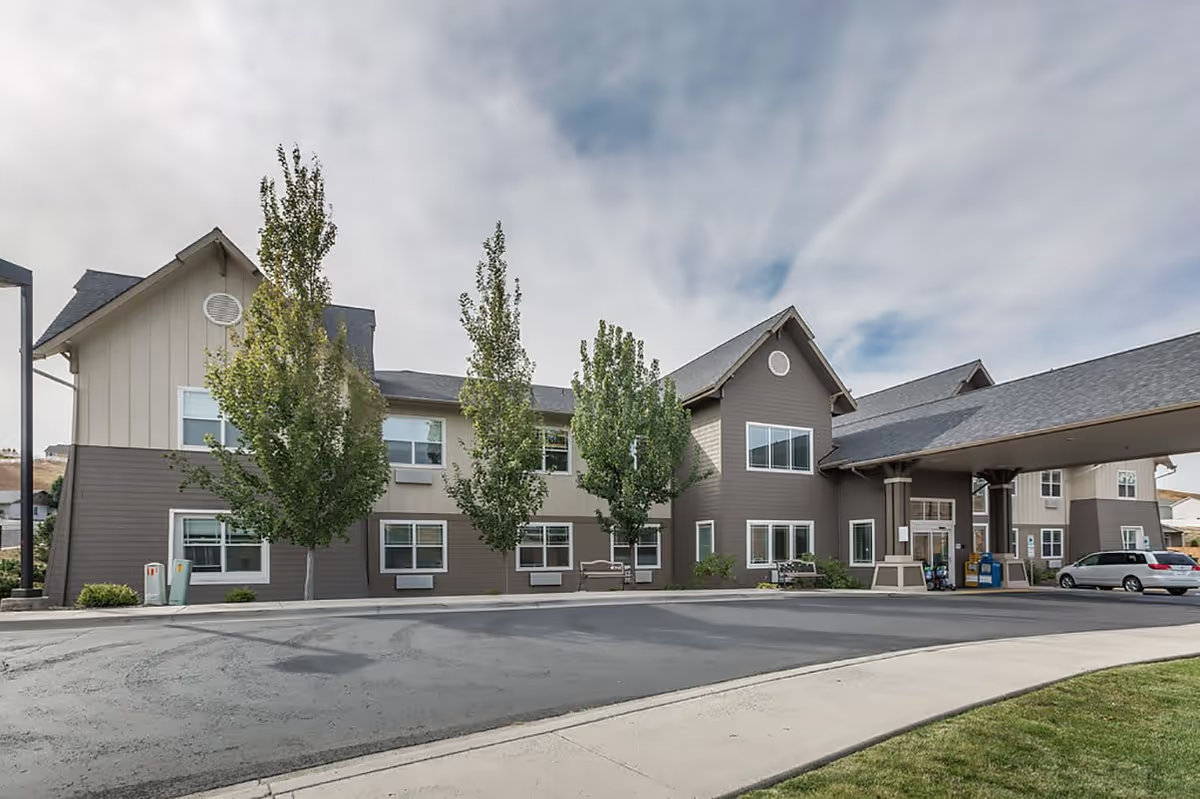
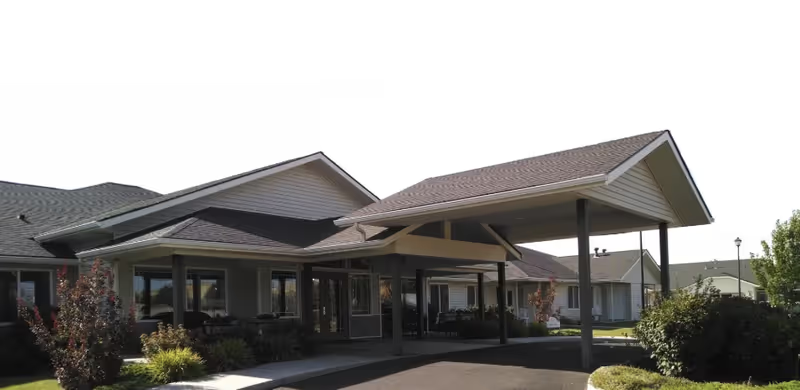
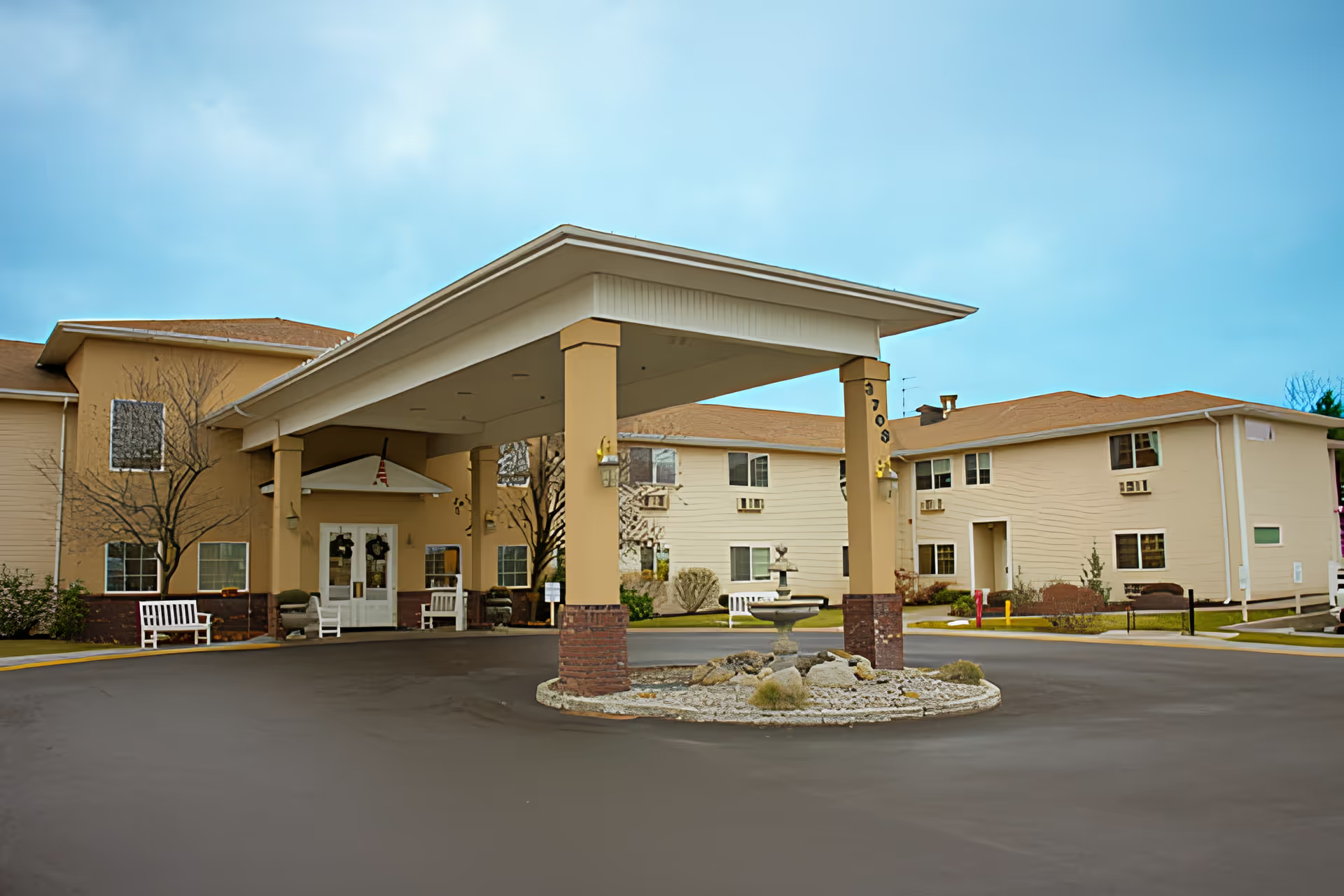
Facility condition and housekeeping receive mixed remarks. Several accounts praise cleanliness and the living atmosphere, while others raise sanitation and maintenance concerns about certain buildings or common areas. This suggests that facility maintenance and housekeeping standards may differ by building, floor, or shift.
A notable pattern is the contrast between strong front-line caregiving and weaknesses in managerial processes. Concerns about staff conduct and conflict resolution are reported alongside examples of management perceived as unresponsive or slow to act; at least one review describes reassignment of a problematic staff member rather than a transparent resolution. For prospective residents and families, the primary considerations are the high marks for direct care quality and social engagement versus the operational risks tied to documentation, medication timing, dietary consistency, and management follow-through.
Recommendations for due diligence: ask the facility to describe current medication administration and clinical-order documentation processes, request recent examples of how dietary restrictions are handled, and inquire about incident and conflict-resolution policies. Visiting multiple times and speaking with both nursing staff and current residents/families may help clarify whether positive staff relationships and clean environments are consistent across the campus or concentrated in particular units.