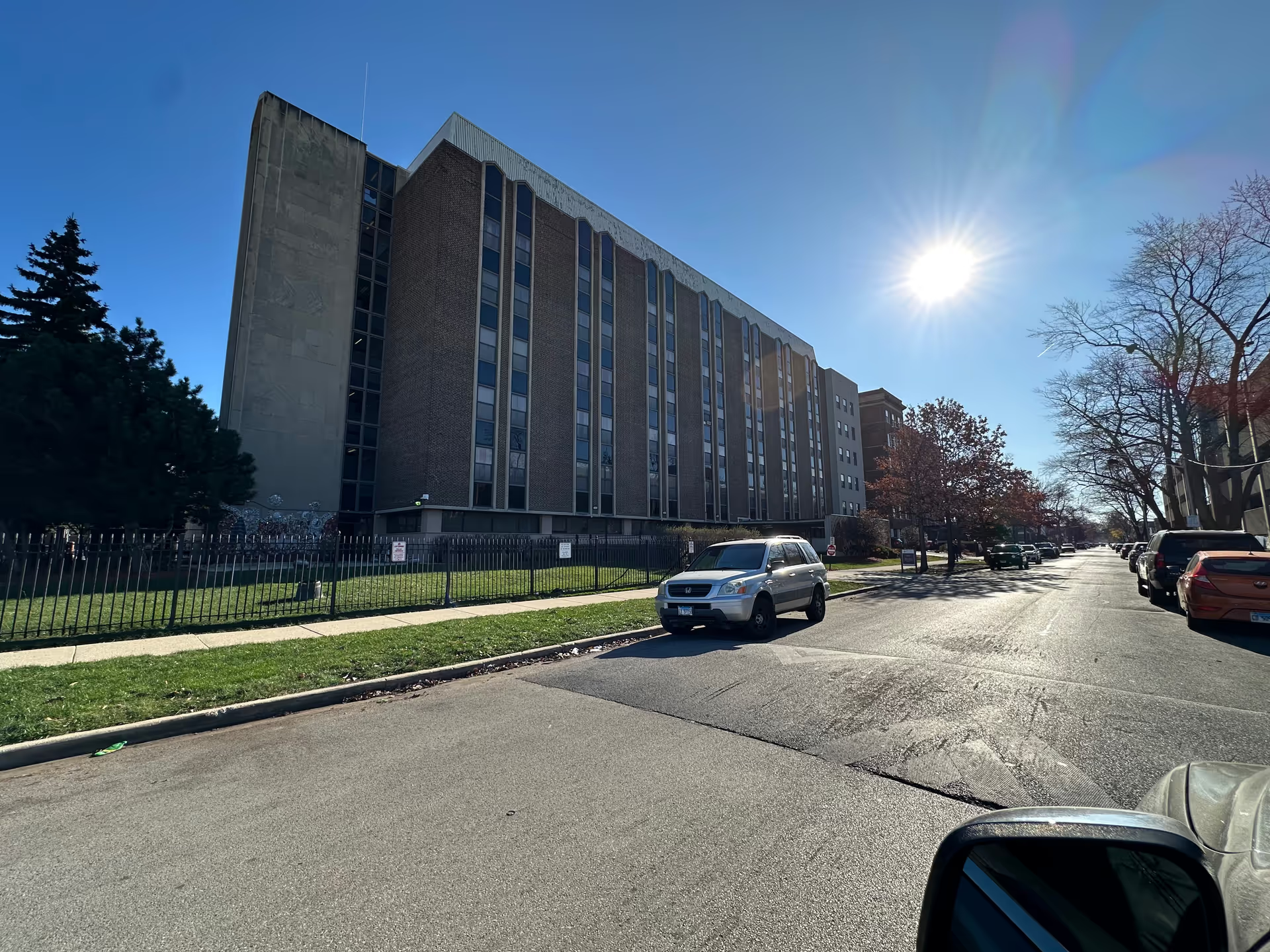
Winston Manor elicits a mixed but clear pattern: direct-care staff and day-to-day caregiving are frequently described as compassionate, attentive, and person-centered, while administrative and front-office operations generate the bulk of negative feedback. Many commenters highlight the warmth of care interactions, praise specific certified nursing assistants, and describe a homelike, safety-focused atmosphere that supports residents’ transitions and daily needs. Maintenance responsiveness and recent interior updates (for example, new room dividers) are also noted as operational strengths.
Care quality is generally characterized as compassionate and resident-focused. Reviewers emphasize caregivers’ dedication, pride in work, and positive staff–resident interactions. Several families referenced helpful CNAs and staff who make residents feel supported, and some described the facility as an enjoyable place to live. At the same time, there are indications of staffing strain: comments about overworked staff and occasional knowledge gaps suggest variability in service consistency and training depth.
Dining receives divergent comments. A subset of residents express enjoyment of meals and say they like the food, while other feedback highlights inconsistent food quality, limited menu variety, and requests for clearer seasoning/ingredient labeling. Those differences suggest the kitchen may provide acceptable meals for many residents but that the menu and consistency could benefit from review and expansion to meet broader preferences and dietary transparency needs.
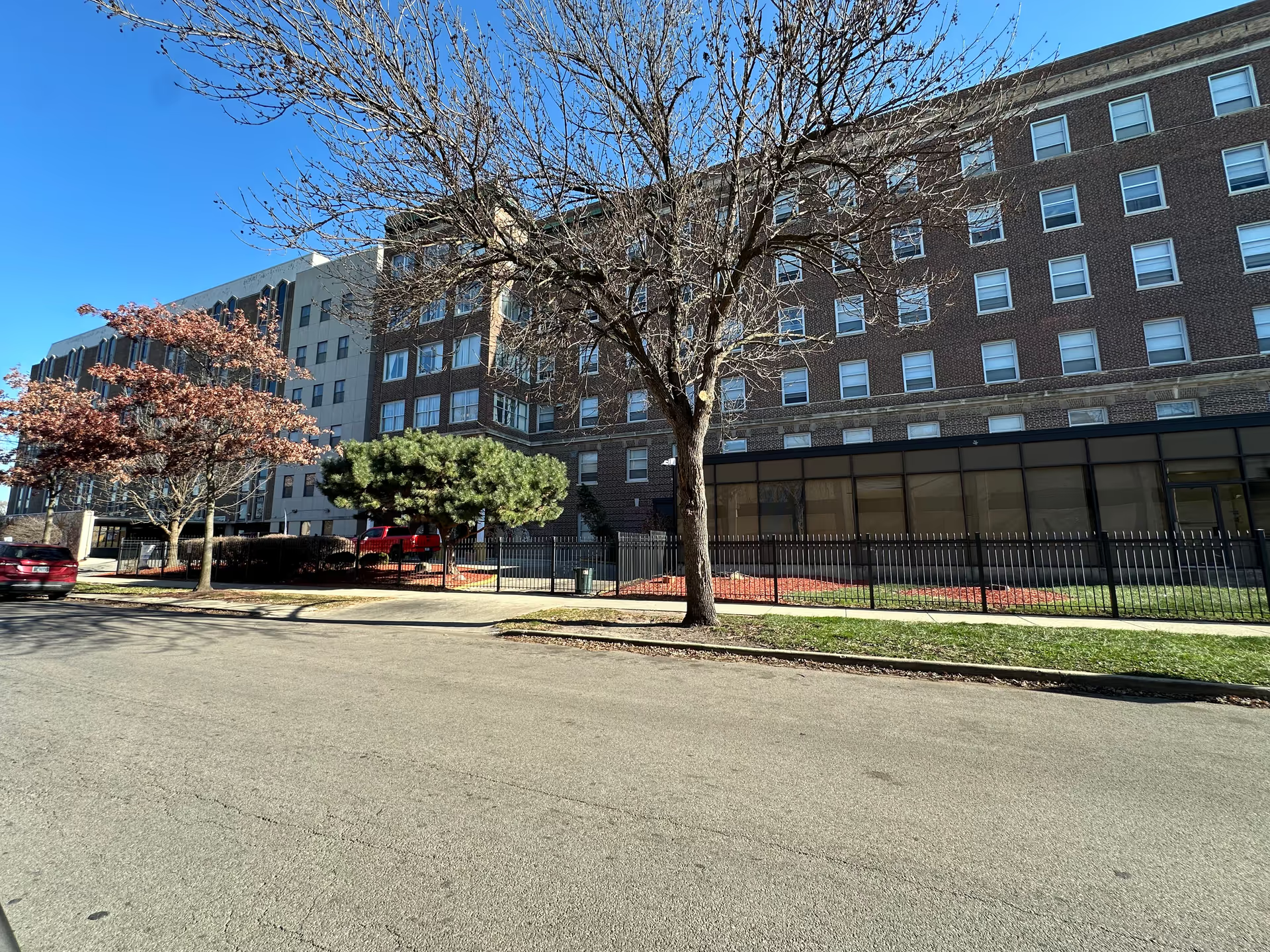
Facilities and upkeep appear mixed. Timely maintenance and some recent upgrades are positives, and the overall environment is often described as homelike. However, reviewers also point to outdated areas of the building and suggest further capital improvements would be appropriate to raise overall impressions and comfort.
The clearest pattern of concern centers on administration and front-office customer service. Multiple comments reference long phone hold times, curt or unhelpful reception interactions, gaps in HR presence, and poor follow-through on questions or requests. Reviewers frame these as organizational and communication deficiencies rather than direct-care deficiencies; nonetheless, they influence family confidence in the facility’s management. Additionally, there are reports of inconsistent enforcement of smoking policy, including smoking in common areas such as the dining room, which raises policy-enforcement and indoor air-quality concerns.
In summary, prospective residents and families will likely find a facility where direct caregivers generally provide compassionate, person-centered support and where maintenance issues are handled promptly. Those strengths are tempered by administrative and policy-enforcement inconsistencies, occasional staff training gaps, and uneven dining and building conditions. If management addresses front-desk responsiveness, training and staffing stability, menu variety, and smoking-policy enforcement, the overall experience would be more uniformly positive.