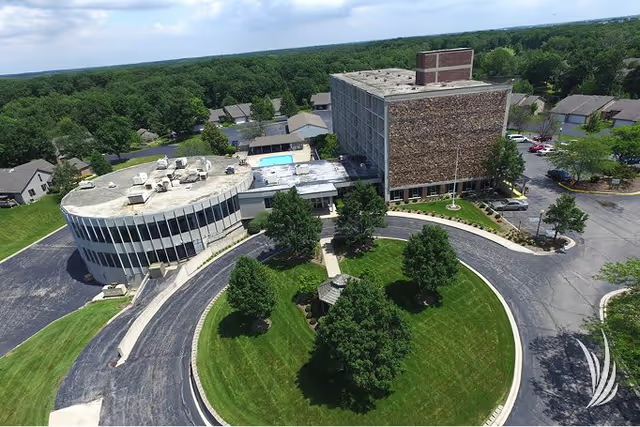
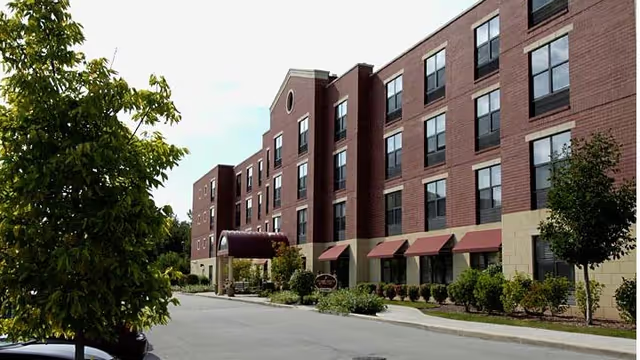
Sunrise of Olympia Fields is described across reviews as a large, well-appointed senior living campus with a broad suite of living options and campus amenities. Strengths commonly cited include a clean, updated environment; a wide array of apartment types from studios to detached bungalows and villas (some with garages and full-size washers/dryers); and numerous shared amenities such as a bistro, movie theater, library, salon, media room, and landscaped courtyards. The campus supports an on-site continuum of care with independent and assisted living neighborhoods and on-campus clinical services including primary care, dental, and physical therapy, which many families found convenient.
Staff and day-to-day life are frequent positive themes. Many reviewers highlight compassionate, personable staff, active programming (exercise classes, arts, outings, game nights, religious services), and a pronounced sense of community. Dining is often praised for restaurant-style presentation, menu variety, and accommodation of special diets; however, reviewers express mixed experiences around meal delivery consistency and temperature control. Safety features such as call buttons and daily check-in systems are in place and contribute to families’ sense of security.
At the same time, several operational patterns emerge that prospective residents and families should assess carefully. Staffing coverage is described as inconsistent, particularly on evenings and weekends, and some families perceived that clinical attention for higher-acuity or memory-care needs can be uneven. Medication administration and reminder practices have been called out as areas needing improvement. Administrative and communication issues are also a recurring theme: delayed responses, variable front-desk effectiveness, and billing or move-in coordination problems have been reported. There are also concerns about the facility’s fee structure and the potential for additional or unclear charges; there are even isolated allegations of unauthorized rent withdrawals and billing errors, so confirming billing safeguards is prudent.
Facility logistics and experience can vary by unit type and location on campus. The large footprint and diverse housing options (townhouses, cottages, larger independent living buildings) create strong choices but also pose wayfinding and distance challenges for some residents. Move-in readiness and on-time unit preparation appear inconsistent in select cases. Pandemic-era infection-control decisions affected social programming and meal service for some residents; reviewers describe periods of restricted visitation and altered dining that reduced social opportunities.
Recommendations for prospective families: tour multiple unit types and ask to visit during different shifts (including evenings/weekends) to observe staffing levels and activity engagement; request written, itemized fee schedules and billing policies; clarify medication-management protocols, staffing ratios, and the facility’s memory-care training and oversight; confirm unit readiness and move-in timelines in writing; and sample dining and activity programming where possible. Overall, the community offers a broad amenity set and many strengths in staff culture and campus features, but families should verify operational details that affect safety, clinical consistency, and financial transparency before committing.