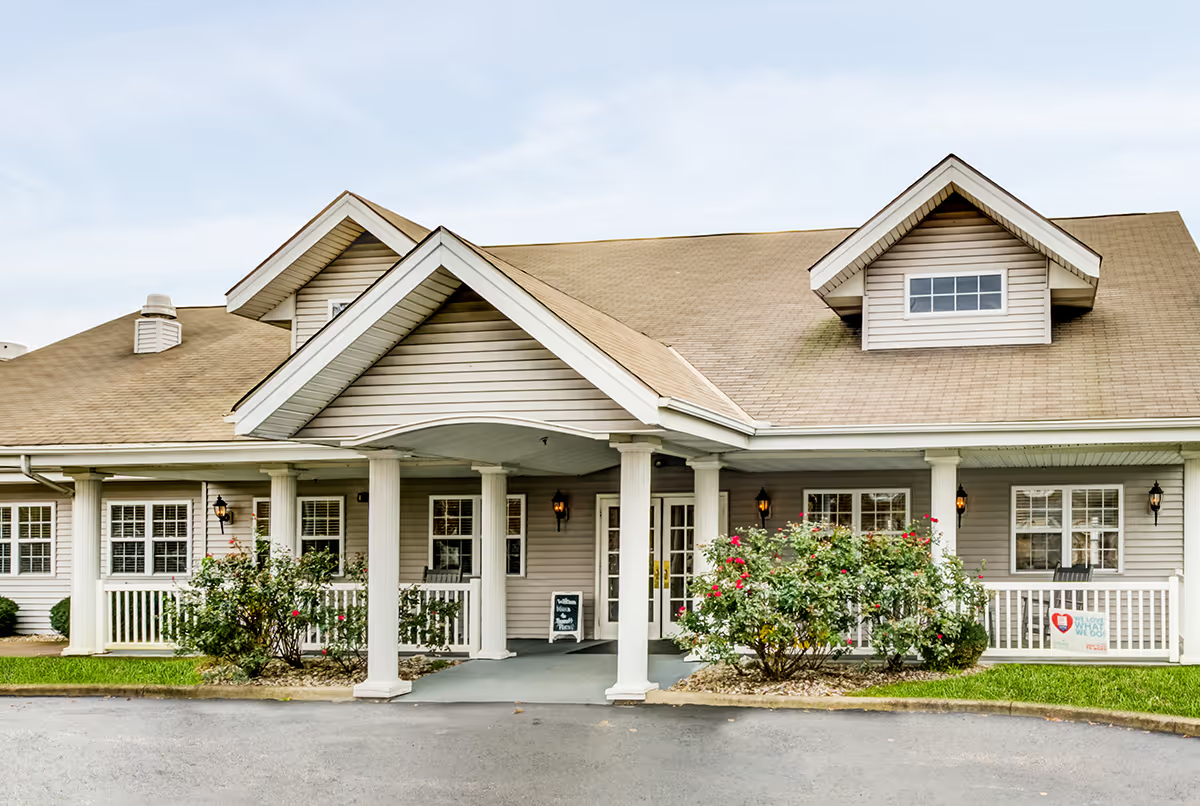
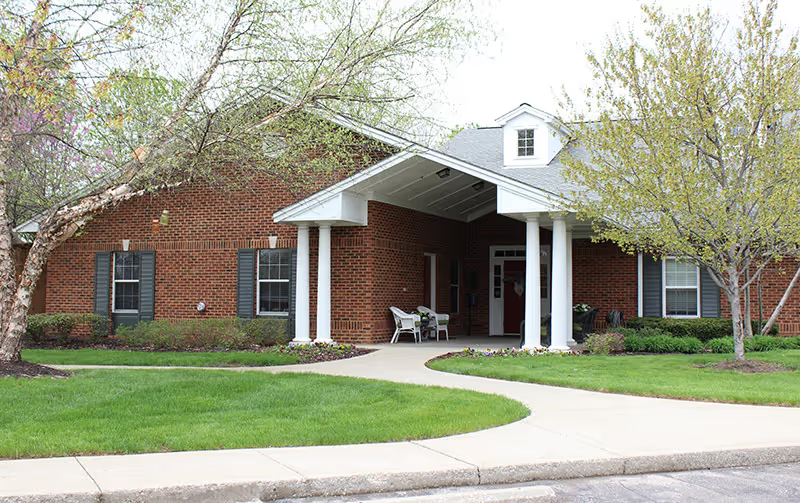
Reviews for Sellersburg Healthcare Center present a mixed picture: many families praise the facility's cleanliness, friendly caregivers, and strong rehabilitation services, while others describe significant operational weaknesses that affect care reliability. The facility appears to offer an engaged activity program (weekly music, care dogs, an on-site aviary, courtyards and sunrooms) and dietitian-supervised meals, and rehabilitative therapy is frequently highlighted as a strength. Multiple reviewers also noted instances of staff who went beyond routine duties to assist families and individual residents, and training activity for CNAs is evident on site.
Care quality and staffing are the most variable areas. Positive accounts describe compassionate frontline caregivers and life-saving clinical interventions; contrasting accounts raise concerns about inconsistent staffing levels, slow responses to call bells, and gaps in medication timing and clinical monitoring. Several comments indicate delays in assistance for toileting and bathing, inconsistent shower schedules, and other examples that reflect unstable direct-care coverage. These issues appear to be intermittent but consequential when they occur, with some families linking delayed clinical responses to hospital transfers and deterioration.
Dining and daily living services show mixed performance. The presence of a degreed dietitian and supervised meal planning is a strength, but reviewers describe variability in meal temperature and quality over time. Some residents benefited from appropriate diabetic meals and supervised feeding; others described food consistency and meal-service timing problems. Activity programming and communal spaces are notable positives: daily activities, music, animal-assisted offerings, and pleasant outdoor/indoor common areas were described as enhancing resident quality of life.
Facility condition and safety observations are also mixed. Many reviewers described the environment as clean and well-maintained, yet others raised sanitation and tray-cleanliness concerns in care areas and noted occasional odor or hygiene issues. Physical limitations were mentioned: rooms may be small and not always fully wheelchair accessible. Security and operational controls drew attention as well—concerns about unescorted vendor/delivery access and gaps in entrance control were raised. Inventory control for personal belongings and family interactions around possessions and end-of-life items also emerged as an operational weakness.
Management, communication, and administrative processes were repeatedly identified as pain points. Families reported difficulty getting timely responses from administrators, inconsistent discharge planning and coordination of services, and confusion about billing classification (rehab vs skilled nursing) and insurance charges. There are also allegations of theft and billing irregularities; while such claims are serious, they were presented as individual but consequential concerns that prospective families should investigate further.
Patterns across the reviews suggest variability in performance from shift to shift and unit to unit. Strengths—clean facility, engaged therapy and activity programs, and many caring staff—coexist with operational gaps in staffing consistency, clinical response times, infection-control/sanitation practices in specific situations, administrative responsiveness, and billing transparency. Prospective residents and families should consider on-site visits at different times of day, ask for staffing ratios and call-light response expectations, review medication-administration and infection-control policies, request details about discharge planning and billing practices, and inquire about end-of-life communication policies to evaluate whether the facility's strengths align with their needs.