The review set for Kearny County Hospital presents a mixed picture: several accounts describe attentive clinicians and strong interpersonal connections, while other accounts raise substantive operational and clinical concerns. Positive remarks repeatedly highlight individual caregivers—especially nurses and certain physicians—who provide personable, compassionate interactions and continuity for long-term patients. At the same time, a number of reviews describe delays or omissions in diagnostic workups and follow-up care that resulted in later identification of significant health problems.
Care quality appears variable. Many accounts praise specific clinicians for effective treatment and supportive care; these narratives emphasize time spent with patients, approachable bedside manner, and cases where staff were credited with meaningful help. Conversely, there are patterns indicating inconsistent diagnostic evaluation, discharge planning, and timely escalation when symptoms warrant further workup. Those operational gaps, as described, have contributed to delayed diagnoses in some cases and a perception of uneven clinical thoroughness.
Staffing and staff behavior are similarly bifurcated. Reviewers often commend nursing staff for compassion and friendliness—several mention individual nurses by name and describe positive conversations and rapport. However, other comments describe limited responsiveness, short staffing, and perceptions of less-engaged clinicians. Staffing constraints are presented as a driver of inconsistent service and longer waits, and they appear linked to variable patient experiences.
Administrative and operational issues recur in several summaries. Long wait times and scheduling delays are noted alongside reports of opaque billing and aggressive collections activity. Management responsiveness and complaint follow-up are called into question in multiple accounts, with descriptions of limited communication when patients or families sought resolution. Those operational weaknesses may amplify clinical concerns by reducing trust and making it harder for patients to obtain timely clarification or remediation.
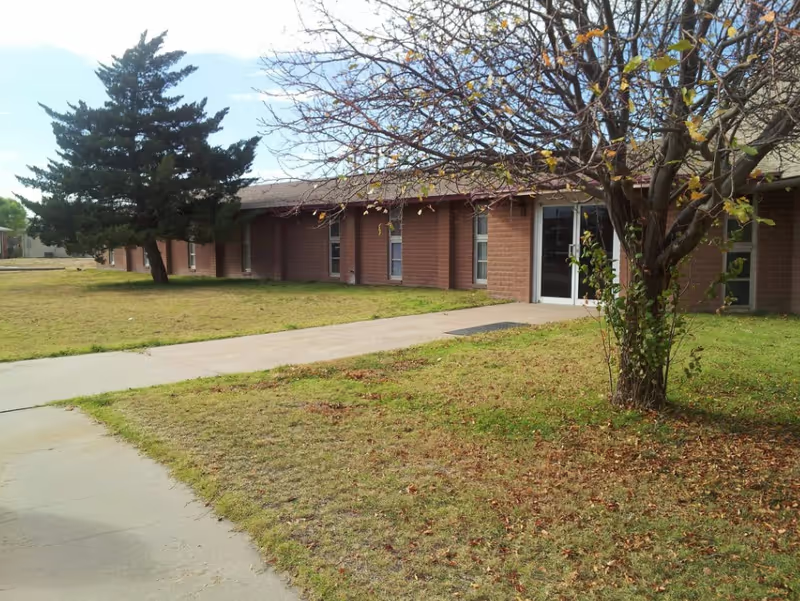
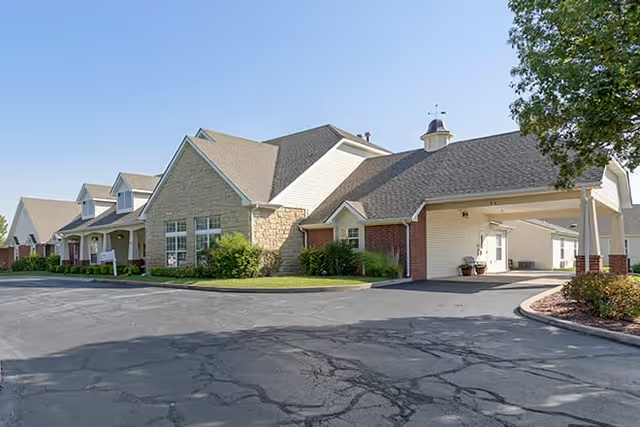
There is little specific information about dining, activities, or the physical plant in these summaries. Reviewers do not provide consistent commentary on food service, organized activities, or facility upkeep, so those domains cannot be reliably assessed from the provided data. Prospective patients and families should request current information and, if possible, tour the facility to evaluate these aspects directly.
Overall, the pattern suggests a facility with notable individual strengths in nursing and some physician relationships, but with systemic challenges in diagnostic consistency, scheduling, billing transparency, staffing levels, and management communication. Families considering the hospital may wish to ask targeted questions about diagnostic protocols and escalation pathways, typical wait times and scheduling practices, billing procedures and dispute resolution, staffing ratios, and how complaints are tracked and resolved. Checking recent regulatory inspections and speaking with current patients or community sources may help clarify whether the operational issues described have been addressed.