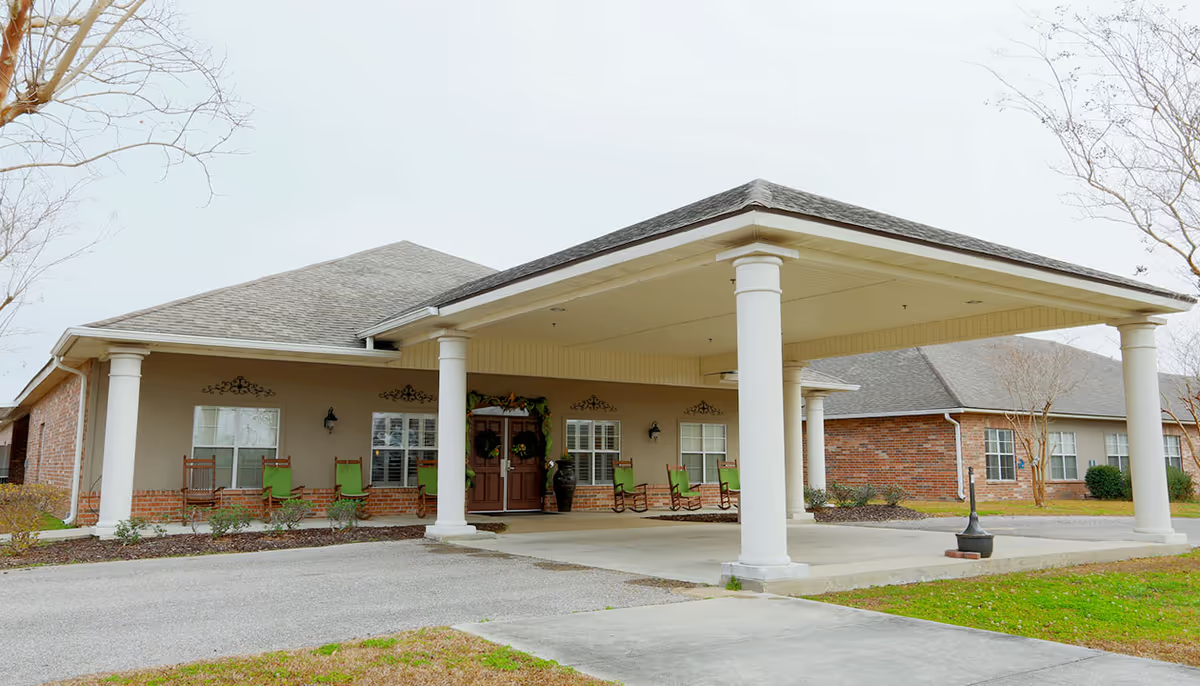
The reviews for Lady of the Oaks Retirement are highly polarized, showing a facility with clear strengths alongside recurring operational concerns. Many accounts describe caring, personable front-line caregivers, an active social calendar, recent room updates, and strong therapy services that contribute to residents' quality of life. At the same time, a substantial set of concerns centers on inconsistent practices in clinical responsiveness, cleanliness, and administrative communication.
Care quality is described in mixed terms. Positive comments emphasize attentive, family-like care and effective physical therapy that has produced meaningful clinical improvements. Conversely, other accounts indicate variability in how promptly staff respond to clinical needs and how well clinical issues are escalated; a few reviewers described situations that suggest gaps in clinical oversight. Prospective families should view the facility as one with the capacity for high-quality care but also a potential for uneven experiences depending on staffing and shift coverage.
Staff culture also appears split. Several reviewers praise individual caregivers, describe pleasant interactions, and note upbeat nursing leadership. Other comments point to unprofessional conduct by some staff members, distracted behavior linked to personal-device use, and a work environment that several reviewers characterize as problematic. These contrasts suggest that staff performance and tone may depend on particular shifts, teams, or leadership continuity.
Facility-level maintenance and sanitation concerns appear in the feedback as well. While some reviewers note recent room renovations and an attractive environment, others describe inconsistent cleanliness and odor concerns in rooms and common areas, plus delays in incontinence-related care. These are operational issues that bear on daily comfort and dignity and that may reflect inconsistent housekeeping or care routines.
Management and administration receive mixed evaluations. Positive notes single out respectful and involved nursing leadership; negative feedback focuses on poor communication with families, limited transparency about clinical changes, and perceived unprofessionalism in human-resources practices. These management issues align with the broader pattern of variability across shifts and departments and may affect how quickly concerns are addressed when raised by families.
Activities and quality-of-life offerings are a relative strength: reviewers frequently mention lively programming, social engagement, and residents appearing happy. Dining received limited direct commentary in the summaries provided, so there is no clear pattern to report there.
Notable patterns for prospective residents and families: the facility can deliver compassionate, effective care and meaningful rehabilitation, particularly when staffing and leadership are aligned. However, there are consistent themes around variable staff conduct, lapses in cleanliness and incontinence care, uneven clinical responsiveness, and inconsistent administrative communication. When evaluating this community in person, families should ask specific questions about staffing ratios and turnover, cleaning and incontinence-care protocols, clinical-escalation procedures, how families are notified about changes in condition, and recent or ongoing HR or leadership improvements. Observing a range of shifts, speaking with current residents and families, and reviewing recent inspection or staffing records will help clarify whether the facility's strengths are consistent day-to-day.