Overall sentiment across the review summaries is mixed but leans toward serious concern. Several reviewers praise specific parts of Chateau de Notre Dame—notably the memory care unit, the independent living and Pavilion sections, and certain rehabilitation outcomes—while many other comments describe systemic problems that affect safety, dignity, and basic care. The picture that emerges is one of uneven quality: pockets of very good, compassionate care and cleanliness exist alongside troubling reports of neglect, understaffing, and unsafe practices.
Care quality and safety: The memory care unit receives multiple positive mentions for being clean, well-staffed relative to other units, and providing compassionate, skilled care. In contrast, assisted-living and nursing-level care appear patchier. Recurrent and specific safety concerns are raised: residents left unattended (including bedbound residents), denied basic equipment or commodes, walkers removed, bruises allegedly from staff, and incidents where residents were left wet or given cold baths. Reviewers also mentioned maintenance and equipment issues that increase fall risk, and at least one explicit example of an inadequate nursing staffing ratio (three nurses for 44 patients). These details point to both immediate safety risks and systemic staffing shortages that compromise care.
Staffing, behavior, and communication: Reviews highlight a sharp contrast in staff performance. Many reviewers single out senior staff, certain aides, nurses, and housekeepers as friendly, helpful, and competent—especially in memory care. Simultaneously, other aides and staff are described as indifferent, rude, unprofessional, or neglectful. Multiple reports describe staff disappearing from the floor, slow response to call lights, and patients ‘‘begging’’ for help. Management is described as largely inaccessible and prone to blaming staff rather than addressing root problems, contributing to family frustration. Themes of understaffing and underpayment are cited as possible underlying causes of variable staff performance.
Rehab and therapy services: Rehabilitation is noted positively by several reviewers—“rehab was great” and “rehab is working” appear—indicating that therapy can produce good outcomes. However, coverage is inconsistent: reviewers report minimal weekday rehab and no rehab on weekends, which could limit progress or continuity of care. These inconsistencies suggest that rehab quality may depend on scheduling and staffing and that families should verify therapy availability when making decisions.
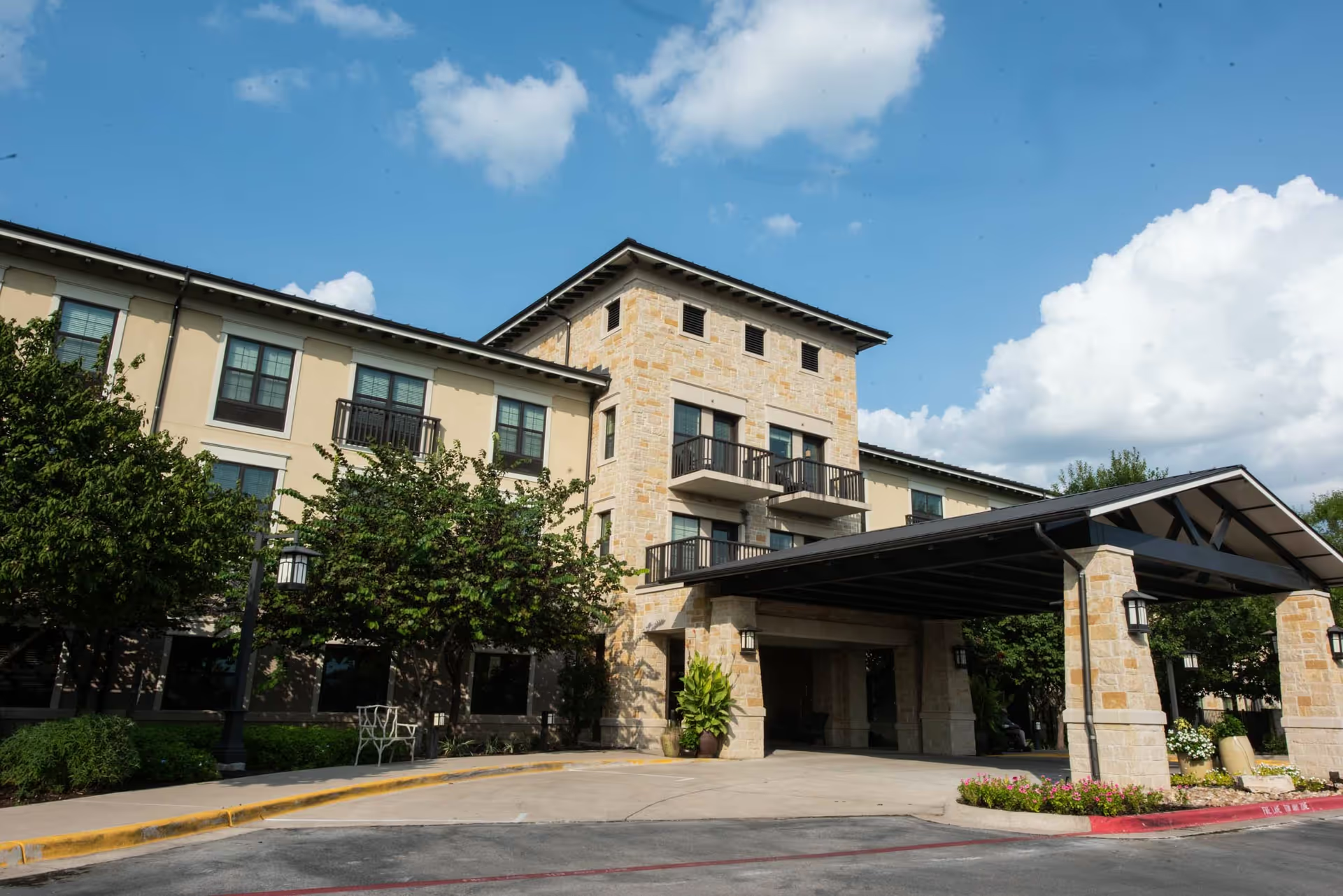
Facilities, cleanliness, and amenities: Cleanliness and lack of odor are repeated positives—rooms and public areas are described as very clean, and daily Mass is offered. The independent living and Pavilion areas are called out as appealing. At the same time, negative facility-related issues appear: some rooms were described as dark and lacking a phone, maintenance problems affecting safety, and cameras in rooms (reported with concern about privacy). The facility’s appearance is called “nice/fancy” by some reviewers, indicating that aesthetic quality doesn’t fully reflect care quality.
Dining and dietary policy: Dining quality receives criticism, with multiple mentions of cold or unpleasant food and poor dinner quality. There is also a specific complaint about dietary policy for diabetics, implying that medically appropriate meal planning and implementation may be inconsistent or inadequate for residents with dietary needs.
Property management, logistics, and valuables: Several reviewers report logistical failures such as lost or dirty laundry and even theft. These operational problems compound the emotional and practical burden on families and residents and suggest weaknesses in day-to-day supervision and inventory control.
Patterns and recommendations: The dominant pattern is variability—some units and staff provide excellent, compassionate care, while others fall short in basic duties and safety. Recurrent themes point to understaffing, inconsistent supervision, and managerial inaccessibility as central issues. Immediate areas for improvement would include: stronger staffing coverage (including weekends for rehab), clearer and enforced toileting and mobility-assistance protocols, improved staff training and accountability to reduce neglect and abuse, better laundry and valuables management, and dietary oversight for medical conditions. Families should be advised to ask specific questions about staffing ratios, weekend therapy availability, toileting and mobility assistance policies, and incident reporting/management when evaluating the facility.
In summary, Chateau de Notre Dame appears to deliver high-quality care in certain units (notably memory care and parts of independent living), with clean facilities and compassionate staff in those areas. However, there are multiple, specific and serious reports of neglect, inadequate staffing, safety risks, poor communication, and operational failures in other parts of the community. The reviews suggest the facility has strengths worth noting but also systemic problems that should be investigated and addressed to ensure consistent, safe, and dignified care for all residents.