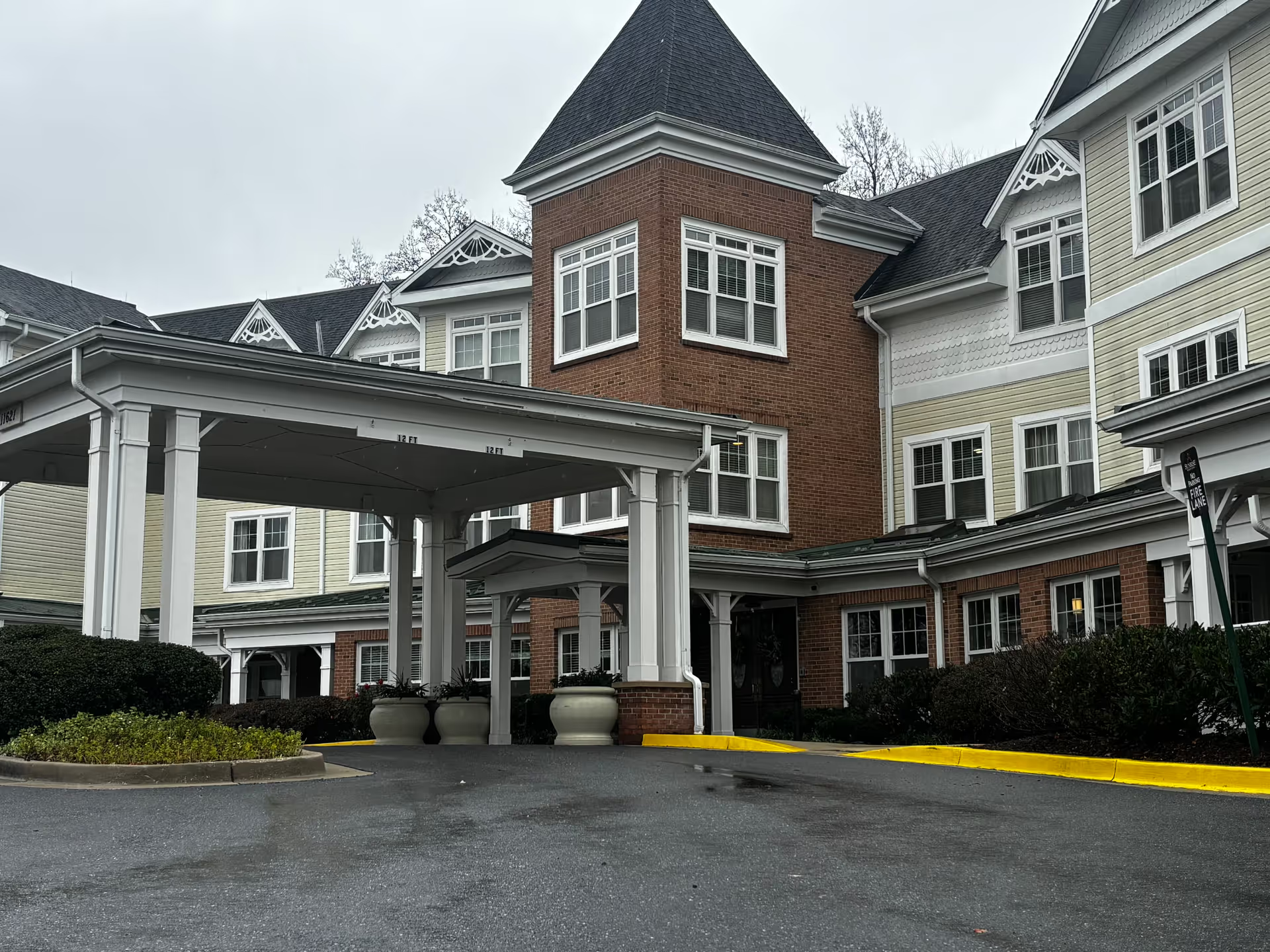
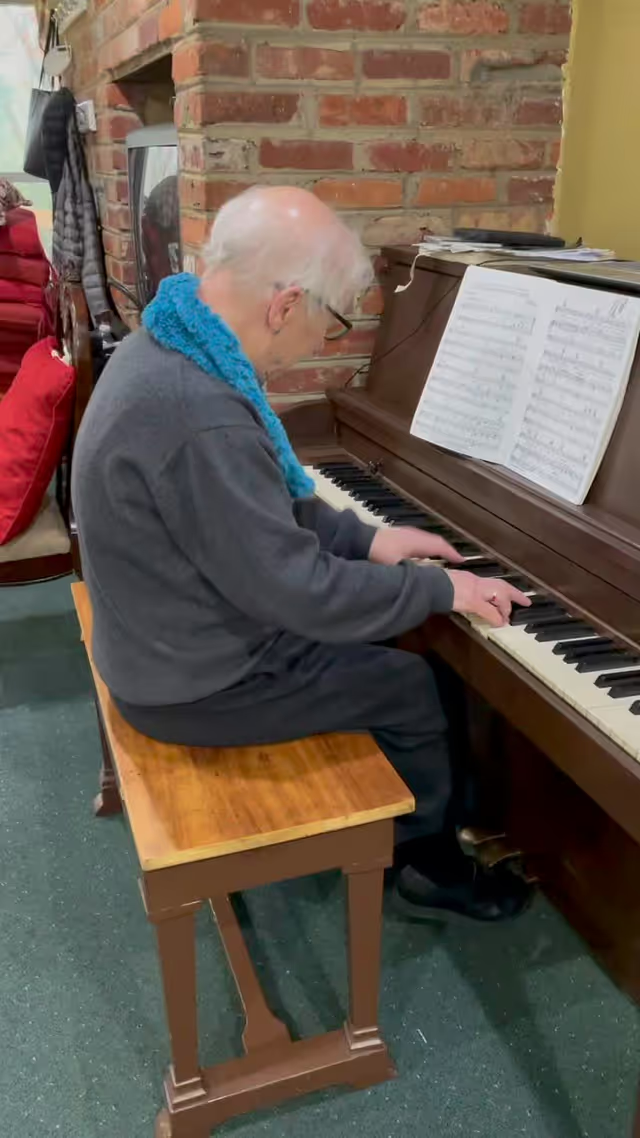
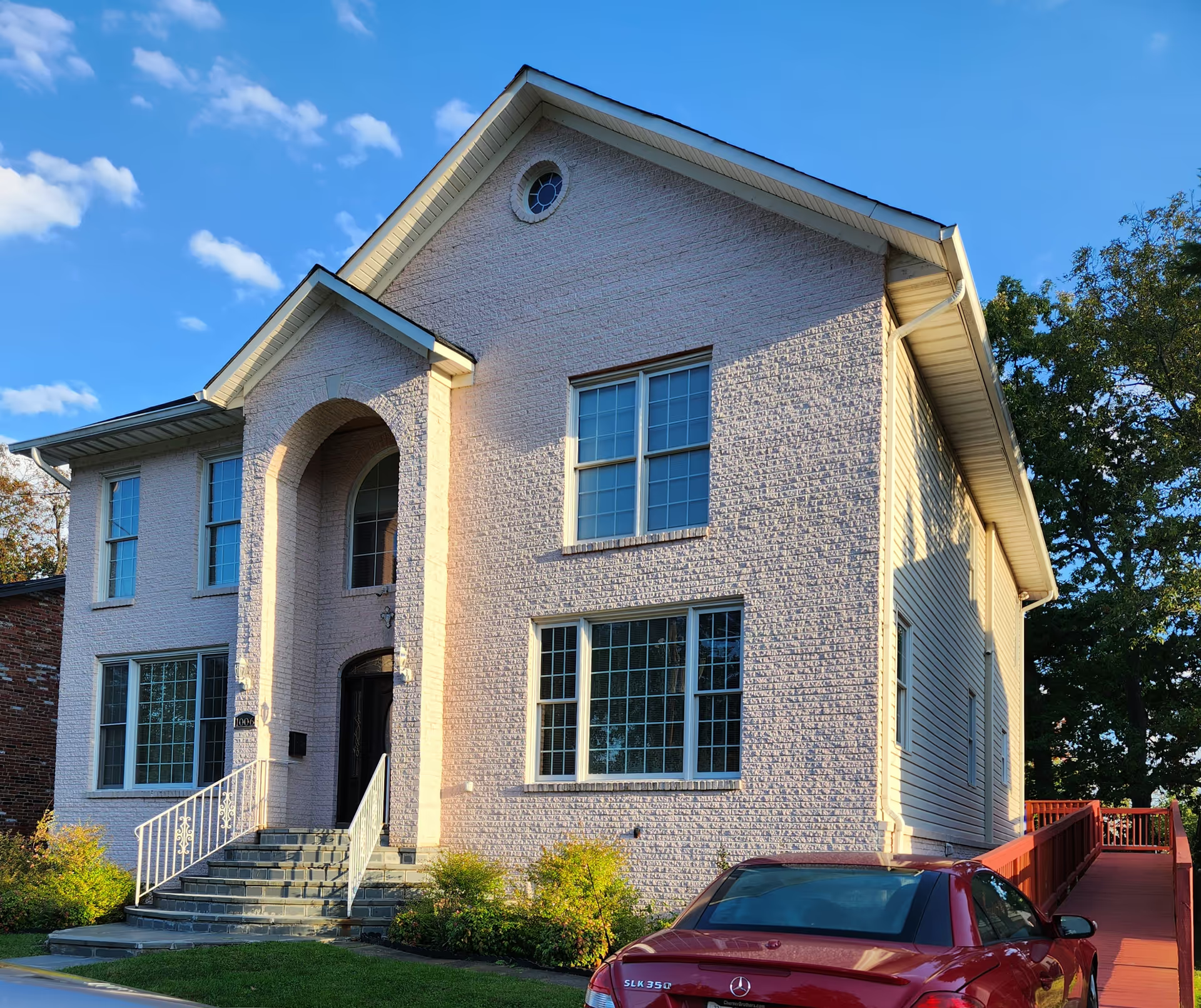
Sterling Care Hillhaven elicits strongly polarized impressions: many families and residents describe high-quality rehabilitation, engaged activity programming, and a clean, bright facility staffed by compassionate caregivers. The facility’s rehabilitation services — including physical and occupational therapy and a well-equipped gym — receive consistent praise for supporting recovery and functional gains. Activity coordinators and event planning are frequently noted as strengths, with varied programming that contributes to a family-like social atmosphere. Admissions and social-work personnel are often characterized as helpful and proactive, and many reviewers highlight spacious, well-appointed rooms, visible safety features, and a generally well-maintained physical plant.
At the same time, an array of operational weaknesses appears repeatedly. Communication gaps between clinical staff/management and families are a common concern: examples include delayed updates after incidents, difficulty reaching nurses or physicians, and opaque discharge or transition decisions. These communication issues dovetail with reports of inconsistent medication administration and charting practices, delayed recognition or reporting of falls or clinical changes, and uneven execution of wound and other clinical-care protocols. Several reviewers described situations that they felt reflected broader lapses in clinical oversight or follow-up; taken together, these accounts suggest a need for stronger incident-response procedures and clearer family notification pathways.
Staffing and responsiveness are other recurring themes. While many reviewers praise individual nurses and aides for kindness and attentiveness, others describe slow response times to assistance requests, especially during late afternoons and nights, and perceptions of inadequate staff-to-resident ratios at certain times. Related operational areas include inconsistent room-cleaning schedules, laundry and personal-item handling concerns, and variable adherence to infection-control rules and visitation policies. Dining receives generally positive comments for quality and accommodation of special diets, but some families note limited menu variety and insufficient low-sodium options or salt control practices.
Management and administrative practices draw mixed feedback. Admissions and front-desk interactions are often efficient and welcoming, yet several reviewers report difficulty obtaining medical records, charges for documentation, and a lack of transparency when families seek clarification about care goals or clinical events. There are also episodic reports of more serious clinical incidents that families felt were mishandled; these underscore the earlier points about communication, incident reporting, and clinical oversight rather than describing a single recurring event.
For prospective residents and families, the pattern suggests a facility with many operational strengths — notably rehabilitation capabilities, activities, and an overall clean, pleasant environment — combined with uneven performance in communication, some clinical processes, and staffing consistency. Families who prioritize rehab, social programming, and a bright facility may find Hillhaven suitable, but those for whom continuous clinical oversight, rapid responsiveness, and transparent administrative communication are critical should explicitly address these areas during tours and admissions. Asking about current staffing ratios by shift, incident-notification protocols, medication-administration safeguards, sanitation schedules, and the process for obtaining medical records can help set expectations and identify how the facility will address the operational gaps highlighted by reviewers.