Overall impression: Reviews describe a facility with clear strengths in rehabilitation, individualized attention from many staff members, and an active social and activities program. Numerous accounts highlight successful therapy outcomes, effective discharge planning, and several staff—particularly in admissions, therapy, concierge, and social work roles—who provide consistent communication and personalized support. At the same time, reviewers repeatedly identify operational and clinical inconsistencies that families should assess when considering placement.
Care quality and clinical oversight: The facility's rehabilitation teams (physical, occupational, speech) receive consistent praise for promoting functional recovery and enabling many residents to return home. Several families and patients credited therapists and associated clinicians with measurable improvements. However, there are recurring concerns about nursing-level care continuity: delayed or incorrect medication administration, inconsistent wound monitoring and follow-up, and variable physician engagement. These translational issues suggest the need to verify medication-safety protocols, physician availability, and wound-care processes prior to placement.
Staffing, responsiveness, and communication: Many reviewers describe compassionate, attentive nurses, CNAs, and support staff who provide respectful, person-centered interactions. Simultaneously, patterns of understaffing, slower response times to call bells, and weaker weekend or night coverage are reported. Communication gaps appear at two levels: shift-to-shift handoffs within clinical teams and proactive updates to families. Prospective families should inquire about staffing ratios, night/weekend coverage, and formal handoff procedures to understand how continuity is maintained.
Dining and activities: The activities department and recreational programming are frequently cited as strengths, contributing to resident engagement and quality of life. Dining experiences are more mixed: some reviewers describe high-quality, accommodating meal service, while others report late meals, temperature/quality issues, and limited alternative options when residents dislike the menu. Families should ask about therapeutic diets, special-meal accommodations, and typical meal-service timing.
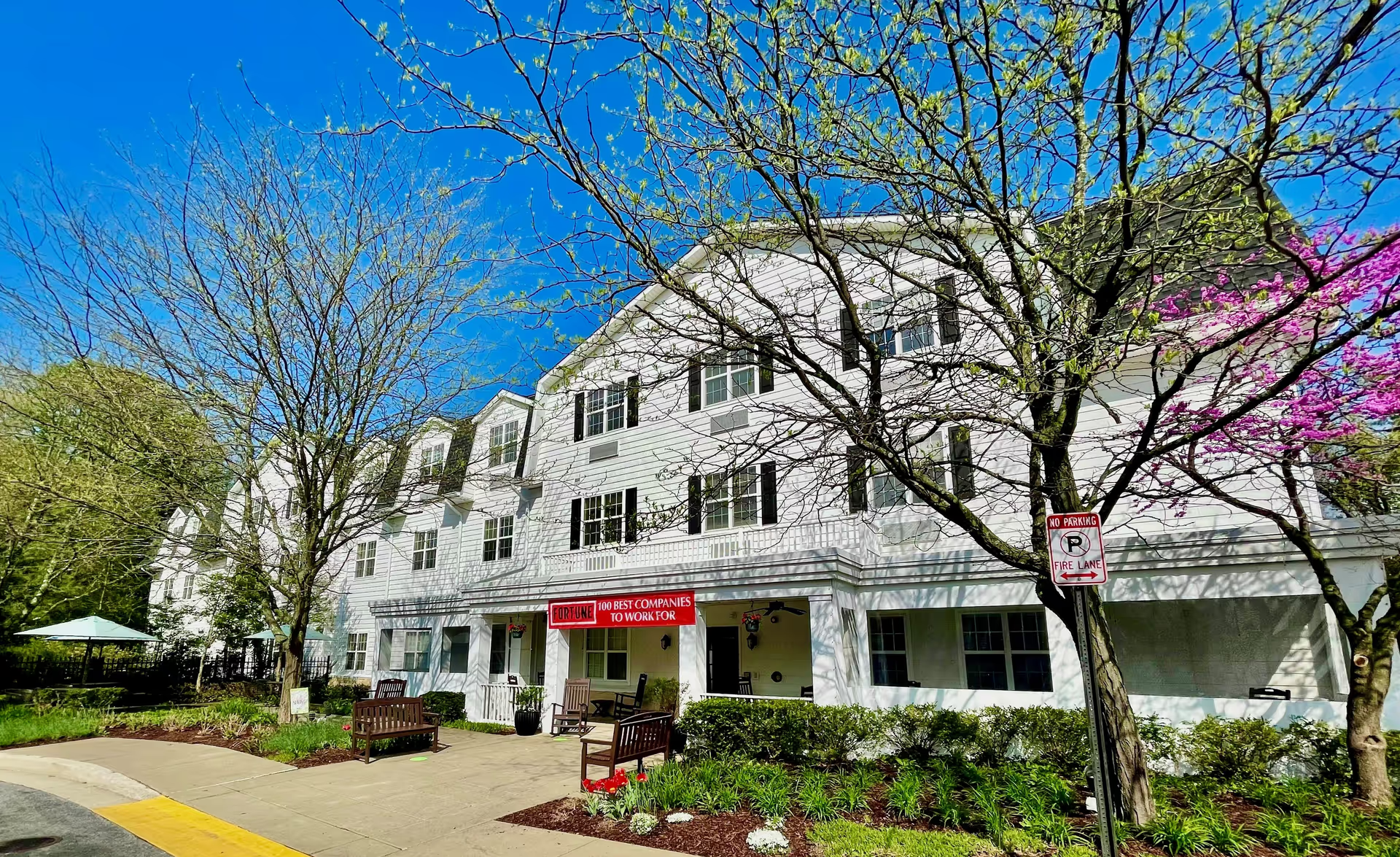
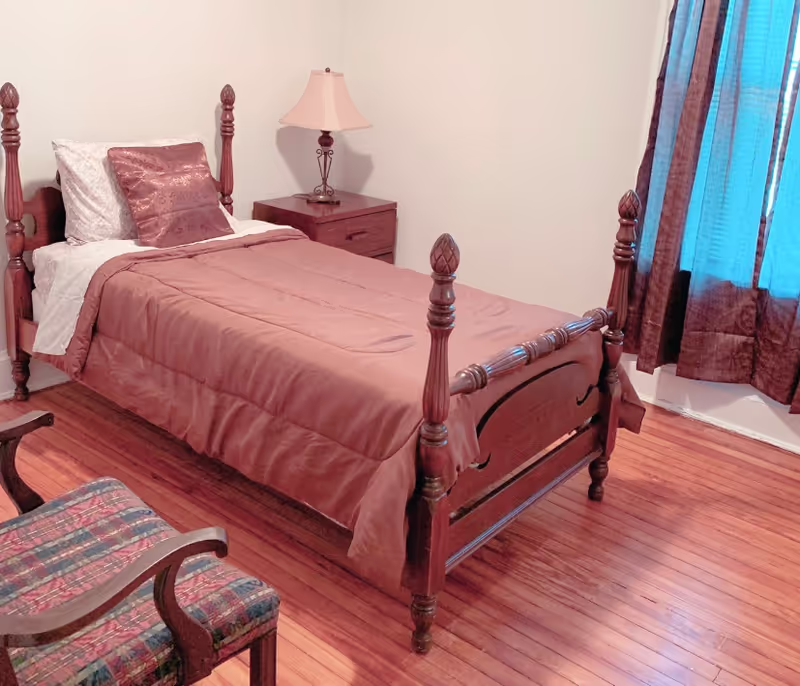
Facilities, housekeeping, and supplies: Many accounts describe clean, well-maintained public areas and rooms with attentive housekeeping and maintenance staff. Contrasting reports identify sanitation issues in specific rooms or units, occasional mold or cleanliness lapses, pest-control concerns, and shortages of linens or hygiene supplies. These indicate uneven implementation of environmental and supply-management processes; prospective residents should request information on infection-control practices, linen-supply protocols, and recent inspection outcomes.
Management and systems: Administrative leadership and admissions staff are often described as approachable and responsive, which supports families during transitions. Nevertheless, there are repeated perceptions that administrative or reimbursement priorities sometimes compete with individualized care needs. Serious concerns including allegations of theft and staff misconduct appear in some accounts; these are significant and warrant direct inquiry to management about incident reporting, background checks, staff training, and grievance processes.
Notable patterns and guidance for families: The facility appears to perform well as a rehabilitation-focused center with strong therapy outcomes and many dedicated caregivers. Where risk appears greatest is in areas that require consistent staffing, tight clinical oversight, and robust supply and environmental management. Families considering Westgate Hills should (1) verify staffing ratios and weekend/night coverage, (2) review medication-safety and handoff protocols, (3) ask about recent inspection and infection-control records, (4) clarify meal-service times and dietary accommodations, and (5) obtain clarity on incident-reporting and security measures. Visiting at different times of day (including evenings/weekends) and speaking directly with therapy, nursing leadership, and social work can help assess whether the facility’s operational strengths align with a specific resident’s needs.