Reviewer accounts are strongly polarized: many families and visitors describe excellent rehabilitation outcomes, a lively activities program, and helpful frontline personnel, while others relay consistent operational problems that affect day-to-day care. The facility appears to deliver high-quality therapy services in its rehabilitation department; physical and occupational therapists receive frequent praise for improving mobility and function. The activities and recreation teams also receive substantial positive feedback for engagement, variety, and resident morale. Front-desk staff, certain nurses, GNAs, and specific liaisons or social-work staff are repeatedly identified as supportive and effective.
At the same time, a persistent pattern of inconsistent nursing coverage and responsiveness emerges across reviews. Common operational weaknesses include long waits for assistance with toileting and bathing, delayed analgesic administration, and variability in routine bedside care. Several accounts point to deficiencies in the call-button/response system and to staffing shortfalls that are more pronounced on weekends or certain units. These issues are associated with families needing to advocate repeatedly to obtain timely attention.
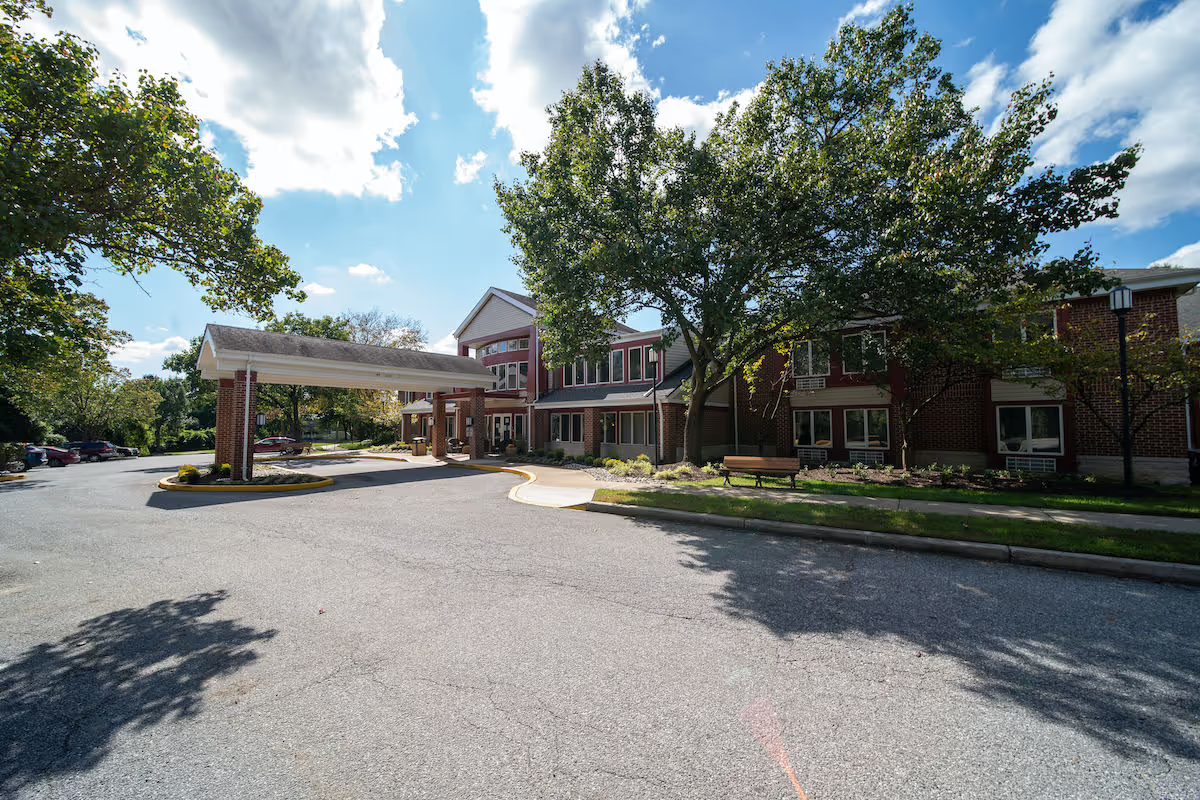
Dining and nutrition are another mixed area: some reviewers note acceptable meals and a functional kitchen, while others describe repetitive menus, cold or poorly presented items, and inadequate accommodation of therapeutic or texture-modified diets. There are also specific concerns about how pureed or modified diets are prepared and tolerated. Housekeeping and environmental maintenance produce variable impressions: many visitors describe clean, pleasant public areas and well-kept therapy spaces, yet other reports cite sanitation and odor concerns in certain units, evidence of inadequate pest control in places, and inconsistent housekeeping follow-through.
Management and communication practices show notable variability. Several families report informative Plan of Care meetings, responsive liaisons, and clear coordination; conversely, others report difficulty reaching leadership, unanswered calls or voicemail issues, unclear discharge coordination, misplaced belongings, and inconsistent transparency about care plans. Temperature control and room-level environmental management are raised as repeat concerns where heating can be excessive in some rooms. Infection-control enforcement (masking and PPE) and weekend staffing levels are also identified as uneven.
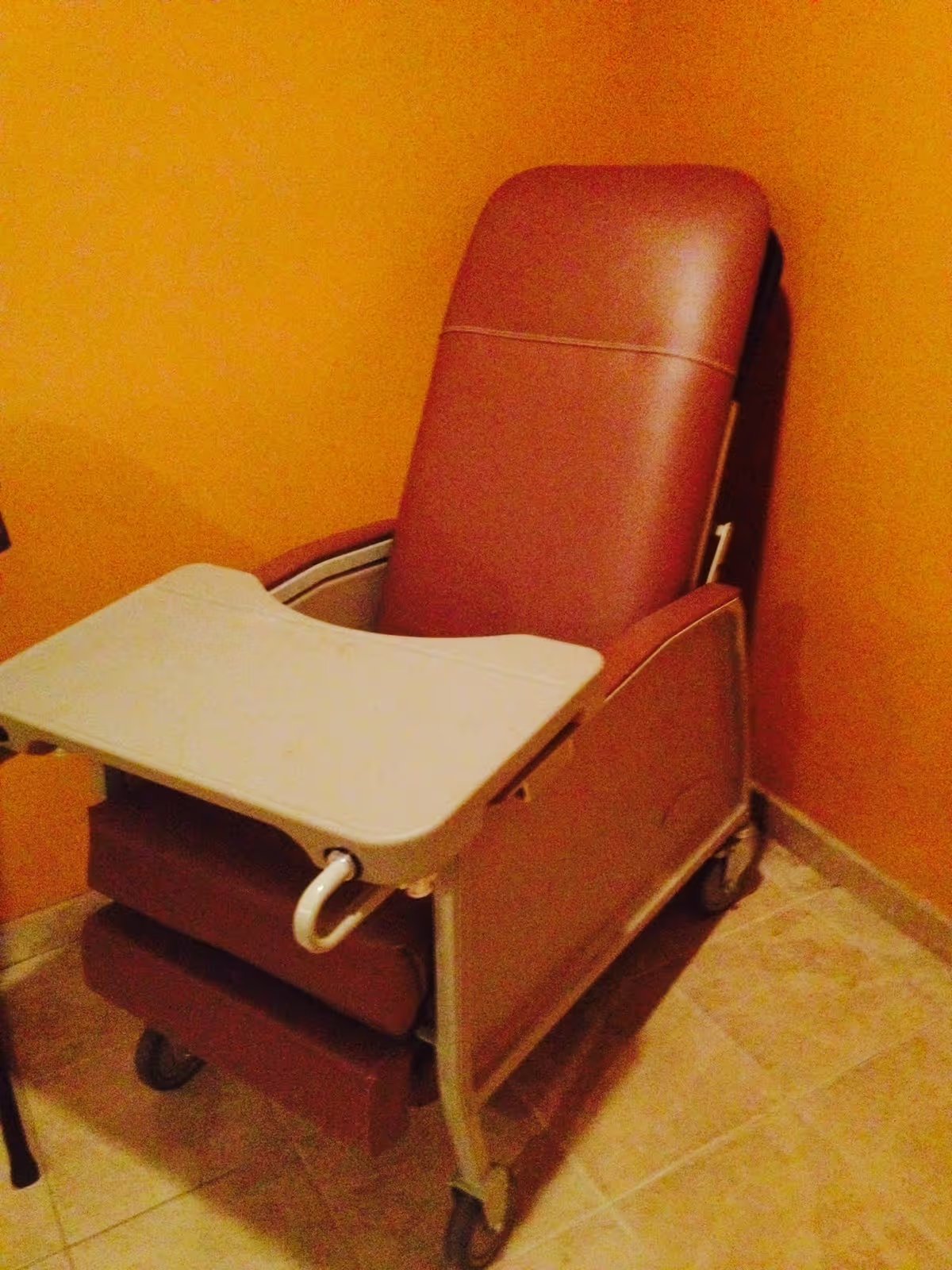
Safety and clinical oversight concerns appear in a subset of accounts and range from transfer- and equipment-safety issues to more serious individual allegations about staff conduct and adverse outcomes. These are serious claims that reviewers link to lapses in training, supervision, or escalation of care; families should seek up-to-date regulatory information and documentation if these issues are an area of concern.
Overall, the dominant pattern is variability: strong rehabilitation capabilities, an active activities program, and pockets of highly compassionate staff coexist with operational weaknesses in nursing responsiveness, environmental consistency, dining services, and administrative communication. Prospective residents and families would benefit from targeted questions before admission: staffing ratios on the intended unit and on weekends, call-button response metrics, specifics about dietary accommodation, examples of recent care-transition planning, and evidence of infection-control and temperature-management protocols. Observing shift change, touring the intended unit, and speaking directly with therapy and nursing leadership can help set expectations given the mixed experiences reflected across reviews.