East Village Place presents as a small, well‑maintained memory-care and assisted‑living community with a strong emphasis on person‑centered programming and social engagement. Reviewers consistently describe a family‑like atmosphere supported by long‑tenured staff and an active life‑enrichment department; programming includes music, live entertainment, art classes, outings, virtual‑reality experiences, and structured cognitive stimulation through Watermark University. The community’s scale and abundant activities make it suitable for residents who benefit from frequent social opportunities and a high level of staff‑resident familiarity.
Clinical and therapeutic supports are a notable strength. The community offers on‑site nursing, regular physician visits, blood‑work access, and therapy services (PT/OT), and some reviewers described in‑apartment medical care when needed. Staff are frequently praised for individualized attention, clear communication with families, and responsiveness to changing needs. Memory‑care programming is highlighted as purposeful and safe, with secure spaces and daily encouragement for participation and mobility.
Dining is frequently cited positively: many families described restaurant‑style meals, varied menus that accommodate dietary needs, holiday events, and chef competitions. That said, there are intermittent comments about variability in meal‑service staffing and occasional dissatisfaction with food quality from a minority of perspectives. Families should expect generally strong dining offerings but may want to confirm consistency and staffing patterns during a tour or meal observation.
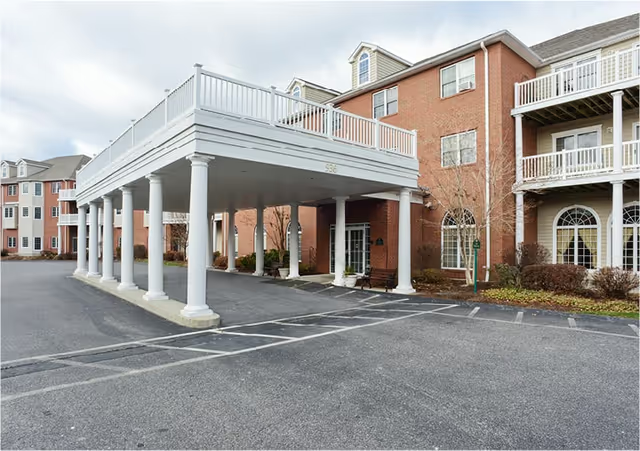
The physical environment receives high marks: renovated apartments (typically about 600 sq ft), clean common areas, courtyard gardens, and amenities such as a coffee house, pub room, beauty shop, and washer/dryer access. Apartments are unfurnished and do not include in‑unit cooking facilities, which suits residents seeking maintenance‑free living but may be a drawback for those who want full kitchen capabilities. Transportation services and scheduled outings extend opportunities for community engagement off‑site.
Operational patterns to weigh include staffing continuity and coverage. While many reviewers praise long‑term, attentive employees, there are recurring notes about variable staffing levels, occasional gaps in assisted‑living coverage, and inconsistencies in scheduling for personal care tasks (for example, bathing assistance). An isolated staff‑conduct incident prompted corrective action in one account; such comments point to the importance of monitoring supervisory and conduct‑oversight practices. Industry‑wide CNA turnover dynamics were also referenced as a contextual factor affecting continuity.
Cost and location are further considerations. The community operates on a private‑pay model with a one‑time community fee; reviewers’ perceptions of value vary, with some describing pricing as competitive and others finding it relatively expensive. The facility’s distance (about a 45‑minute drive for one reviewer) may be meaningful for families who need frequent on‑site access. Prospective residents and families should balance the strong social, clinical, and environmental attributes against these operational and logistical factors.
Overall, East Village Place is characterized by warm, engaged staff, robust activity programming, and accessible clinical supports within an intimate, well‑kept setting. It appears particularly well suited to families seeking focused memory‑care services in a community with active life‑enrichment offerings; prospective families should assess current staffing patterns, dining‑service consistency, apartment features, and financial terms during a visit to confirm fit for their specific needs.