Franklin Health & Rehabilitation Center elicits highly polarized impressions. Many families and residents praise the clinical team — several accounts highlight compassionate nursing, a strong therapy department for short-term rehabilitation, and a supportive nurse practitioner presence. Where clinical staff perform well, reviewers credit individual nurses and therapists with making stays tolerable and achieving good rehabilitation outcomes. The facility provides both short-term rehab (up to six months) and long-term care, and on-site services such as a hairdressing room are available.
At the same time, there are recurring operational concerns. A number of reviews describe long call-bell response times and variability in staff engagement; this creates uneven day-to-day experiences despite strong individual caregivers. Medication-management and inventory-control issues are raised, including at least one serious allegation of mishandling that families said requires review. Discharge planning and communication with families are also noted as inconsistent, with some transitions handled poorly and resulting in distress for residents and relatives.
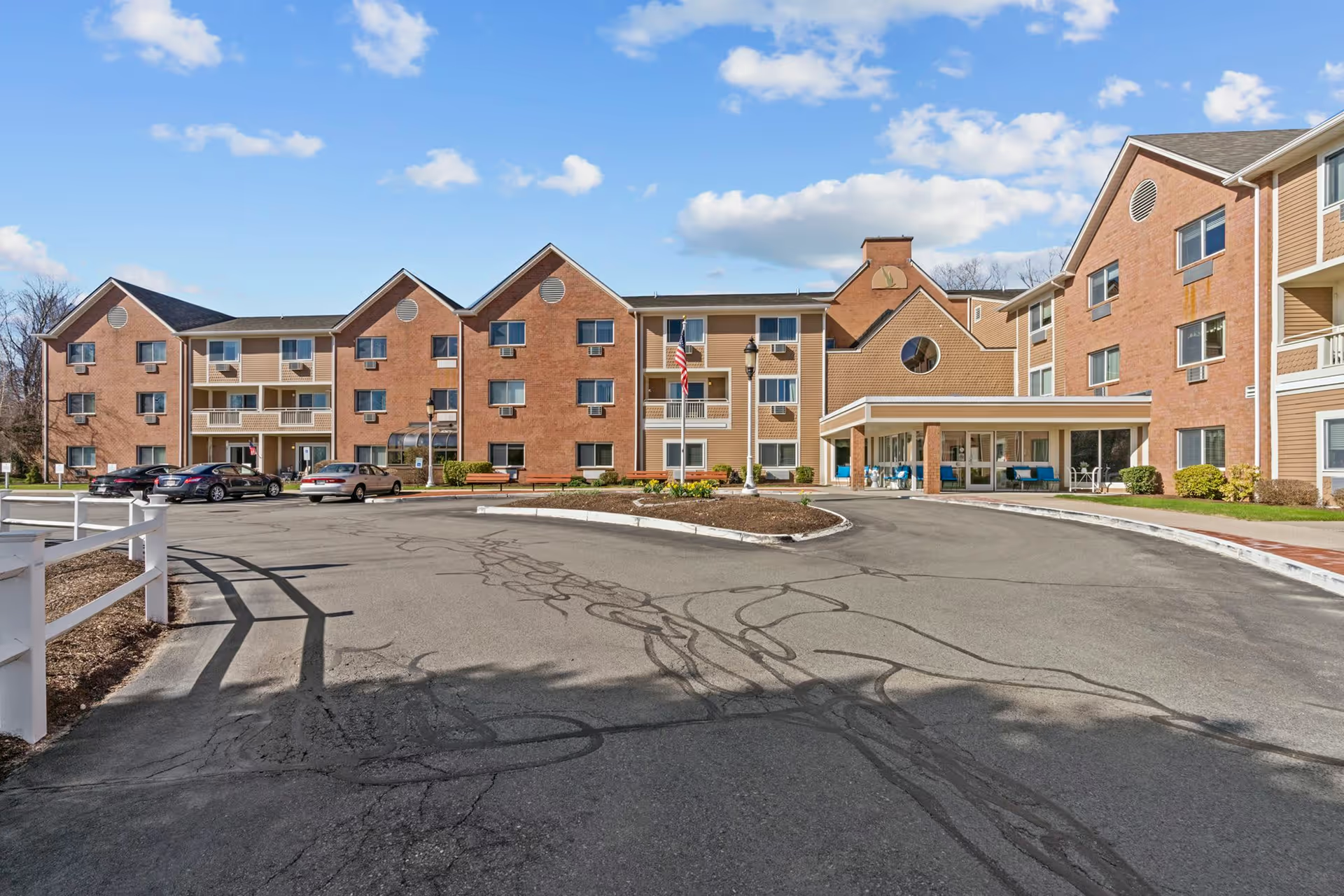
Physical plant and amenities receive mixed assessments. Some areas were described as clean and well-maintained, and therapy spaces and clinical areas are, in places, effective. However, the facility is characterized by an older infrastructure with safety concerns (for example, trip and cord hazards cited), limited accessibility for wheelchair users, and overcrowded shared rooms with minimal closet or storage space. Dining and housekeeping experiences vary: some reviewers praised the food and overall cleanliness, while others described unacceptable meal quality and lapses in basic supplies and bathing assistance.
Management and administrative history is another distinguishing theme. Current ownership and leadership (noted to have changed in recent years) are credited by some with improved clinical leadership and outcomes. Conversely, prior administrative and financial lapses — including payroll and vendor-payment problems reported by some families — have left a legacy of concern. Activities and resident-centered programming exist, but their consistency appears affected by staffing and administrative stability.
Overall, Franklin demonstrates clear clinical strengths in nursing and therapy when staff and leadership are functioning well, but persistent operational and infrastructural weaknesses create variability in resident experience. Prospective residents and families should verify current management practices, observe staff responsiveness, review medication-safety protocols, and assess room configurations and accessibility during an in-person visit. Where continuity of care and reliable discharge planning are priorities, requesting written care-transition procedures and recent outcome data from the facility may be advisable.